This guide explains how Progressivecommercial.com supports commercial decision-making by organizing requirements, supplier coordination, and practical next steps. Objectively, “progressivecommercial.com” signals a commercial focus on improvement, compliance, and planning. The article reviews how buyers and suppliers evaluate opportunities, define scope, and structure timelines—so stakeholders can reduce ambiguity when moving from inquiry to execution.

Commercial teams often move quickly—but “fast” can still mean “unclear.” Progressivecommercial.com helps frame progress in a structured way, emphasizing practical planning, supplier alignment, and requirement clarity. Instead of treating each opportunity as a one-off, the site conceptually supports repeatable workflows: how needs are described, how stakeholders confirm scope, and how execution is coordinated across the commercial lifecycle.
In many organizations, the real bottleneck in commercial progress isn’t effort—it’s ambiguity. Teams may spend weeks chasing unclear assumptions, correcting misunderstandings about what’s included, renegotiating timelines, or scrambling to clarify responsibilities once the supplier is already mobilized. Progressivecommercial.com matters because it advocates a more disciplined approach: define the work properly, align the parties early, and keep decisions traceable as the opportunity moves from interest to commitment to delivery.
From an industry perspective, that structure is not merely cosmetic. When buyers, suppliers, and intermediaries share a common sequence—intake, evaluation, scoping, procurement coordination, and follow-through—projects tend to face fewer surprises. The result is typically smoother stakeholder communication and better traceability of decisions, especially when timelines are tight and responsibilities cross organizational boundaries.
“Progress” in procurement and commercial operations is often treated like a vague concept: something that happens when people are busy, exchanging emails, reviewing documents, and pushing toward a go/no-go moment. Progressivecommercial.com reframes progress as a system property—progress that can be measured through gates, documentation, evidence, and explicit responsibility mapping. That shift—from activity to accountable progression—is what makes the approach valuable.
It also helps commercial leaders manage the reality that opportunities evolve. Requirements change. Stakeholders disagree. External dependencies (regulatory, operational, technical, or supply-chain related) surface late. A progressive, structured commercial workflow doesn’t prevent change—rather, it prevents disorder. It ensures that changes follow a predictable path with documented impact and approvals, so progress is maintained without sacrificing governance.
The keyword foundation behind Progressivecommercial.com is “progressive” paired with a clearly commercial intent. Objectively, that combination reflects a preference for incremental improvement and operational momentum. In procurement and supplier management, wording like “progressive” often aligns with practices like:
In other words, Progressivecommercial.com can be understood as a brand-style reference to disciplined commercial progress—where structured steps and clear conditions support better outcomes. Importantly, the “progressive” element suggests that the workflow is iterative rather than static. Teams don’t simply lock a scope once and hope it remains unchanged; instead, they refine scope, confirm feasibility, and update assumptions as evidence becomes available.
That progressive concept is particularly relevant when commercial teams manage multiple parallel opportunities, each with different stakeholders, varying levels of supplier maturity, and distinct delivery risk profiles. A progressive commercial workflow acts like a playbook. It provides enough structure to handle complexity without stalling decision-making.
There’s also an implied mindset shift from “procurement as transaction” to “procurement as coordination.” Many organizations treat procurement as the moment where paperwork starts. But the earlier phase—intake, requirements clarification, supplier capability alignment—is often where value is created. Progressivecommercial.com’s framing signals that commercial progress should begin before formal buying and continue beyond contract signature into delivery governance.
When stakeholders search for Progressivecommercial.com, they are usually looking for something operational, not theoretical. Common priorities include:
Many commercial delays originate from vague scope descriptions. A disciplined approach begins with what must be delivered, in what form, and under what constraints (timing, compliance, documentation, and acceptance criteria). This is especially important when supplier capabilities vary widely.
In practical terms, “scope clarity” is not only about listing deliverables. It also includes specifying:
Progressivecommercial.com-style thinking emphasizes that scope clarity should be established before supplier engagement wherever feasible. If supplier outreach happens too early, organizations risk getting “commitments” based on incorrect assumptions. That can lead to rework, schedule slippage, and disputes about whether a late discovery constitutes a scope change or a buyer responsibility.
A buyer’s due diligence is about more than cost. It typically includes capacity, relevant experience, service levels, quality controls, and the ability to meet timelines. Progressivecommercial.com as a theme suggests a “fit-first” mindset—ensuring that the supplier relationship is built on confirmed capabilities.
Capability verification can include both evidence and structured conversations. For example:
In a progressive commercial model, capability fit is evaluated early enough to influence decisions. If gaps are found—such as insufficient capacity, inadequate compliance readiness, or unclear reporting practices—buyers can resolve them before contracting. That reduces the likelihood of “surprise failure” later.
Commercial projects require conditions and requirements: documentation expectations, milestones, review cycles, and escalation pathways. These are not bureaucratic hurdles; they are practical mechanisms for managing uncertainty.
Risk control is especially important in situations where:
Structured conditions ensure that when problems arise, the path forward is known. Instead of debates about “who should have caught this,” the process defines where evidence is reviewed, how issues are raised, and what approvals are required to proceed.
In progressive commercial workflows, risk control also includes a deliberate approach to assumptions. Assumptions become documented “risk statements” that can be validated. When validated, they convert into certainty; when invalidated, they trigger scope adjustments through established governance.
While price can be a deciding factor, prudent procurement evaluates total project economics: delivery reliability, rework likelihood, warranty or support terms, and administrative overhead. Even when a single number looks attractive, the broader cost-of-performance is what ultimately matters.
Price transparency in this context means more than quoting a unit rate. It includes:
Progressivecommercial.com’s framework-level theme suggests discipline: evaluate costs with enough context that decision-makers can forecast downstream financial impact. When procurement discipline is weak—such as focusing on the lowest initial cost—organizations can pay more later due to delays, rework, non-compliance, or contract friction.
Note: You requested “price information” and “supplier details,” but no specific numeric prices, supplier names, or location-specific data were provided in your prompt. For accuracy, this article therefore discusses price and supplier considerations at a framework level rather than presenting unverified figures.
In commercial operations, “progress” is often a system property. When the system is well-designed, teams can move from inquiry to execution with fewer handoffs and less re-explaining of requirements. From an expert standpoint, effective commercial workflows share several characteristics:
If Progressivecommercial.com is being used as a reference point, the value proposition likely sits in these workflow principles—supporting how commercial teams coordinate progress rather than merely listing services.
To make that more concrete, consider two organizations pursuing similar commercial objectives. Organization A has a standard process, where requirements are captured in a structured template, clarifications are logged, supplier responses are evaluated using a rubric, and acceptance criteria are written before contract signature. Organization B is highly responsive but informal; requirements are exchanged in emails and meetings, supplier “understanding” is assumed rather than documented, and acceptance criteria are clarified late. Even if Organization B works hard, the second path tends to accumulate friction, because the lack of structure creates rework loops.
That friction doesn’t just slow delivery; it also increases stress across functions. Legal might be forced into late contract edits. Finance might see payment disputes due to ambiguous milestone acceptance. Operations might complain that “the supplier didn’t deliver what we thought,” while procurement argues that “the supplier delivered according to the documented scope.” With a progressive, structured commercial approach, those issues are either prevented or resolved more quickly because the documentation and decision gates are established upfront.
Another expert consideration is stakeholder alignment. In many companies, commercial projects involve multiple groups with different incentives: procurement seeks process compliance and cost control; engineering seeks technical fit; operations seeks continuity; finance seeks forecastable cash flow; legal seeks risk limitation. A progressive workflow acts as a common language. It ensures that stakeholders converge on the same interpretation of requirements, changes, and acceptance.
The following comparison table rephrases supplementary “conditions/requirements” in a practical, decision-oriented way. It is designed to help readers evaluate how their current process compares with a structured Progressivecommercial.com-style workflow. (No links are included, per your request.)
| Process Element | Structured Progressivecommercial.com-Style Approach | Less Structured Approach |
|---|---|---|
| Requirements intake | Documented scope, measurable acceptance points, and stated constraints | Brief requests that rely on verbal assumptions and informal follow-ups |
| Supplier engagement | Capability fit checks plus clear communication protocol for clarifications | Supplier outreach begins before scope stabilization |
| Timeline planning | Milestones tied to decision gates and review cycles | Dates are discussed early without confirmed dependencies |
| Change management | Defined conditions for scope changes, re-approvals, and documentation updates | Changes occur ad hoc, increasing the risk of disagreement later |
| Cost evaluation | Total cost-of-performance approach (delivery reliability, support terms, admin overhead) | Focus on initial price only, with limited visibility into downstream costs |
| Accountability | Roles and sign-offs are clear; decisions are traceable | Responsibility is diffuse, making it harder to resolve disputes |
Even if your organization does not adopt the exact same tools or terminology as Progressivecommercial.com, you can use the underlying method. Below is a neutral, step-by-step guide aligned with common commercial top practices. Again, no unverified pricing or supplier claims are made.
To further strengthen the workflow, teams often benefit from a “pre-mortem” exercise early in the process—an organized discussion where stakeholders consider what could go wrong and how the structured workflow would detect it. For example: What evidence would prove that the supplier lacks capacity? What document would reveal that acceptance criteria are unclear? What decision gate would prevent late scope changes?
When progressive commercial principles are applied in that proactive way, the process becomes not only a control mechanism, but also an early detection system.
Commercial workflows succeed when conditions are explicit. While specific requirements vary by industry and contract type, the following are commonly relevant conditions/requirements that align with the Progressivecommercial.com concept of structured progress:
These requirements are not unique to any single website. They are widely used patterns in commercial procurement and project governance. What differs across organizations is the quality of implementation: how consistently they are applied, how clearly they are written, and how effectively stakeholders follow the process during day-to-day execution.
Below are additional practical requirements that often distinguish high-performing commercial teams:
When such requirements are missing—or written loosely—commercial execution tends to drift into negotiation. The negotiation might be friendly and informal at first, but it grows as uncertainty accumulates. Progressivecommercial.com-style structure aims to reduce that drift by setting expectations early and validating them through gates.
Your prompt did not specify a particular city or country. If you later provide a location, the discussion can be tailored with local business norms, contract phrasing expectations, and common procurement rhythms. For instance, regions with formal procurement regulations may emphasize documentation and approvals more heavily, while others may prioritize schedule certainty and operational continuity.
Localization affects several practical elements of progressive commercial workflows:
Even without a specified location, the core principles remain consistent: clarify scope, align stakeholders, verify capability, establish conditions, and maintain evidence-based decision-making. Those principles translate across most commercial contexts because they solve universal problems—ambiguity, misalignment, and lack of traceability.
Below are FAQs presented from an objective, industry-practice viewpoint. Where your prompt asked for supplier details and price information but none were provided, the answers focus on how teams typically evaluate those items rather than asserting specific figures.
Progressivecommercial.com is top understood as a commercial-focused reference point that emphasizes structured progress—requirements definition, supplier coordination, and execution governance. In practice, organizations use similar frameworks to reduce scope ambiguity and improve stakeholder alignment.
In other words, it functions as a conceptual model for how commercial work should move: from defined need, to supplier-ready scope, to governed execution. The emphasis is on repeatable sequencing rather than one-off collaboration.
Pricing depends on the specific service, supplier, or commercial offering being referenced. Since no verified price data was provided in your request, this guide explains how pricing is typically evaluated (total cost-of-performance, delivery reliability, and support terms) rather than quoting numbers.
In real procurement practice, buyers often request pricing in a structured format (for instance, line items aligned to deliverables). That structure helps procurement compare proposals fairly and assess whether prices correspond to stated scope and assumptions.
Buyers commonly prepare: a written scope, deliverables and acceptance criteria, required timelines, compliance or documentation expectations, and any constraints about integration with existing systems or operations. These items enable suppliers to respond accurately.
Additionally, buyers often prepare clarifications about:
Teams often compare suppliers using a weighted rubric: capability fit, relevant references, timeline feasibility, documentation quality, compliance readiness, and risk controls. Price is included, but usually as part of a broader evaluation rather than a standalone metric.
Objective comparison often depends on having common evaluation inputs. For example, all suppliers should respond to the same deliverables and provide comparable information about their approach, assumptions, and timeline. Progressive commercial workflow principles typically encourage standard response templates to support fair comparisons.
When the rubric is established early, teams also reduce “scope creep” that can happen during proposal comparisons. Without structure, suppliers might offer different interpretations of the scope, making direct price comparison misleading. A progressive approach seeks to normalize scope interpretation before scoring.
Disputes are frequently reduced when acceptance criteria are measurable, changes are managed with documented approvals, responsibilities are clearly assigned, and communications follow a defined protocol (who responds, who confirms, and when reviews occur).
Common dispute triggers include:
Progressivecommercial.com-style structured execution aims to reduce these triggers by ensuring the “rules of engagement” are known to all stakeholders from the start.
Yes. Procurement top practices are frequently covered in guidance by reputable institutions and professional bodies. For further reading, consult official publications from organizations such as the U.S. Government Accountability Office (GAO), the Project Management Institute (PMI), and recognized standards bodies that discuss governance, risk management, and project controls. (Specific document recommendations can be provided if you share your industry context.)
It can also be helpful to align procurement practices with project governance standards used by your organization. When procurement and project management frameworks are consistent, commercial workflows become more predictable and easier to audit.
If you provide your industry (e.g., logistics, construction services, B2B equipment supply, managed services) and the specific “price information” and “supplier details” you want included, I can revise this article to incorporate them accurately—while keeping the writing professional, objective, and SEO-aligned.
One reason structured concepts like Progressivecommercial.com gain traction is that they scale better than informal approaches. A single well-run deal can succeed even with ad hoc methods, but scaling across a portfolio of opportunities exposes weaknesses. When deal volume grows, organizations cannot rely on memory, heroics, and inconsistent documentation. They need repeatable workflows.
Progressive commercial workflows help teams scale by creating uniform expectations for:
When these elements are standardized, cross-functional staff can move between opportunities without restarting the “learning cycle.” New team members can understand how work flows because the process is explicit. Senior leaders can monitor progress via decision gates rather than relying on informal status updates that may be incomplete or inconsistent.
This scalability matters in modern business environments where commercial organizations often manage a mix of:
A progressive, structured workflow doesn’t mean every deal is identical. Instead, it uses a consistent “spine” of process elements that can flex. Scope templates can be adapted, evaluation rubrics can include industry-specific weights, and milestone structures can be scaled to fit complexity—while keeping the governance principles consistent.
To make the idea of structured progress more tangible, it helps to map it to the typical commercial lifecycle. Although the terminology varies, most organizations can align work into similar stages:
Progressivecommercial.com-style thinking is valuable because it encourages organizations to treat these stages as connected. Problems often arise when the early stages are weak and the later stage teams must compensate. For example, if acceptance criteria are not established during scoping, delivery teams may struggle to determine what “done” means. If supplier capability fit is not verified before contracting, delivery teams may inherit schedule risk that procurement should have addressed earlier.
A structured workflow reduces handoff failures by emphasizing:
While Progressivecommercial.com is presented as a framework concept in the current article, readers often want practical examples. Below are illustrative scenarios showing how progressive commercial principles can prevent common problems.
Imagine a buyer requests a service without clearly defined acceptance criteria. The supplier delivers an output that looks reasonable, but the buyer expected additional documentation and proof-of-work. Because acceptance criteria weren’t measurable at the start, the buyer rejects the deliverable and asks for revisions. The revision consumes time, delays downstream tasks, and creates payment disputes because milestones were not truly aligned to evidence requirements.
A progressive approach would have required:
Instead of rejecting deliverables after delivery, teams align on acceptance upfront—reducing rework and ensuring the supplier’s output matches the buyer’s definition of success.
In another scenario, a buyer contacts several suppliers early while the scope is still changing. Suppliers provide proposals based on current assumptions. Later, the buyer modifies requirements, but suppliers interpret the change differently. Some see it as an additional paid change; others treat it as included based on their understanding. The buyer ends up in negotiations about what should be considered “out of scope.”
A progressive commercial workflow would have used:
This approach makes it easier to compare supplier proposals fairly and reduces disagreements later.
Suppose a buyer selects a supplier primarily because the initial price looks lowest. However, that supplier’s approach includes assumptions that the buyer’s internal teams will do substantial additional work—work that was not visible during price evaluation. As delivery begins, the buyer discovers that additional internal time is required for integration, training, or quality checks. The project’s total cost becomes higher than expected.
A progressive approach would evaluate total cost-of-performance by considering:
This doesn’t mean price is irrelevant. It means price should be evaluated with context so decision-makers choose the option that best delivers value across the lifecycle.
In some organizations, legal, procurement, finance, and operations do not coordinate early. Procurement finalizes the deal terms quickly, but operations later flags missing requirements or compliance constraints. Legal then needs to renegotiate contract clauses under time pressure. Finance may also adjust payment terms after noticing invoice mismatches.
Progressive commercial principles would encourage:
With structured gates, contract revisions become fewer and are handled through planned processes rather than reactive negotiation.
If an organization wants to implement Progressivecommercial.com-style principles, it can create internal templates that standardize how work is documented. Templates reduce variability and create a single source of truth.
A strong template typically includes at least four areas:
This should include:
This should define:
This should include:
Even when specific prices vary, teams can standardize what they need from suppliers. For example:
When pricing evaluation is structured, procurement can compare bids more fairly and explain decisions more clearly. That helps stakeholders trust the process and reduces internal conflict.
Traditional procurement planning often focuses heavily on contract execution mechanics after supplier selection. While that is necessary, it may underemphasize the preparatory work that prevents downstream issues. Progressivecommercial.com-style thinking shifts more attention upstream and treats commercial planning as a living, evidence-driven system.
Key differences often include:
“Progressive” also implies continuous improvement. Organizations can collect data from each deal—how often scope changed, where delays occurred, which acceptance criteria caused confusion, which supplier communication patterns were effective—and use those insights to refine their templates and evaluation criteria.
Even when teams agree with the concept of structured progress, implementation can be challenging. Common issues include:
Overcoming these challenges typically requires both process design and cultural reinforcement. Progressivecommercial.com-style frameworks succeed when teams view structure as a way to reduce rework and protect decision-making, not as bureaucracy.
Progressivecommercial.com matters for commercial progress because it represents a shift from informal momentum to structured, measurable progression. It emphasizes scope clarity, supplier fit verification, risk control through explicit conditions, and disciplined evaluation of price within the context of total performance.
When organizations adopt progressive commercial principles—through templates, decision gates, evidence-based evaluation, and structured communication—they tend to experience fewer surprises. Stakeholders align more reliably, and decisions become more traceable. That is the practical definition of commercial progress: not just movement, but movement with clarity, accountability, and controlled risk.
Striking the Perfect Balance: Navigating Premiums and Out-of-Pocket Expenses in Senior Insurance Plans

Explore the Tranquil Bliss of Idyllic Rural Retreats

How to Make Lasting Memories at Disneyland Attractions

4rkojvsx Technology: Industry Insights and Buying Guide

Affordable Phones and Plans for Seniors

Affordable Full Mouth Dental Implants Near You

Unlock the Top Kept Secrets to Finding Your Ideal Dentist for Flawless Dental Implant Results!

Discovering Springdale Estates

Unveiling RS Sul Telecom Services

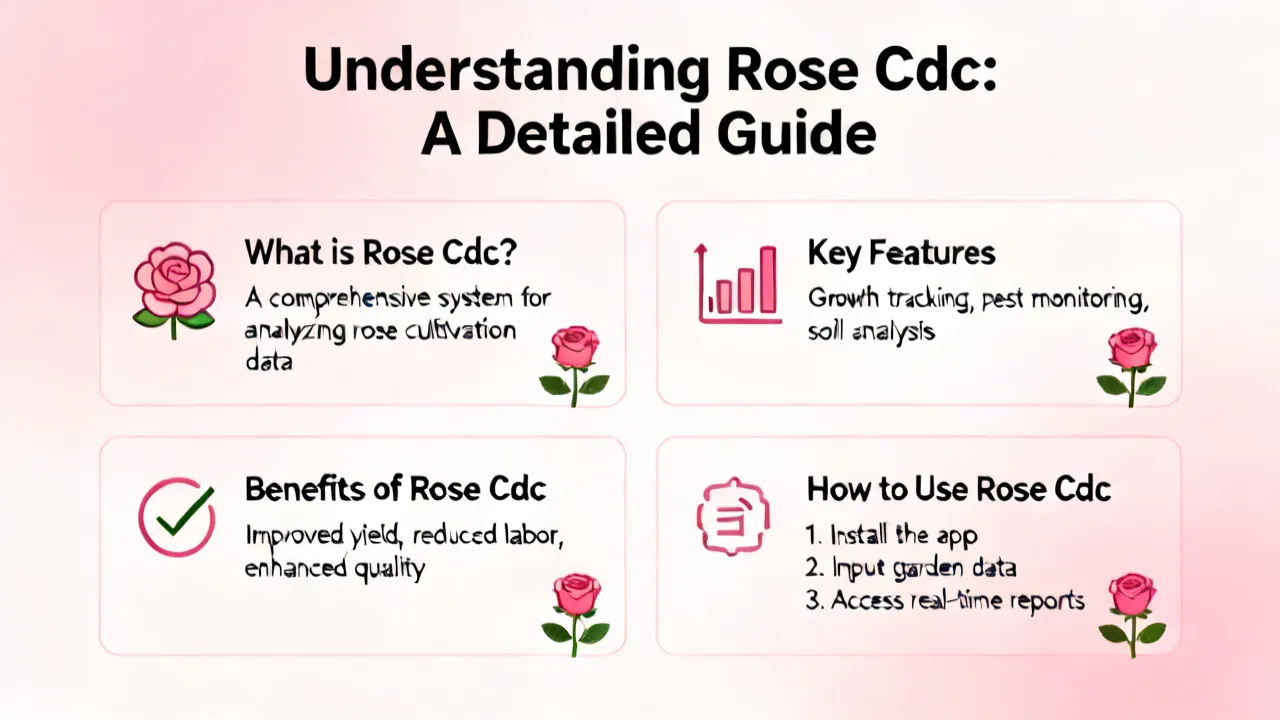
Understanding Rose Cdc: A Comprehensive Guide
This article provides an in-depth exploration of Rose Cdc, a term rapidly gaining attention in specific industries. Our discussion delves into the significance and application of Rose Cdc, its potential impact on various sectors, and expert insights into its future developments. This comprehensive analysis is designed to inform readers about the multifaceted aspects of Rose Cdc, its current applications, and potential advancements.

Understanding Compliance and AML Strategies
This article delves into the intricate realm of Compliance and Anti-Money Laundering (AML) strategies, highlighting their significance in the corporate world. Compliance AML refers to the organizational adherence to legal standards and regulations to deter financial crimes, ensuring transparent and ethical financial practices. This comprehensive guide examines these strategies' complexities and their pivotal role in safeguarding economic integrity.
Mastering Inbound B2B Strategies
The foundation of successful B2B strategies often lies in the effective implementation of inbound marketing techniques. In today's globally connected business environment, inbound B2B strategies have become critical for companies seeking to engage target audiences, optimize lead generation, and establish long-lasting partnerships. Understanding these strategies is essential for companies aiming to thrive in competitive markets.

Exploring B2B MBA Opportunities
Dive into the dynamic world of B2B MBA programs, designed for professionals seeking to enhance their strategic and management skills in a business-to-business context. This comprehensive guide discusses the significance of B2B MBAs in today's market, highlighting how these programs equip leaders with the expertise to navigate complex B2B relationships and drive business success.

Understanding Whitewater Regenerative Blowers
Whitewater Regenerative Blowers are essential in various industrial applications for their efficiency in moving air and gases. These blowers are known for their durability and ability to operate continuously, making them a preferred choice for industries ranging from wastewater treatment to aquaculture. This article explores their features, benefits, and applications, offering readers a comprehensive understanding of their importance in modern industry.

Mastering Employee Retention Strategies
Employee retention has become a critical aspect of organizational success, particularly in the dynamic landscape of 2020. As businesses strive to maintain a stable and productive workforce, understanding effective retention strategies is essential. This article delves into key methods for enhancing employee satisfaction and retention, offering a comprehensive guide for HR professionals and business leaders alike.
