This guide explains how Payment Processing Systems work and how to evaluate them for reliability, security, and cost control. It provides objective background on payment orchestration, authorization flows, and risk controls, then adds a structured comparison of options, practical requirements, and decision steps—so businesses can align systems with their operational needs and compliance obligations.
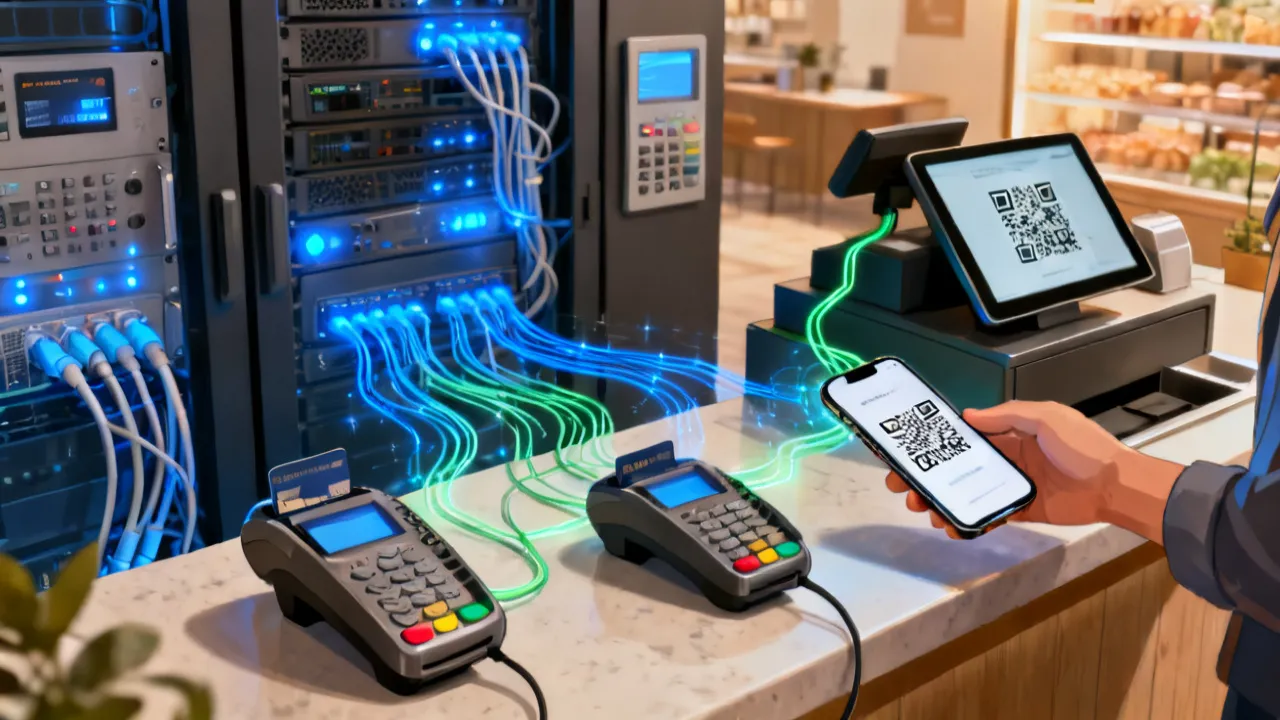
Choosing Payment Processing Systems is less about picking a “fast” checkout and more about selecting the right combination of authorization handling, security controls, reporting, and integration fit. In practice, the top-performing setup is the one that reduces payment failures, supports your payment methods, and matches your compliance and operational requirements—without creating hidden complexity in reconciliation or customer support workflows.
From an industry expert perspective, the very common mistakes occur after teams sign a provider agreement but then discover that settlement schedules, chargeback handling, reporting granularity, or integration approach don’t match how the business operates. A well-planned selection process prevents those gaps by clarifying what must be true for every payment lifecycle stage: authorization, capture, settlement, dispute, refunds, and accounting-ready reporting.
In many organizations, the payment stack becomes a critical business capability rather than a simple technical integration. That means procurement decisions should include operational realities: who responds when a payment fails, what data is available to support a customer, how finance confirms that the money that arrived matches what the system expected, and how support teams avoid giving conflicting messages when webhooks arrive late or a charge is reversed.
Deciding early matters because payment processing decisions influence the shape of your entire transaction data model. If you choose a platform that emits events with inconsistent identifiers or lacks stable schemas, you may later need a costly “translation layer” just to make the data usable for order management, invoice generation, ledger updates, and dispute evidence workflows. Conversely, a good early decision reduces complexity later by establishing clean identifiers, consistent event delivery behavior, and reporting exports that can be trusted.
Payment Processing Systems coordinate the pathway that a transaction takes—from the moment a customer initiates payment to the point funds are settled into the merchant’s account. Depending on the architecture, this may involve:
At a system level, successful payment operations require consistent, auditable event records and predictable handling of exceptions—timeouts, partial captures, network errors, authentication challenges, and edge cases like multi-currency or split payments. This is why experts focus on the entire lifecycle rather than only the user-facing checkout.
It helps to think of the payment lifecycle as a series of state transitions. A transaction starts as “initiated,” then may become “authorized,” then “captured,” then “settled.” Separately, it may later produce “refund,” “partial refund,” “chargeback,” or “adjustment” events. Each of these events can arrive at different times, sometimes out of order. An effective system makes those transitions explicit and provides enough metadata to reconstruct a complete story for finance and customer support.
Additionally, real-world payment operations are not only about card payments. Many modern businesses include alternative methods such as bank transfers, local payment methods, digital wallets, and cash-based channels. Even when those methods do not map perfectly to classic “authorization/capture” terminology, payment processing systems still need to provide consistent status handling and reconciliation. That consistency becomes especially important when you run subscriptions, where payment cycles repeat and customer expectations are shaped by every event that occurs across months.
The following areas typically determine whether a Payment Processing Systems rollout improves conversion, reduces operational overhead, and supports sustainable compliance.
Although there are many “nice to have” features—advanced dashboards, marketing-oriented fraud UI, or instant payout announcements—operational value often comes from a small set of practical capabilities. If you prioritize those early, you prevent later integration rework and avoid growing operational costs as transaction volume increases.
Consider whether the system is implemented via APIs, hosted payment pages, SDKs, or a hybrid approach. Each method affects control over customer experience, PCI scope boundaries, and the effort required to connect payments to order management, invoicing, and refunds.
Expert lens: Teams often underestimate how integration design affects reconciliation. If events (authorization/capture/refund/chargeback updates) arrive in inconsistent formats or with insufficient identifiers, finance teams may rely on manual corrections.
Integration design also impacts how quickly your engineering team can reach operational stability. “Time-to-stability” is not a single metric; it is the period between launch and the point where your failure rates and operational procedures become predictable enough that incidents are routine rather than disruptive. A system with clear documentation, consistent event schemas, stable idempotency patterns, and predictable webhook delivery behavior generally leads to faster stability.
When evaluating integration models, teams should ask not only “How do we connect?” but also “How do we manage change?” Payment processing evolves: new payment methods get added, risk tuning changes, issuers introduce new authentication behaviors, and reconciliation requirements can shift when you modify your invoicing workflow. A good integration provides versioning policies, backwards compatibility commitments, and clean deprecation timelines.
Practical questions to include in early evaluation:
Payment security is not only a provider feature—it is a shared responsibility model. Even when a provider handles card data in a tokenized flow, merchants still need controls around authentication, access management, logging, and secure software development practices.
Practical requirement: Verify how the solution supports audit trails, least-privilege access for dashboards, and secure handling of webhooks and callbacks (including signature verification and idempotency).
Reliable source basis: The Payment Card Industry Data Security Standard (PCI DSS) is published and maintained by the PCI Security Standards Council. When evaluating solutions, use PCI DSS documentation and scope guidance rather than vendor marketing claims. (Source: PCI Security Standards Council, PCI DSS overview and guidance documents: pcisecuritystandards.org.)
It’s important to treat PCI scope as something you manage, not something you “check once.” A system that reduces card data exposure can help, but you still need to manage where logs go, how data is masked, how secrets are stored, and how internal access is controlled. Many payment incidents occur not because a provider “failed” but because merchants inadvertently stored sensitive data in application logs, leaked credentials in misconfigured environments, or failed to validate webhook signatures properly.
Security evaluation should cover:
Also consider operational security. Incident response for payment systems differs from typical web incidents because financial events and customer communications can be involved. You should clarify who the provider contacts during incidents and how you can verify that events match expected transactions without exposing sensitive data internally.
A mature Payment Processing Systems setup clarifies what happens when:
Expert lens: Look for idempotent transaction handling, event ordering clarity, and documented reconciliation mapping. These reduce disputes caused by mismatched evidence and prevent duplicate charges.
Edge cases are where most payment operational pain originates. “Duplicate charges” are a classic outcome of inadequate idempotency or unclear retry behavior. For example, a customer presses “Pay” twice because the UI timed out. Your checkout calls the payment API twice. Without idempotency keys or robust deduplication, you might end up creating two distinct payment intents. Later, you need to reverse one of them, which can create delays for both customer satisfaction and accounting.
Another major edge case involves capture behavior. Some platforms support manual capture after authorization; others automatically capture immediately. Subscription models often rely on periodic authorization and capture patterns. You need to confirm how those patterns map to your business operations. For instance:
Then there is the question of how authentication challenges affect state. In regions with strong authentication requirements, payment flows may require additional user interaction (challenge flows). This can change how quickly you learn whether a payment will succeed. Your integration must handle “pending” states and update your order status appropriately. If you mark an order as paid too early and later receive a failure, customer support can face difficult “we told you it worked” situations.
Finally, event ordering and webhook delivery behavior needs careful attention. In distributed systems, “out of order” events are normal. What matters is whether the provider includes sufficient metadata to reconcile state correctly. For example: does the webhook event include a “current status,” or do you only infer status from a sequence of events? If you only infer, you need a careful state machine in your integration.
When you evaluate, request documentation and examples for:
Fraud prevention should be tuned to your business model. A one-size approach can either block legitimate customers or increase fraud exposure. Similarly, chargeback workflows must align with the evidence your operations can realistically provide (proof of delivery, customer communications, subscription logs, etc.).
Reliable source basis: The European Central Bank and other regulators have published payment-related guidance and payment fraud discussions that highlight the need for effective controls and monitoring. For general fraud and payment security concepts, consult authoritative public resources such as central bank publications and, for card disputes, industry documentation and regulatory bodies. (Source examples include ecb.europa.eu and national regulators.)
Risk controls in modern payment systems are rarely “set and forget.” If you start with broad rules, you may block too much early and hurt conversion. If you start with permissive rules, you might accept fraud while you learn your real fraud patterns. A mature system supports iterative tuning—meaning you can observe outcomes, apply rules per product category or geography, and update risk parameters without rebuilding the whole integration.
Also clarify the division of responsibilities. Some providers offer fraud scoring and decisioning, but merchants often still need to decide what to do with a fraud score. You should define a fraud action policy early, such as:
Chargeback operations must match your operational capabilities. Dispute workflows are not only about responding on time; they are about building a repeatable evidence collection process. Evidence requirements differ by dispute reason and region. A key selection question is whether your Payment Processing Systems can export structured dispute data and provide fields needed for evidence submissions.
For example, if your business ships physical goods, you need proof of delivery. You likely store shipment data in a logistics system. The ideal integration provides stable references between an order and the dispute. Then your disputes workflow can automatically assemble evidence. If references are missing or inconsistent, you may end up manually searching for evidence per case, which scales poorly.
Additionally, the system should support a dispute status lifecycle that reflects what your operations teams need. You want statuses such as “received,” “needs evidence,” “submitted,” “won/lost,” or similar. You also need access to dispute reason codes that help you improve risk rules or fulfillment processes.
Finally, consider how refunds affect disputes. Many disputes relate to refunds that did not fully process, refunds that processed late, or partial refunds that were issued incorrectly. Your integration should reconcile refund events precisely so that customer support can explain what occurred and finance can confirm the ledger.
Many systems show transaction metrics, but only a subset produces reconciliation-ready detail such as:
Expert lens: Ask how reporting data is exported and how you link it to order IDs, invoice IDs, or subscription IDs. If reporting lacks consistent identifiers, the “real cost” is staff time.
Reporting is frequently underestimated during procurement because dashboards look convincing. But finance teams need something different than a dashboard. Finance needs repeatable exports or API access to transaction-level data, stable identifiers that match their internal ledgers, and fields for fees, adjustments, and FX. They also need a consistent approach to timestamps and settlement periods to avoid manual adjustments.
To evaluate reporting depth, ask for samples. For example, request:
Consider reconciliation drift. Drift occurs when what finance expects from internal order data differs from what the payment provider reports as settled. Drift can come from timing differences (settlement arrives later), mapping issues (incorrect reference IDs), or partial captures/refunds that aren’t correctly linked. A robust Payment Processing Systems setup makes reconciliation deterministic by providing explicit fields for reconciliation and by enabling consistent mapping to internal systems.
Also check whether reports expose the data you need to compute accounting entries. For example, you may require:
One common operational issue is time zone confusion. If your ledger uses UTC but provider reports in a local timezone—or the reverse—you might end up reconciling the wrong day’s settlement. Early clarification prevents recurring accounting adjustments.
Pricing for Payment Processing Systems varies by region, payment types, business volume, and integration choices. Rather than relying on a single headline number, experts model the full cost of ownership across:
Important note: The terms you negotiate and the final fee schedule are the only dependable basis for cost estimates. For an accurate business case, request the provider’s current fee sheet and clarify how settlement timing affects cash flow planning.
A responsible cost model also includes operational costs that don’t show up in provider invoices. For example, if a payment system’s webhook retries are unclear and create frequent reconciliation mismatches, you may incur ongoing staff time. If reporting does not provide enough fields for finance to reconcile automatically, you might need spreadsheets or manual processes.
When modeling pricing, consider cash flow impact. Settlement timing affects your working capital. Two providers with similar per-transaction fees may produce very different effective costs if settlement is delayed or if payout schedules differ. To estimate this, many finance teams compute:
You should also confirm whether pricing differs by region and method. For example, local payment methods might have different fee mechanics compared to card payments. If you plan to expand into multiple markets, ensure your fee model remains realistic beyond your current transaction mix.
Finally, don’t forget implementation costs. Even if the provider charges low fees, your integration work may be expensive if you need a complex translation layer to map events to your internal system. If you anticipate frequent changes (new products, new subscription logic), choose a provider whose API and event schemas minimize integration brittleness.
When organizations evaluate Payment Processing Systems, they typically choose among these patterns:
Pros: Faster implementation, potentially reduced PCI scope for card handling, consistent provider-managed UI compliance features.
Cons: Less control over customer experience, reliance on provider page flows for edge cases, and limitations on customizing certain UX elements.
Hosted checkout can be an efficient starting point, particularly for teams that want to reduce engineering work and accelerate time-to-market. In this model, you typically embed a provider-controlled payment page or redirect flow. The provider manages a large portion of the payment UI and may also handle some authentication flows. This can reduce PCI scope depending on the specific architecture and how you handle card data (again, scope must be verified with your compliance assessor).
However, hosted approaches can introduce operational friction if you have complex logic around order states. Suppose your business wants to show real-time order updates, estimate delivery windows, or apply dynamic discounts that depend on payment outcome. With hosted checkout, you often need to rely on redirects and callback flows, which can delay when you can show “paid” vs “pending” states.
Also consider localization. If you operate across multiple markets, the provider’s hosted UI language and customization capabilities can impact customer comprehension. Vague or inconsistent error messaging can increase retry behavior, creating duplicate payment attempts if idempotency isn’t properly handled.
Pros: Full control over checkout experience, tighter integration with order management and personalization, smoother handling of complex flows like subscriptions and split payments.
Cons: Higher engineering and QA effort; requires careful security design and robust webhook/event handling.
Custom checkout often appeals to businesses with strong product and UX requirements. It can also help when you need to integrate payment outcomes tightly with your order management system. For example, you may want to create an order record before payment and then update it with payment statuses. In this model, you can control the “pending” and “success” states more precisely.
But it shifts responsibility to your team for event handling robustness and customer communication clarity. You must manage asynchronous payment outcomes and ensure your UI is consistent even when webhooks arrive late. If you fail to build a clear state model—such as “pending authentication,” “authorized,” “captured,” “refunded,” “chargeback initiated”—your customer support workload can grow rapidly.
Custom integration also needs strong testing. You should test against timeouts, 3D Secure flows, partial captures, and refunds, not just successful payments. Provider sandbox environments can help, but some edge cases only occur in real-world conditions; plan for early observation and iterative tuning.
Pros: Potentially improved authorization performance by routing to the top available acquiring option based on rules.
Cons: Added complexity in debugging and increased need for clean observability (logs, correlation IDs, and event tracking).
Orchestration is often marketed as an optimization for approval rates. In reality, it’s a powerful tool that can route transactions through different acquiring paths. It can improve performance, but it makes debugging and reconciliation more complex. When a transaction fails, you may need to understand which route was used and whether a different route would have succeeded. This requires better observability and consistent correlation IDs.
Orchestration also adds a layer between your business and acquiring outcomes. If you depend on specific processor features (for example, certain authentication behaviors or dispute evidence fields), you need to ensure orchestration supports those requirements across all routes.
To evaluate orchestration, ask for:
This section presents a structured, practical method used by many payment operations teams to evaluate Payment Processing Systems before committing to procurement.
To make this evaluation process even more actionable, teams often add two extra steps that reduce risk during the procurement-to-implementation transition:
A final “pre-commit” step that many mature teams use is a joint session with engineering, finance, and customer support to walk through realistic scenarios. For instance: “What happens if capture fails after authorization?” “How does support view the customer’s transaction history?” “What does finance see in the export?” “Where do we record exceptions and who resolves them?” When everyone answers consistently, the rollout is less likely to produce cross-team misunderstandings later.
The table below compares common Payment Processing Systems supplier capabilities and the conditions you should verify during evaluation. (No links are included in the table, per your request.)
| Evaluation Area | What to Compare | Conditions / Requirements to Verify |
|---|---|---|
| Core payment flow | Authorization and capture support, support for refunds and adjustments | Confirm documented behavior for partial captures, retries, and out-of-order events; ensure idempotency guidance is provided |
| Routing and orchestration | Rules-based routing, failover logic, and multi-acquirer behavior | Request test results for failure categories; verify correlation IDs for tracing and debugging |
| Security & compliance alignment | Tokenization approach, PCI scope management, encryption and webhook security | Verify webhook signature verification expectations; confirm access controls, audit logs, and secure API practices |
| Webhooks and event delivery | Event coverage, delivery reliability, replay behavior | Confirm retry and replay mechanisms; require event schema stability and versioning policy |
| Reporting & reconciliation | Settlement, fees, FX details, dispute status reporting | Request reconciliation samples; verify mapping fields to your order/invoice IDs and consistent timestamps |
| Dispute / chargeback tooling | Evidence workflows, reason code handling, statuses | Confirm evidence formats and submission deadlines; validate whether reason-code data aligns with your operations |
| Operational support | Escalation pathways, support hours, incident communication | Ask for a support model description and an example escalation workflow; confirm SLAs or response-time expectations |
| Pricing mechanics | Fee structure, monthly charges, and potential dispute-related costs | Require the full fee schedule; clarify how settlement timing affects cash flow and how refunds are charged |
When evaluating suppliers, also consider contract-level protections that influence operational stability. For example, ask about uptime commitments, incident communication procedures, and what happens if provider APIs change. While these details may not be part of the technical integration, they shape your ability to manage risk during launch and subsequent operations.
Even with strong vendor capabilities, the success of Payment Processing Systems depends on how the solution is operated day-to-day. Expert teams typically implement observability and governance before enabling new payment methods.
“Good” implementation has three visible outcomes: (1) fewer payment failures and fewer customer-facing ambiguities, (2) easier reconciliation and accounting, and (3) predictable dispute and refund handling that support teams can explain to customers. Achieving these outcomes requires more than technical correctness; it requires operational readiness.
Monitoring should be designed around operational questions, not just around technical metrics. For example:
Observability should also support “forensics.” When a customer claims “I was charged twice,” you need to reconstruct what happened: how many payment intents were created, whether idempotency deduplicated calls, what the final settlement status is, and whether refunds were issued. If your system has correlation IDs across all stages, this reconstruction becomes feasible.
Additionally, you should implement alerts that reflect business impact. For instance, alert when authorization success rate drops below a threshold for a given payment method. Alert on missing webhooks. Alert on unexpected spikes in duplicate payment attempts or refund failure. These alerts can be tuned once you have baseline metrics, but early alignment between engineering and operations ensures alerts are meaningful from day one.
Runbooks are essential for handling payment incidents without guesswork. For example:
A high-quality runbook is not only a “what to do” document; it includes decision criteria and evidence gathering steps. For example, a runbook for “capture failed after authorization” should specify:
For dispute runbooks, the key is evidence readiness. Your runbook should define the sources of evidence (order management, shipment tracking, customer messaging logs), how to retrieve them reliably, and how to submit within deadlines. If evidence fields are missing, your runbook should include fallback steps and escalation instructions.
Finally, runbooks should define what happens after an incident. For example, if a webhook signature verification failure occurred due to a misconfigured secret, the runbook should specify how to confirm that you recovered all missed events. Then you may need a reconciliation replay strategy to ensure internal states match provider states.
Where payment behavior differs by market, Payment Processing Systems should be configured to match local expectations. For instance, in many regions customers are accustomed to specific authentication flows, invoice formats, and settlement timing conventions. In practice, teams may need to align checkout UI language, error messaging style, and refund visibility with what customers expect in “nearby” markets—because support volume often correlates with clarity of payment outcome messages.
Expert lens: Review how decline reasons appear to users. If the wording is vague or inconsistent, customers retry in ways that can create operational overhead. Good systems pair technical accuracy with user-facing clarity.
Even when payments succeed technically, customer confidence depends on how you present outcomes. Consider three examples of communication issues that can materially affect operations:
To handle this, configure your integration to support a mapping from provider decline codes and failure categories to user-friendly messages. Also build a support-ready “payment status explanation” template so that support agents can answer consistently. If the provider’s raw error descriptions differ from what your customer-facing UI uses, ensure both engineering and support agree on the taxonomy.
Refund visibility also matters. In some markets, customers expect instant refund confirmation; in others, they understand that refunds can take multiple days to appear depending on bank processing. Your payment system should provide enough detail to support these explanations: refund status, timestamps, and expected settlement timing.
Finally, localization applies to evidence in disputes too. If disputes occur in a region where documentation language matters, you need to ensure that the evidence you submit is readable and compliant with required formats. While providers can support evidence submission, your operations workflows must be capable of producing the necessary documentation per market.
They are the technical and operational systems that coordinate the authorization, confirmation, settlement, reporting, and dispute handling of customer payments. In many businesses, they also include orchestration and fraud controls.
In practical terms, think of a payment processing system as the “brain” and “messaging layer” that turns card/network events into merchant-relevant outcomes. When done well, it produces a consistent set of transaction states that your systems—OMS, ERP, support tools, and accounting—can trust.
No. They typically connect the merchant to acquiring banks and card networks through provider infrastructure. The banks and networks remain part of the underlying rails, while the provider helps manage integration and operational workflows.
It can be helpful to separate responsibilities into layers: card networks and issuers determine card-level outcomes; acquiring institutions and processors help move transactions through the rails; the payment processing system orchestrates your merchant integration, event handling, and operational tooling around those outcomes.
Request documentation that shows how tokenization works, what your PCI scope will be, how webhooks are secured (e.g., signature verification), and what audit logs and access controls exist. Then validate responsibilities in your shared responsibility model and test webhook/event integrity in staging.
Security evaluation should also include how you handle secrets and logs. Ask for examples of recommended logging patterns: what fields are safe to log, how sensitive values are masked, and how to avoid accidentally persisting tokens or credentials. The provider’s UI or API might be secure, but your application can still introduce risk through logging misconfigurations.
You generally need stable identifiers that tie payment events to orders or invoices, plus settlement amounts, fees, refunds, and dispute statuses. Confirm that timestamps and time zones are consistent and that exports can be mapped reliably to your finance system.
Also consider reconciliation granularity. Some systems reconcile well at the transaction level but not at the settlement period level. You want to ensure you can reconcile both: (a) transaction-to-order mapping and (b) settlement-to-expected net totals for a date range. The inability to do either becomes a recurring operational burden.
Operational effort—especially when integration identifiers are missing or inconsistent, when webhook event schemas are unstable, or when reporting does not support finance workflows. Those gaps can turn into recurring manual work and prolonged dispute handling.
Hidden costs also arise when your business needs to support many payment methods and the provider’s reporting or evidence tooling doesn’t cover them well. Each additional method increases complexity in how you detect issues, explain statuses to customers, and produce reconciliation exports. That’s why consistent identifiers across methods are so valuable.
It depends on transaction volume, failure rates, payment methods, and operational maturity. Orchestration can help with routing and authorization performance, but it also adds complexity. Many smaller teams start with a simpler integration and expand once they have robust monitoring and reconciliation processes.
Even if you start without orchestration, you can design your integration to remain compatible. Build your internal transaction data model around stable references and event-driven state transitions so that if you later add routing capabilities, the rest of your systems can adapt without a full redesign.
Create test scenarios for authorization success/failure, capture failures, refunds, duplicate payment attempts, webhook delays, and dispute events. Verify end-to-end mapping from checkout to backend to reconciliation exports and ensure your runbooks cover each scenario.
Testing should include a “state reconciliation test.” For each simulated scenario, check that your internal OMS/ERP states match the provider’s final transaction status. Don’t only test API calls; test event ingestion and downstream consequences. Many integration failures occur when webhooks arrive and your state machine doesn’t handle them correctly.
Track authorization success rate, decline rates by category, payment failure causes (network vs. issuer), webhook delivery reliability, settlement timing consistency, refund turnaround behavior, and dispute outcomes. Use these metrics to guide iterative tuning of routing and risk settings.
For operational maturity, also track “time to resolution” for key incident categories. For example, if a webhook delivery fails, how quickly do you detect it and correct internal state? If a dispute is missing evidence, how quickly can your operations team produce it? These operational metrics are often more predictive of customer experience than purely technical uptime.
In the selection of Payment Processing Systems, the winning approach is disciplined: evaluate the entire payment lifecycle, validate security responsibilities, ensure reporting supports reconciliation, and build operational runbooks for edge cases. When you do this, you reduce payment disruption, improve customer confidence, and create a platform that can evolve—whether you add new payment methods, expand into additional “nearby” markets, or scale transaction volume.
The key is to decide early on what “correct” means for your organization: how payments transition through states, how identifiers flow through systems, how finance validates what arrives, and how support explains outcomes. When those decisions are made up front, your payment processing system becomes a reliable capability rather than an ongoing source of operational surprises.
If you want, share your business model (e-commerce, subscriptions, marketplaces, or in-person payments), your target payment methods, and your current stack (OMS/ERP/checkout). I can then help you translate these criteria into a tighter supplier short-list and an evaluation checklist tailored to your environment.
Striking the Perfect Balance: Navigating Premiums and Out-of-Pocket Expenses in Senior Insurance Plans

Explore the Tranquil Bliss of Idyllic Rural Retreats

How to Make Lasting Memories at Disneyland Attractions

Affordable Phones and Plans for Seniors

Affordable Full Mouth Dental Implants Near You

Unlock the Top Kept Secrets to Finding Your Ideal Dentist for Flawless Dental Implant Results!

Discovering Springdale Estates

Unveiling RS Sul Telecom Services

The Guide to Car Trading


Understanding the Concept of Ibiaeon
Dive into the groundbreaking concept of Ibiaeon, a theoretical model that combines technological advancements with philosophical perspectives. Ibiaeon represents a unique intersection where innovation meets ethical considerations, aiming to offer sustainable solutions for future societal challenges. This guide presents a deep analysis of the possibilities and implications associated with Ibiaeon.
Understanding the Sage Cte Platform
Sage Cte is a powerful software offering comprehensive solutions for businesses across various industries. This article delves into its capabilities, exploring its integration with different systems, cost implications, and the significance of choosing the right supplier. By understanding Sage Cte, businesses can make informed decisions for optimal operational efficiency and competitive advantage.
An In-Depth Look at Salesforce
Salesforce is a transformative cloud-based customer relationship management (CRM) platform that empowers businesses to streamline their sales, service, and marketing efforts. Known for its robust suite of tools and global reach, Salesforce has become an industry standard in CRM solutions, providing businesses with unparalleled insights and automation capabilities essential for growth and customer retention.
Seamless Integration of Sagepay and Salesforce
This guide highlights the integration of Sagepay with Salesforce, emphasizing the importance of harmonizing payment processing with customer relationship management. Sagepay offers secure online payment solutions, while Salesforce provides comprehensive CRM services, both popular among businesses seeking efficiency. Explore how they complement each other for enhanced business functionality.

Plansource BambooHR: Expert HR Platform Comparison Guide
Plansource BambooHR helps organizations standardize HR workflows with modern recruiting, onboarding, and people analytics. This guide explains what the keywords typically refer to in HR technology contexts, outlines how businesses evaluate these platforms, and provides an expert comparison framework so HR leaders can make informed sourcing decisions based on requirements, implementation scope, and total cost considerations.
Integrating Sagepay with Salesforce
Integrating Sagepay with Salesforce streamlines business operations by combining sophisticated CRM capabilities with a secure payment gateway. This fusion allows businesses to efficiently manage customer relations and transactions within one seamless framework. Sagepay ensures secure and swift payments, while Salesforce aids in comprehensive customer relationship management, enhancing overall operational productivity and customer satisfaction.
