This guide explains how StandUp Wireless Phones fit within the federal Lifeline phone program, including plan features, eligibility rules, application steps, device choices, and possible extra charges. It also compares StandUp Wireless with SafeLink Wireless, Assurance Wireless, Access Wireless, and True Wireless. Lifeline support is administered through approved providers, while availability, data allowances, device options, and requirements may differ by state and household circumstances.
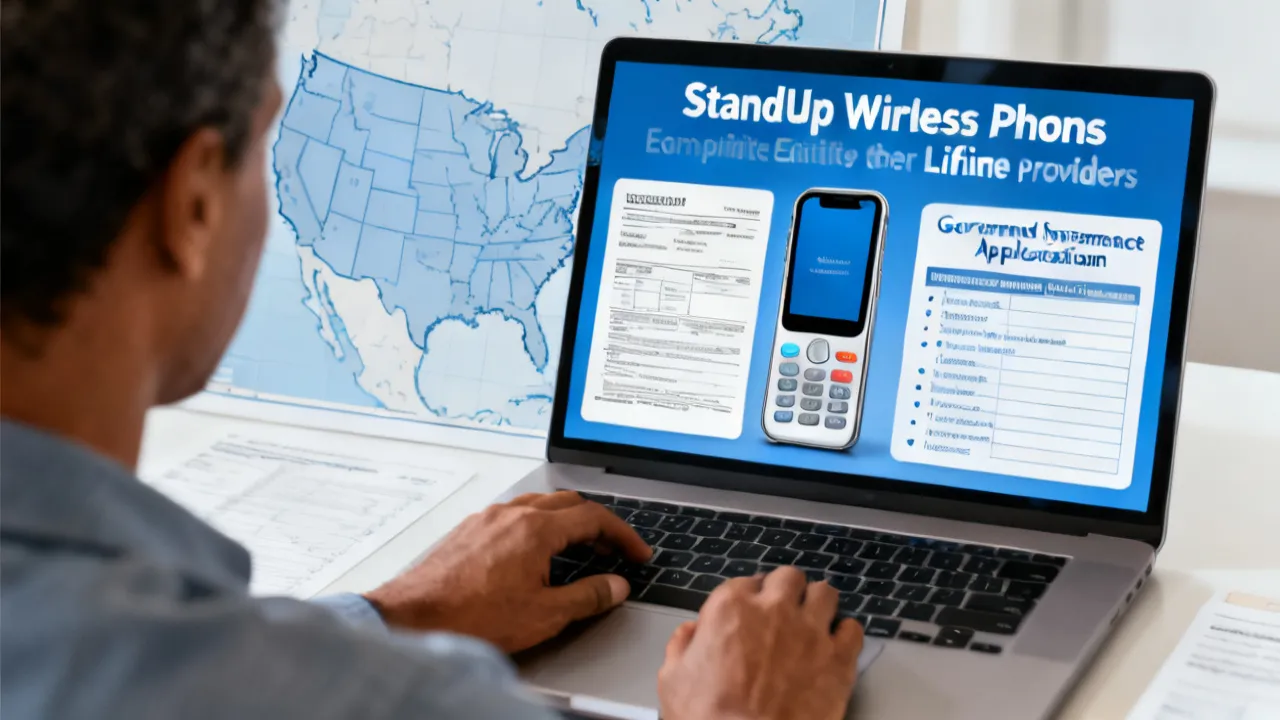
StandUp Wireless Phones are devices and wireless service options offered through StandUp Wireless, a participating provider in the federal Lifeline program. Depending on the applicant’s state, eligibility category, and available inventory, an approved household may receive a smartphone or use an eligible existing device through a bring-your-own-device option. Plans commonly include voice service, text messaging, and a defined amount of mobile data, although the exact allowance, network arrangement, device selection, and activation process can change.
The important point for applicants is that approval is not based only on wanting or needing a phone. The applicant must qualify under the program rules, complete an eligibility review, and meet provider-specific enrollment conditions. Lifeline generally supports one benefit per household, not one benefit for every individual in a household. A household is normally understood as people who live at the same address and share income and expenses, subject to the program’s formal definitions.
StandUp Wireless is one of several companies that may participate in government-supported wireless service. Other commonly recognized providers include SafeLink Wireless, Assurance Wireless, Access Wireless, and True Wireless. These companies can offer different plans in different states. Consequently, a package advertised in one location may not be available in another, and a provider’s plan may change without the provider continuing to offer the same handset or data allowance.
Applicants should also distinguish between a subsidized service benefit and a particular handset model. The program helps support qualifying telecommunications service. A provider may supply a basic smartphone, offer a bring-your-own-device route, or present upgraded models at an additional cost. A specific brand, storage capacity, camera specification, screen size, operating system, or condition should never be assumed before the provider confirms it in writing.
For many households, a phone connected to affordable wireless service is an important link to employment, schools, health-care offices, transportation, public agencies, family members, and emergency contacts. The value of the service therefore depends on more than the device itself. Coverage, data limits, account rules, customer support, and the ability to keep the phone active all deserve consideration before enrollment.
From an industry perspective, the safest approach is to treat the phone as one part of a regulated service enrollment rather than as a retail promotion. A careful applicant first confirms eligibility, then verifies the plan’s monthly data policy, device terms, renewal requirements, account activity rules, and possible fees.
The federal Lifeline program is administered by the Federal Communications Commission and supported by the Universal Service Administrative Company. Its purpose is to make qualifying voice or broadband communications services more affordable for eligible low-income consumers. Participating providers apply the benefit to an approved service plan according to federal and state rules.
In everyday language, people often refer to a phone obtained through Lifeline as a “government phone” or an “affordable government phone.” However, the program is more accurately understood as a service benefit. The device, monthly allowance, activation process, and upgrade policy are determined by the participating provider. Some providers supply a handset as part of an eligible package, while others emphasize bring-your-own-device enrollment.
This difference is useful when evaluating an offer. The Lifeline benefit is not necessarily a promise of a particular smartphone, unlimited mobile data, free accessories, or permanent service without any further action. Instead, it helps an eligible household obtain qualifying communications service. The participating company establishes the details of the package within the applicable federal and state requirements.
The Affordable Connectivity Program, or ACP, was a separate federal benefit that supported internet connectivity for eligible households. The ACP ended when funding was exhausted in June 2024. Because the reference information for this article is dated October 2023, any historical description of ACP benefits should not be read as confirmation that ACP enrollment is currently open. Applicants should consult official federal resources for present program status.
This distinction matters because older websites and search results may combine Lifeline and ACP language. A page that once described combined benefits may no longer reflect current federal funding, plan structures, or enrollment rules. StandUp Wireless Phones and similar offers should therefore be checked directly through the provider and official government sources before an applicant submits personal documents.
After a person submits an application, eligibility information is reviewed through the required verification process. If the applicant is approved and the provider serves the applicant’s location, the provider may offer one of several arrangements:
The phrase “unlimited talk and text” can have a specific meaning within a plan but does not necessarily mean that every feature is unlimited. Data may be capped, slowed after a threshold, subject to network management, or limited by coverage conditions. Hotspot access, international calling, video quality, roaming, and premium messaging may be governed by separate terms.
An expert review of any StandUp Wireless plan should examine at least five factors: the monthly data allowance, the speed after the allowance is reached, the network used, the expiration or renewal rules, and the customer’s responsibility if the account is inactive. These details often affect the real usefulness of a phone more than the handset’s appearance.
Applicants should also ask how the first month is calculated. Some services begin the service period on the activation date, while others use a monthly cycle. A phone activated near the end of a billing period may have less available data before the next renewal. Understanding the cycle helps customers avoid believing that an allowance has disappeared unexpectedly.
The following comparison rephrases the supplied provider information. It is intended as a starting point rather than a guarantee of current plan availability. Offerings may vary by state, eligibility category, network arrangements, inventory, and regulatory changes.
| Provider | Services commonly described in eligible plans | Possible additional package costs |
|---|---|---|
| SafeLink Wireless | A provider-supplied smartphone or bring-your-own-device option, with voice, text, and data that can vary by plan and state. | Premium handset upgrades or extra data may require payment. |
| Assurance Wireless | An Android smartphone may be offered, together with talk, text, and a stated data allowance. | Extra high-speed data and international calling may be optional paid services. |
| StandUp Wireless | A smartphone or bring-your-own-device option, voice and text service, and a data plan subject to location and program rules. | Higher-tier devices or additional data may carry a charge. |
| Access Wireless | Voice, text, and a limited amount of high-speed data may be available under eligible Lifeline service; historical descriptions also referenced ACP support. | Data boosts and device upgrades may be offered for a fee. |
| True Wireless | A provider-supplied handset and supported voice and data service may be available to qualifying customers. | Improved devices or additional data packages may cost extra. |
Source: The provider websites and federal program resources listed below. Plan terms should be confirmed directly with the relevant provider before applying.
source: www.safelinkwireless.com
source: www.assurancewireless.com
source: standupwireless.com
source: www.accesswireless.com
source: www.gotruewireless.com
When comparing these providers, consumers should avoid treating the table as a ranking. A provider with a larger advertised data allowance may not have the best coverage at a particular address. A company offering a newer handset may have different activation, replacement, or recertification policies. The most suitable choice is the one that combines eligibility availability, reliable coverage, manageable terms, and features appropriate to the household’s needs.
Applicants generally qualify through either an income pathway or a program-participation pathway. The two routes are separate, but the applicant must still satisfy the provider’s documentation and identity requirements.
Under the standard Lifeline rule, a household may qualify when its income is at or below 135% of the federal poverty guidelines. The relevant limit depends on household size and, in some cases, the applicant’s state or territory. Federal poverty guidelines are updated periodically, so an old income figure should not be used without checking the current official table.
Income can include wages, self-employment earnings, unemployment compensation, Social Security benefits, pensions, and other sources recognized by the program. Documentation may include a recent pay statement, tax return, Social Security statement, or an official benefits letter. The exact documents accepted can differ according to the verification route.
Household size is important because the income limit generally changes as the number of people in the household changes. Applicants should use the program’s definition of household rather than simply counting everyone who happens to be present at an address. People who share housing but do not share income and expenses may receive different instructions during the application process.
A person may also qualify by participating in a recognized assistance program. Examples commonly associated with Lifeline include:
Participation must normally be current and verifiable. A past approval, an application that has not yet been accepted, or a benefit received by an unrelated person may not be sufficient. If a child or another household member qualifies, the applicant may need to show the relationship between that person and the household.
Residents of qualifying Tribal lands may receive enhanced Lifeline assistance or may qualify through additional Tribal programs. The rules can involve the location of the residence and the specific program in which the household participates. Applicants should not rely on a general map or an informal description of Tribal boundaries; the official eligibility system or provider should confirm the location.
Lifeline generally limits participation to one benefit per household. This does not necessarily mean one benefit per address in every circumstance, because the program has rules for people who share an address but maintain separate economic households. Where more than one household shares a residence, the applicant may need to complete a household worksheet or provide additional information.
Maintaining more than one benefit through inaccurate information can lead to de-enrollment, repayment obligations, or other compliance consequences. Applicants should report an existing Lifeline benefit and ask the provider for guidance when moving from another participating company. A person who moves should also update the service address because an account may be connected to both eligibility and geographic availability.
The exact document list depends on the verification method, but applicants should prepare clear, readable copies of materials such as:
Documents should be current, consistent, and submitted through the provider’s secure application channel. Applicants should avoid sending sensitive identity documents through unofficial social media accounts, unfamiliar email addresses, or links received from unknown senders. A legitimate application page should explain why information is collected and how it will be used.
Names and addresses should match across the application and supporting documents whenever possible. Differences caused by abbreviations, apartment numbers, marriage, or a recent move can delay review. If the address is unusual or shared, the applicant should explain the circumstances through the official support channel rather than submitting repeated applications.
Good document preparation can reduce avoidable delays. Images should include all four corners of the document, be free from glare, and show the relevant text clearly. Applicants should not crop out names, dates, addresses, or case information that the verifier needs. At the same time, documents should be uploaded only through a trusted portal and retained securely afterward.
Begin with the official Lifeline information source and check whether the service benefit is available in the applicant’s state. Do not assume that an older ACP reference remains active. Review current federal notices and the provider’s current enrollment page.
Determine whether the applicant qualifies through income or participation in a recognized assistance program. Use the current federal poverty guideline information when following the income route. If the applicant receives Medicaid, SNAP, SSI, or another qualifying benefit, locate the relevant case number or award documentation.
Compare providers serving the applicant’s location. For StandUp Wireless Phones, confirm whether StandUp Wireless accepts applications in the state, what type of device is currently supplied, whether a bring-your-own-device option is available, and what data allowance applies.
Applications may be completed through the provider, the Lifeline National Verifier, or another authorized process. Enter the legal name, date of birth, address, and other information exactly as requested. Upload documents only through the official application system.
Verification time can vary. A request for more information does not automatically mean rejection. It may indicate that the system could not match the applicant’s identity, address, income, or program participation. Respond through the official channel and keep a record of confirmation numbers.
Approval through the eligibility system may not complete the entire service enrollment. The applicant may still need to accept provider terms, select a device, confirm shipping information, or activate a compatible phone. Read all plan details before completing this stage.
After receiving a handset or SIM card, follow the provider’s activation instructions. Test voice calls, text messages, data access, voicemail, and emergency calling. If the phone is intended for a child, older adult, or person with accessibility needs, test those features before discarding the packaging.
Lifeline accounts may require periodic recertification or confirmation that the customer remains eligible. Some providers also have usage or account activity requirements. Read notices carefully and respond by the stated deadline. A customer who changes address, loses qualifying benefits, or receives another Lifeline benefit should contact the provider promptly.
Many subsidized plans include voice minutes and text messaging, and some advertise unlimited use within defined terms. The applicant should check whether calls to international numbers, premium numbers, directory services, or special short codes are excluded. Text messaging may also have restrictions for premium content or automated services.
Emergency calling should remain a priority when testing service. Customers should understand how the phone reaches emergency services, whether location information is available, and what happens if the phone has no active data connection. A mobile phone should not be treated as a substitute for every local emergency communication option, particularly in areas with weak coverage.
Data is usually the feature very likely to differ among states and plans. A plan may provide a fixed high-speed allowance, then reduce the connection speed after that amount is used. Another plan may suspend data until the next monthly cycle or offer a paid data add-on. “Unlimited” language should be read alongside the provider’s fair-use, network-management, and speed policies.
Routine activities use different amounts of data. Email and text-based browsing may use relatively little, while video calls, streaming video, automatic photo backups, software updates, and social media video feeds can consume an allowance quickly. Customers who have limited data can reduce usage by connecting to trusted Wi-Fi, disabling automatic updates over mobile data, and lowering video quality.
StandUp Wireless may rely on a host mobile network, and coverage can vary by location, terrain, building materials, congestion, and device compatibility. A coverage map is useful but cannot predict reception inside every home. Applicants who live in rural areas, near state borders, or in mountainous regions should test the network where the phone will be used most often.
Coverage can also differ between outdoor and indoor locations. A customer may receive a strong signal outside but have difficulty inside a basement, concrete building, or rural structure. Wi-Fi calling, if supported by the phone and plan, may help in some locations, but applicants should verify whether it is available and how it operates.
A bring-your-own-device phone may need to be unlocked, compatible with the provider’s network technology, and capable of supporting the required voice and data services. Compatibility checks may require the phone’s IMEI or another device identifier. A phone that worked on one network may not support every feature on another network.
Before moving a personal device to a new provider, customers should back up contacts, photographs, messages, and authentication information. They should also confirm that the phone is not still subject to an unpaid financing arrangement or carrier lock. A compatibility result is not the same as a guarantee that every feature, including visual voicemail or Wi-Fi calling, will operate identically.
Mobile hotspot functionality is not automatically included. Some plans exclude tethering, while others count hotspot use against the main data allowance. Anyone who needs internet access for a laptop, schoolwork, telehealth, or remote employment should confirm this feature before selecting a plan.
International calling is commonly treated as an optional service or a separate rate category. Applicants should review destination rates and supported countries rather than assuming that an ordinary voice allowance covers international calls. Internet calling applications may also consume mobile data.
A qualifying service does not necessarily mean every related item has a low price. Providers may charge for optional upgrades or for features outside the supported package. Potential charges can include:
Consumers should request a complete price before accepting an upgrade. A plan page may show a device price separately from activation, shipping, monthly add-ons, or taxes. The customer should also ask whether an upgrade changes the monthly service terms or creates a separate installment obligation.
From a consumer-protection standpoint, the strongest practice is to save screenshots or PDF copies of the offer, terms, confirmation page, and payment receipt. If the final charge differs from the displayed price, these records can help when contacting customer service or filing a complaint with the appropriate regulator.
Applicants should be particularly cautious when a webpage uses words such as “free,” “guaranteed,” or “no cost” without displaying full terms. A standard phone may be provided without a device charge, while a specific premium model, express shipping method, accessory bundle, or extra data package may not be included. Ask the provider to identify which items are covered and which items are optional.
StandUp Wireless Phones may be suitable for an applicant who values an online application, a provider-supplied smartphone, or a bring-your-own-device option. SafeLink Wireless may appeal to consumers seeking both handset and bring-your-own-device possibilities, while Assurance Wireless is commonly associated with an Android handset and defined voice, text, and data service. Access Wireless and True Wireless may also serve eligible customers in selected states.
The top provider is not necessarily the one with the most attractive headline. A more useful comparison asks:
Provider comparison is especially important for households that depend on a phone for employment, medical appointments, school communications, transportation, or emergency contact. A smaller data allowance may be adequate for calls and messages but insufficient for frequent video meetings or streaming. In that situation, a bring-your-own-device arrangement or a different participating provider may be more practical.
Applications can require additional review for several ordinary reasons. The applicant’s name may not match government records, the address may be incomplete, the uploaded document may be unreadable, or the qualifying benefit may not yet appear in the verification system. A household may also have an existing Lifeline account that must be transferred or closed.
Submitting several applications to different providers at once can create confusion and may not accelerate approval. It is generally better to identify the issue, contact the official provider, and follow the instructions for correction. Applicants should not alter documents, use another person’s information, or misrepresent household composition.
When an application is denied, the notice should explain whether the reason relates to eligibility, documentation, duplicate participation, identity verification, or service availability. The applicant may have an appeal or dispute option. The correct process depends on the notice and the responsible agency, so the applicant should follow the instructions rather than relying on informal advice.
A delayed application is not always a sign that the provider has lost the request. Confirmation emails, application numbers, and screenshots can help customer service locate the record. If an applicant uses a public computer or another person’s device, the applicant should log out completely and avoid saving identity information in the browser.
Government-supported phone programs attract impersonation scams because applications involve personal information. A suspicious website may promise a specific premium phone, demand immediate payment to “reserve” an approval, or ask for banking details before explaining the plan. These are warning signs.
Use the provider’s official domain and begin from a trusted federal program page when possible. Check the spelling of the web address, look for secure connection indicators, and avoid links sent through unsolicited text messages. Do not provide an account password, Social Security number, or identity document to an unverified caller.
A provider may need personal information to verify eligibility, but the request should occur within an identifiable application process. If uncertain, close the page and type the official address into the browser manually. Consumers can also contact the provider using the telephone number or support form published on its official website.
Applicants should remember that caller ID can be falsified and that a scammer may know a person’s name or approximate location. Those details do not prove that the caller represents StandUp Wireless or a federal agency. A legitimate customer should be able to end the call and contact the company through an independently verified channel.
Ask about bring-your-own-device enrollment before requesting a new handset. Using an existing unlocked phone may provide a larger screen, better camera, improved accessibility, or more storage. Confirm compatibility and understand whether the provider supplies a SIM card or eSIM activation.
Review the high-speed allowance and post-allowance policy. People who use telehealth, online classes, navigation, or work applications should estimate their monthly data consumption. A plan with unlimited talk and text may still be unsuitable if the data threshold is low.
Review the household definition carefully. Roommates may constitute separate economic households, but the applicant may have to complete additional documentation. Never assume that each person at one address automatically qualifies for a separate benefit.
Check whether the residence qualifies for enhanced support and whether a Tribal program provides an alternative eligibility route. Keep official participation documents available and verify the address through the provider or federal eligibility system.
Ask about hearing-aid compatibility, large-text settings, emergency contact functions, simplified interfaces, and customer support. A handset supplied from current inventory may not meet every accessibility need. A compatible personal device can sometimes be a better option.
Applicants who need a phone for employment should check voicemail capacity, call quality, data limits, and number portability. If a customer already has an established number, the customer should ask whether it can be transferred and whether the current service must remain active until the transfer is complete. Ending the old account too early can create a risk of losing the number.
Students may need data for educational websites, authentication codes, and communication with schools. Caregivers may need dependable calling, location tools, medication reminders, or access to patient portals. These uses should be considered separately from occasional personal browsing because they may require more data or a more capable device.
Once service is activated, protect the account with a strong password and avoid sharing verification codes. Update the provider if the phone is lost or stolen. Ask whether the account can be suspended, the number transferred, or the SIM replaced. Keep the device’s IMEI, account number, and customer-service records in a secure location.
Applicants should monitor monthly notices and messages from the provider. A renewal request may require updated proof of eligibility, while a usage notice may explain how inactivity affects the account. If the customer no longer qualifies, the correct response is to notify the provider rather than continuing to use the benefit under outdated information.
Customers should also install operating-system and security updates when the phone supports them. A low-cost or refurbished phone can still contain important personal information, including contacts, photographs, email access, banking applications, and medical communication. Use a screen lock, avoid installing unknown applications, and erase the device before giving it to another person or returning it.
If a phone is lost, the customer should contact the provider as soon as possible. The provider may be able to block the SIM, protect the account, or explain replacement options. Customers should change passwords for email, financial accounts, and social-media services if those accounts were accessible from the missing phone.
StandUp Wireless Phones are smartphones or compatible-device service options associated with StandUp Wireless, a provider that may participate in the Lifeline program in selected locations. Device availability, plan allowances, and eligibility processing depend on the applicant’s state and current provider terms.
No. The applicant generally must qualify through household income or participation in an approved assistance program. The provider must also serve the applicant’s location, and the household must comply with the one-benefit-per-household rule.
Common qualifying programs include Medicaid, SNAP, SSI, and Federal Public Housing Assistance. Other qualifying categories may apply, including certain Veterans benefits and Tribal assistance programs. The official eligibility system should be used to confirm the current list.
No. Providers generally supply devices from available inventory. The model, condition, operating system, storage, and accessories can change. A customer who wants a particular model should ask whether an upgrade is available and what it costs.
Possibly. StandUp Wireless may offer bring-your-own-device enrollment in some locations. The phone normally must meet compatibility and network requirements. The provider’s compatibility checker or support team should confirm the device before activation.
Not necessarily. Voice and text may be described as unlimited, while data has a specified high-speed allowance or other restrictions. Review the current plan details to learn what happens after the allowance is used.
They may not be. Premium devices, additional data, international calling, accessories, and replacement equipment can involve charges. Request the full price and terms before accepting any optional package.
Generally, no. Lifeline normally permits one benefit per household. If a customer changes providers, the transfer or de-enrollment process should be completed through the official provider or eligibility system.
Sharing an address does not automatically determine whether people are one household or separate households. The program may request a household worksheet or additional information about finances and living arrangements.
The ACP was a separate federal program and ended when funding was exhausted in June 2024. Because the information in this guide uses an October 2023 reference date, readers should check current federal announcements rather than assume that an ACP offer remains available.
Processing time varies according to identity matching, document quality, application volume, provider procedures, and state availability. An incomplete or inconsistent application may take longer. Keep the confirmation number and respond promptly to any official request.
Read the denial reason and follow the stated correction or appeal process. If the issue is a missing document, submit the requested material through the official channel. If the issue concerns duplicate participation or household status, contact the provider or program administrator for specific instructions.
Be cautious of unsolicited messages, requests for payment before eligibility is explained, promises of a guaranteed premium handset, and websites with unusual domain names. Use the official provider sites and federal resources listed below.
In many situations, a customer may be able to transfer an existing number, but the process is not automatic. The number must generally remain active during the transfer, and the customer may need information from the current provider. Ask StandUp Wireless about number portability before canceling an existing account.
A move can affect eligibility records, service availability, household information, and billing or mailing details. Update the address through the official account process. Do not create a second account simply because the address changed.
StandUp Wireless can be a practical option for eligible consumers who need basic mobile connectivity and who live in a service area supported by the company. Its apparent strengths include smartphone availability, a possible bring-your-own-device pathway, and plan structures that may include voice, text, and data. These benefits are useful when the customer’s everyday needs match the allowance and network coverage.
Its limitations are typical of subsidized wireless service. Inventory may change, plan terms can differ by state, and a standard device may not match the performance of a premium retail phone. Data restrictions, upgrade costs, and recertification obligations also deserve close attention. An applicant should compare the complete plan rather than choosing solely on the basis of a device advertisement.
The appropriate decision depends on use case. Someone who primarily makes calls and sends messages may find a basic plan sufficient. Someone who streams video, uploads large files, works remotely, or uses a phone as a hotspot may need a different data arrangement. Coverage at the applicant’s home and workplace should be considered before activation.
In practical terms, the service is most likely to be useful when the household has a verified qualifying status, the selected network works reliably in the area, and the applicant understands the limits of the package. It may be less suitable when a person requires extensive high-speed data, a guaranteed premium handset, advanced international service, or specialized enterprise support.
The links below are provided as reference sources. Provider plans and government program rules can change, so applicants should verify current information directly.
The above information comes from online resources, and the data is as of October 2023. This website cannot guarantee that applicants will definitely get a government affordable phone. For specific application requirements and how to obtain it, please refer to the official requirements of the provider. This website will not be updated in real time.
Program eligibility, provider participation, device inventory, coverage, plan allowances, charges, and application procedures may change. Applicants should rely on the current official Lifeline resources and the provider’s current terms when making an enrollment decision. No particular phone model, data amount, approval outcome, activation date, or service feature should be considered guaranteed until it is confirmed through the official application process.
Striking the Perfect Balance: Navigating Premiums and Out-of-Pocket Expenses in Senior Insurance Plans

Explore the Tranquil Bliss of Idyllic Rural Retreats

How to Make Lasting Memories at Disneyland Attractions

Affordable Phones and Plans for Seniors

Affordable Full Mouth Dental Implants Near You

Unlock the Top Kept Secrets to Finding Your Ideal Dentist for Flawless Dental Implant Results!

Discovering Springdale Estates

Unveiling RS Sul Telecom Services

The Guide to Car Trading

Affordable Phones and Plans for Seniors
Discover the top deals on new phones and plans tailored for seniors, including discounts on 5G technology and unsold models.
Affordable Cell Phones Without Plans
Discover affordable cell phones for sale without plans, exclusive discounts for seniors, and tailored mobile plan options in your area.

Navigating Government Phone Programs
This guide provides an expert analysis of government-supported phone programs for eligible individuals, offering insights into available providers and their services. Affordable phones are often a necessity for individuals under economic constraints, aiding in communication, job searches, and access to emergency services. The article delves into eligibility criteria, application processes, and compares popular service providers in various regions.
Unlocking the Top Cell Phone Deals
Discover unbeatable cell phone discounts, plans, and offers for seniors and iPhone enthusiasts without contracts.
Navigating Affordable Phone Offers
Discover the essential details about government-assisted phone programs aimed at providing budget-friendly devices to eligible individuals. These programs offer complementary mobile phones and services to qualified beneficiaries, ensuring connectivity at minimal expense. This guide breaks down how to access such benefits and what conditions apply.
How to Apply for a Affordable Phone
This guide provides insights on how to apply for a affordable phone through government-sponsored programs. Understanding how these programs operate and their eligibility requirements is essential. These initiatives aim to support individuals in low-income households or those enrolled in specified government assistance programs by providing basic communication tools.