This guide explains how StandUp Wireless Phones work, who may qualify for Lifeline-supported service, what plans and device options can involve, and how to apply through official channels. StandUp Wireless is one of several participating providers that may offer a handset or bring-your-own-device service to eligible households. Program rules, coverage, data allowances, device availability, and optional charges vary by state and can change, so applicants should confirm current details with the provider and the National Verifier.
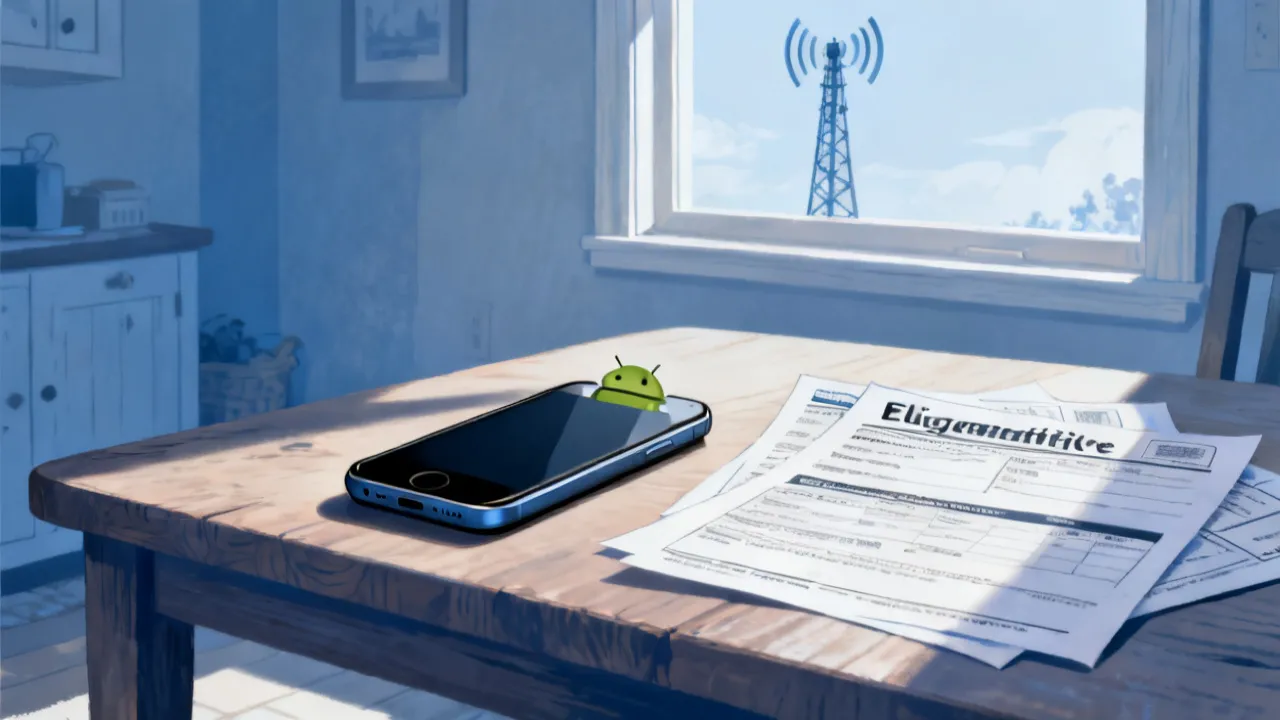
StandUp Wireless Phones are connected with a government-supported communications benefit designed to help qualifying households maintain access to voice, text, and mobile data services. The central program is Lifeline, a federal benefit administered through the Federal Communications Commission (FCC) and supported by the Universal Service Administrative Company (USAC). Depending on location, eligibility, inventory, and the applicant’s existing device, StandUp Wireless may provide a handset option or allow a customer to bring a compatible phone.
The very important point is that approval is not automatic. An applicant generally must qualify through household income or participation in an accepted assistance program, submit identity and eligibility information, and satisfy provider and state requirements. The benefit is normally limited to one supported service per household, not one service per person. A household also has an obligation to answer program-verification questions accurately and to report changes that may affect eligibility.
StandUp Wireless Phones may be suitable for people who need a basic communications connection for work, school, health appointments, family contact, public services, or emergencies. However, the handset, data allowance, network performance, and optional features can differ substantially. A device described as included with a plan may be an entry-level Android phone, while upgraded models or additional data may require payment.
Applicants should therefore evaluate the entire offer rather than focusing only on the handset. Important questions include:
From an industry perspective, these questions are more useful than comparing advertisements alone. Wireless assistance programs are regulated benefits, but the retail experience still depends on state rules, carrier policies, network availability, device supply, and the customer’s account status.
Lifeline helps qualifying consumers reduce the cost of eligible voice or broadband services. Providers such as StandUp Wireless participate in the program in selected areas and may structure plans according to the benefit available in a particular state. The exact service package is not uniform nationwide.
The federal Lifeline framework generally uses two principal qualification routes:
People living on qualifying Tribal lands may have access to additional Lifeline support or different eligibility pathways. Tribal assistance programs can include Bureau of Indian Affairs programs, Tribal Temporary Assistance for Needy Families, Food Distribution Program on Indian Reservations, and other recognized programs. Because the list and documentation rules can be specific, applicants should review the current requirements for their address.
The Affordable Connectivity Program (ACP) was a separate federal benefit that provided broadband-related support for eligible households. The reference material associated with this article mentions ACP at the time of the supplied information. Applicants should not assume that an ACP benefit remains available, because federal program status and funding can change. Current program information should be confirmed through USAC, the FCC, and the provider before an application is submitted.
Lifeline and other communications programs should not be confused with ordinary commercial discounts. The benefit is connected to federal eligibility requirements, verification procedures, consumer-protection rules, and continuing participation obligations. A person who qualifies today may need to confirm eligibility again later. Similarly, a plan that was advertised in one year may not have the same data amount, phone selection, or enrollment procedure in a later year.
StandUp Wireless may offer a supported smartphone, a bring-your-own-device option, or a service package that combines voice, messaging, and mobile data. The selection presented to an applicant may depend on the applicant’s state, eligibility category, available inventory, and whether the account is receiving Lifeline support.
A typical service package may include the following elements:
“Unlimited” should be read carefully. In wireless marketing, the term can describe the total ability to continue using a service while speeds, network priority, video resolution, hotspot access, or other functions remain subject to conditions. A customer who relies on mobile data for telehealth, remote learning, navigation, or employment should read the plan’s service terms before making a decision.
Customers should distinguish between an included allowance and a feature that is merely available on the network. For example, a phone may be technically capable of using a mobile hotspot, but hotspot service may not be included in the supported plan. Likewise, a device may support video calling through an application, while the associated data use counts against the monthly allowance.
The phone’s operating system can also affect the practical value of a plan. An older device may perform basic calling and texting well but struggle with modern applications, online forms, video appointments, or identity-verification tools. Before selecting a handset, applicants should consider storage space, battery health, camera quality for document uploads, screen size, charging-port type, and compatibility with accessibility settings.
The following comparison summarizes the providers identified in the supplied reference information. It is intended as a starting point rather than a guarantee of current availability. Each provider may serve only selected states, and the exact package can change according to program rules and enrollment status.
| Provider and official plan website | Services that may be included | Potential additional package costs |
|---|---|---|
| SafeLink Wireless | Smartphone or bring-your-own-device service; voice, text, and data allowances that vary by state and plan. | Premium handset upgrades or additional data may involve charges. |
| Assurance Wireless | Android smartphone option, talk and text service, and a data allowance subject to the current offer. | Extra high-speed data or international calling may be optional paid features. |
| StandUp Wireless | Smartphone or bring-your-own-device option, talk and text service, and a data plan for eligible customers. | Premium phone models and extra data may be offered for a fee. |
| Access Wireless | Voice, messaging, and limited high-speed data through applicable Lifeline arrangements; historical ACP references should be verified. | Data boosts and device upgrades may carry additional charges. |
| True Wireless | Government-supported phone options with voice and data service for qualifying customers. | Better devices or additional data packages may cost extra. |
Source: www.safelinkwireless.com
www.assurancewireless.com
www.standupwireless.com
www.accesswireless.com
www.gotruewireless.com
When comparing providers, applicants should check the offer after entering their ZIP code or address, if the website provides that option. The general landing page may describe a broad plan, while the enrollment page may show a state-specific allowance. Customers should also compare the network used in their area. The provider with the largest advertised data amount may not be the most practical choice if its coverage is weak at home or along the customer’s regular travel route.
Eligibility normally depends on either income or participation in an approved public-assistance program. The applicant should be prepared to demonstrate that the household meets the relevant standard. A household is usually defined according to economic sharing arrangements, not simply the number of adults living at one address.
An applicant may qualify when household income falls within the applicable Lifeline limit. The 135% figure in the supplied reference material is a federal benchmark for Lifeline, but the precise dollar amount depends on household size and the current Federal Poverty Guidelines. Alaska and Hawaii use separate guideline amounts. Applicants should use the current official eligibility tool rather than relying on an old chart or an informal online summary.
Documents that may help establish income include recent pay statements, a federal or Tribal tax return, an employment statement, a Social Security statement, or another official record showing current income. The reviewing entity may request a specific document or a recent date range. Submitting unclear, expired, or inconsistent records can delay processing.
Household income can include more than wages from a traditional job. Depending on the verification rules, relevant income may include self-employment earnings, unemployment payments, Social Security benefits, retirement income, pensions, or other qualifying sources. Applicants should not guess which amounts count. They should read the current instructions and provide truthful information in the format requested by the verification system.
Participation in an accepted government assistance program may provide an alternative to income documentation. Common examples include:
Documents can include a benefit approval letter, a current program statement, an official enrollment record, or a card accompanied by information that verifies the applicant’s participation. A card alone may not always establish current eligibility, so the applicant should follow the instructions provided by the National Verifier or provider.
In some circumstances, the qualifying program may belong to a dependent or another member of the household. That does not mean every person at the address can receive a separate benefit. The applicant should accurately identify the qualifying household member and explain the household arrangement if the application requests that information.
Applicants commonly need to verify their name, date of birth, address, and, in some situations, the last four digits of a Social Security number or an acceptable identity document. The address should be a physical location where the service will be used. A post office box may not satisfy every address requirement.
Only one Lifeline-supported service is generally permitted per household. If two adults at the same address do not share income and expenses, they may need to complete a household worksheet or similar form. This rule is important because duplicate enrollment can lead to de-enrollment and repayment obligations.
Applicants who move frequently should update the provider promptly. An old address can create verification problems, affect coverage, or cause important notices to be missed. People living in shelters, transitional housing, group residences, or other nontraditional arrangements should contact official support for guidance on acceptable address documentation rather than entering an address that does not accurately describe their circumstances.
Begin with the Lifeline section of USAC’s official website and the current StandUp Wireless enrollment page. Confirm whether StandUp Wireless serves the applicant’s state, whether the relevant benefit is available, and what documentation is accepted. Do not rely solely on a third-party advertisement or a social media post.
Program websites can change their wording when federal rules, funding, or provider participation changes. Before starting, record the date on which the information was reviewed and save the official application link. This can help the applicant distinguish between an old promotional page and the current enrollment process.
Prepare readable copies of the documents that establish eligibility. The name on the application should correspond with the name on the supporting record whenever possible. If the applicant has recently moved, changed a surname, or has a document with an old address, additional explanation may be necessary.
Useful preparation can include:
Applicants should avoid altering documents, covering information that the verifier needs, or combining unrelated pages into an image that is difficult to review. If a document contains sensitive information that is not requested, the applicant can ask the official support channel whether it may be redacted. The safest practice is to submit only through the secure portal identified by the provider or government program.
The National Verifier is the federal eligibility platform used for many Lifeline applications. An applicant may be directed to the National Verifier before selecting or activating service with a provider. The system may approve the application, request additional information, or instruct the applicant to correct a mismatch.
A mismatch does not necessarily mean the applicant is ineligible. It can result from a spelling difference, a recently updated benefit record, a former address, or information that has not yet synchronized between agencies. Follow the appeal or document-upload instructions rather than submitting multiple duplicate applications.
Keep the application identification number and any confirmation message. If the system requests action by a particular deadline, complete that action promptly. A person who cannot use the online system may be able to obtain help through an authorized support channel, although the applicant remains responsible for reviewing the information and confirming that it is accurate before submission.
After completing the required eligibility process, use the StandUp Wireless website to continue enrollment. The provider may request the eligibility identification number, address, contact information, and device preference. Applicants should read the authorization language, privacy notice, and plan terms before submitting.
Some customers may be able to apply directly through the provider, while others may need to complete a separate federal verification step first. The sequence can vary by state and by the applicant’s qualification route.
Before submitting an application, check the phone number and email address carefully. These details may be used for account notices, activation instructions, recertification reminders, or fraud alerts. If the applicant does not regularly use email, a reliable telephone number or another approved contact method may be especially important.
If a handset is offered, review the model information, operating system, storage, network compatibility, warranty terms, and replacement policy. An entry-level phone may be adequate for calls, messaging, authentication applications, and light browsing, but it may have limited storage or battery capacity.
Customers using their own device should confirm that it is unlocked, compatible with the provider’s network, and not blocked because of loss, theft, unpaid financing, or another account issue. A compatible device can be valuable for customers who need a familiar interface or accessibility feature.
When considering a personal phone, applicants should check more than the SIM-card size. Compatibility may depend on supported radio bands, voice-over-LTE capability, software configuration, and whether the device is locked to another carrier. The provider’s compatibility checker is more reliable than a general assumption based on the phone’s brand or age.
When the phone or SIM card arrives, follow the activation instructions. Test calls, text messages, mobile data, voicemail, and emergency calling. If the service does not work, check the account status and coverage before replacing the handset. Customer support may need the device identification number, SIM information, or application reference number.
Testing should take place in the locations where the phone will normally be used. Make a call indoors, send a text, open a webpage using mobile data, and check whether voicemail can be accessed. If the phone supports Wi-Fi calling, review whether it is enabled and whether it requires a particular account setting.
Lifeline customers may need to confirm eligibility periodically. The program also has a usage requirement. If a customer does not use the supported service during the applicable period, the provider may send a notice and later deactivate the benefit. Customers should respond to recertification requests and keep their address and contact details current.
Account use can include an eligible voice call, text message, or data session, depending on the provider’s current rules. Customers should read notices from StandUp Wireless instead of assuming that simply owning the phone satisfies the requirement. If the account is at risk of deactivation, the notice may explain the deadline and the accepted method of preserving service.
Application requirements vary, but a practical checklist can reduce delays. Applicants may be asked for:
Never send sensitive identity documents to an unverified intermediary. Confirm that the website address is the official provider domain or an official government domain. Look for secure website indicators, but remember that a padlock alone does not prove that a website is legitimate. Avoid sharing account passwords, full banking information, or unrelated documents with an unknown caller.
A legitimate application may require sensitive information because the program must prevent duplicate enrollment and verify eligibility. However, the applicant should understand why the information is requested and where it is being submitted. If a caller pressures the applicant to act immediately, promises guaranteed approval, or demands a payment unrelated to a clearly identified optional product, stop and verify the request independently.
A supported plan does not necessarily mean that every related product or feature has no charge. The basic benefit may cover an approved service, while certain selections remain optional. The supplied provider information identifies several possible charge categories:
Prices, availability, and billing rules should be confirmed before selecting an upgrade. An applicant should not assume that choosing a more advanced phone is necessary. For many users, the standard model is sufficient for voice calls, text messaging, email, maps, and basic web access.
Industry analysis also suggests that the value of a wireless plan depends on reliability and usability, not simply on the advertised data amount. A plan with a larger allowance may be less useful in a weak-coverage area. Conversely, a smaller allowance may meet the needs of a customer who mainly uses Wi-Fi and requires mobile access for transportation or urgent communication.
Customers should ask whether a payment is one-time or recurring. They should also determine whether an upgrade changes the account’s status, requires a separate purchase agreement, or affects the replacement policy. If payment information is requested, review the final order screen and save a receipt. Do not assume that an optional purchase is covered by Lifeline merely because it appears during the enrollment process.
StandUp Wireless Phones may operate through a partner network or network arrangement rather than a unique nationwide radio system. Coverage can therefore depend on the underlying network, local terrain, building materials, congestion, and device bands. Rural valleys, dense urban buildings, underground spaces, and severe weather can affect performance.
Before enrolling, check the coverage map for the places that matter most:
Coverage maps are planning tools rather than guarantees. A map may show outdoor service while indoor performance is weaker. The handset itself also matters: newer devices may support more network bands, modern emergency features, improved battery efficiency, and stronger Wi-Fi capability.
Customers should also consider accessibility. A phone with larger text, hearing-aid compatibility, screen-reader support, physical buttons, or a simplified interface may be more useful than a higher-priced model with features the customer will not use.
Network congestion can cause a temporary reduction in performance even where the coverage map shows service. Busy events, commuting periods, storms, or local outages may affect data speed. Applicants who need a phone for employment or medical communication should ask people in their neighborhood about real-world performance and should review the provider’s outage and support procedures.
Customers can extend a limited data allowance by connecting to trusted Wi-Fi networks for software updates, application downloads, video calls, and streaming. Automatic updates should be configured carefully because background downloads can consume data without the customer realizing it. Many Android phones include settings that display data usage by application and allow a warning or limit to be set.
Video is usually one of the most data-intensive activities. Reducing video quality, disabling autoplay, downloading content over Wi-Fi, and using text-based versions of websites can help conserve mobile data. Navigation applications can sometimes download maps for offline use. Customers should avoid downloading unknown “data-saving” applications that request excessive permissions.
Battery management is also important. Lowering screen brightness, turning off unused Bluetooth or location services, and carrying a compatible charging cable can help keep a phone available during the day. A customer who relies on the phone for emergency contact should periodically check the battery condition and avoid allowing the device to remain completely discharged for long periods.
If the name or date of birth does not match government records, check for typographical errors and recent legal changes. Use the exact spelling shown on the official document. If the system requests additional verification, submit the requested record through the secure channel.
Use the physical residential address and review whether the application has an apartment number, lot number, or unit designation. People experiencing homelessness or living in temporary housing should ask the provider or National Verifier about accepted address procedures rather than entering inaccurate information.
Another person at the same address may already receive a supported benefit. If the adults do not share income and expenses, the household worksheet process may be necessary. Do not create a second account simply to bypass a system message.
Benefit letters and income records must usually be current. If the document is old, request a current statement from the relevant agency or use the verification method specified by the application portal.
A provider may not enroll customers in every state or ZIP code. If StandUp Wireless is unavailable, compare other authorized providers serving the same location. The benefit itself is separate from loyalty to a particular carrier.
Reduce image size without making the text unreadable, use a stable internet connection, and submit one complete set of records. Keep the confirmation page or reference number. If the portal fails, contact the official customer-support channel listed on the provider’s website.
Confirm that the SIM card is inserted correctly, the device is charged, and the account has completed enrollment. Restart the device and follow the activation instructions exactly. If the phone was brought from another carrier, confirm that it is unlocked and compatible. Do not repeatedly reset the device or discard packaging before the provider confirms that a replacement is necessary.
Review recent notices for a missed recertification, insufficient usage, address issue, or change in eligibility. Contact the official provider support channel promptly. A customer should not assume that purchasing an unrelated add-on will automatically restore a Lifeline-supported account.
Applicants should compare providers on a consistent set of criteria. The following framework is more reliable than comparing promotional language:
| Evaluation area | Questions to ask | Why it matters |
|---|---|---|
| Eligibility | Does the provider serve the applicant’s state and accept the available qualification route? | Program participation is location-specific. |
| Service allowance | How much voice, text, and high-speed data is included? | Actual usage needs differ among households. |
| Device choice | Is there a standard phone, an upgrade path, or a bring-your-own-device option? | Device availability affects usability and satisfaction. |
| Network | Which network supports service at the applicant’s address? | Coverage and congestion influence call quality and data speed. |
| Support | How can customers contact support, and what replacement process applies? | Accessible support is important when a phone is a primary connection. |
| Optional charges | Which upgrades, data additions, or calling features cost extra? | Clear pricing helps prevent unexpected expenses. |
| Account maintenance | What usage, recertification, and address-update requirements apply? | Failure to follow these requirements can interrupt the benefit. |
| Accessibility | Does the device support large text, hearing assistance, voice controls, or other necessary features? | A technically available phone may still be difficult to use. |
StandUp Wireless may be a reasonable choice for an eligible customer who prefers its application process, coverage arrangement, device selection, or service terms. Another provider may be more suitable when it offers better coverage or a device that meets the customer’s accessibility needs. There is no universal top option for every household.
It is useful to write down the answers before enrolling. For example, an applicant might need dependable calls at a rural residence, modest data for maps and messages, and a larger screen for reading. Another applicant might need a strong camera for document uploads and enough storage for school applications. A written list of priorities helps prevent a promotional device feature from overshadowing more important practical considerations.
Government-supported wireless applications involve personal information. Use only official websites and avoid responding to unexpected requests for passwords or payment details. Legitimate eligibility verification may require sensitive information, but the request should occur through a recognized application system.
Be cautious of websites that promise guaranteed approval, demand an unexplained payment, or claim to represent every wireless provider. A provider may charge for an optional product, but an applicant should understand exactly what is being purchased. If an advertisement makes a claim that conflicts with the official provider terms, treat the official terms as controlling.
After activation, protect the phone with a screen lock, operating-system updates, and multi-factor authentication where available. Customers should also understand that mobile data is not automatically private. Avoid entering financial information over an unsecured public network, and use reputable applications downloaded from the device’s official app store.
If the phone is lost or stolen, contact the provider as soon as possible to suspend service or protect the account. Use a separate device to change important passwords, particularly for email, financial services, government accounts, and social media. Keep the account PIN or security information in a secure place, but do not write it on the phone or share it with an unverified caller.
Before activating service, review the provider’s support methods and hours. Some customers may prefer telephone assistance, while others may need online chat, email, or an accessible relay service. Save the official support number separately from the phone itself. This is especially helpful if the device becomes unavailable.
Replacement policies can differ for lost, stolen, defective, or accidentally damaged phones. The customer may need to pay for a replacement in some circumstances, and a replacement model may not be identical to the original. Ask whether the SIM card, phone number, contacts, and account balance can be transferred. Keep the original shipment information and device identifiers until the service is working correctly.
A customer who brings a personal phone should understand which party provides technical support. The wireless provider can generally explain account activation and network access, but it may not provide extensive support for every application, password, or hardware issue. A family member, community organization, library, or local digital-literacy program may be able to help with basic setup.
StandUp Wireless Phones are handset and service options associated with StandUp Wireless for eligible customers receiving a qualifying communications benefit. Depending on the state and current offer, the customer may receive a smartphone option, use a compatible personal phone, and obtain voice, text, and data service under the provider’s terms.
No. Eligibility for the benefit does not necessarily guarantee a particular phone model or immediate handset availability. Device inventory, state rules, application approval, and provider policies affect the result. Some eligible customers may prefer to bring a compatible device.
Possible qualifying programs include Medicaid, SNAP, SSI, and Federal Public Housing Assistance. Additional Tribal programs may apply to residents of qualifying Tribal lands. The official National Verifier and provider instructions should be used to confirm the current list.
Usually, Lifeline limits support to one service per household. If two people share an address but do not share income and expenses, the program may require a household worksheet or related explanation. Applicants should provide accurate information rather than opening duplicate accounts.
Not always. StandUp Wireless may support a bring-your-own-device pathway when the phone is compatible, unlocked, and eligible for activation. Compatibility should be checked before changing a SIM card or transferring service.
The standard offer may be based on available entry-level devices. Premium models can be optional upgrades and may involve an additional charge. The customer should request the full price and terms before agreeing to an upgrade.
Read the denial reason carefully. Correct an application error, provide the requested document, or follow the official appeal instructions if the decision appears incorrect. Applying repeatedly without resolving the underlying mismatch may create further delays.
Eligibility may need to be recertified, and the customer must follow usage and account-maintenance requirements. Changes in income, household circumstances, address, or program participation can affect eligibility. The provider or National Verifier may send notices requiring a response.
No assumption should be made about ACP availability. ACP rules and funding status have changed since the period covered by the supplied reference information. Applicants should verify the current position through official federal resources and the provider’s current plan page.
Begin with StandUp Wireless customer support or the official USAC Lifeline resources. A state or Tribal program office may also help confirm participation records. Do not provide sensitive information to an unofficial intermediary simply because it offers to complete an application quickly.
Number transfer may be possible, but it depends on the provider’s procedures, the current carrier account, and the information supplied during enrollment. Customers should not cancel their existing service before confirming that the number transfer has completed. They may need the current account number, transfer PIN, billing ZIP code, or other carrier information.
Travel use depends on the provider’s plan, network arrangements, roaming rules, and coverage. A customer should review the current terms before relying on the phone for extended travel. International use may be restricted or treated as an optional service.
From a telecommunications-industry perspective, the strongest application strategy is to separate eligibility, service quality, and device selection into three different decisions. Eligibility determines whether the household can receive the benefit. Service quality depends on coverage, data management, and network conditions. Device selection concerns battery life, software support, storage, accessibility, and replacement options.
A household that depends on a phone for employment should prioritize dependable coverage and sufficient data over cosmetic device features. A senior user may value large icons, loud audio, and simple menus. A student may need a stronger battery and reliable video access. Someone managing medical appointments may place greater importance on voicemail, text notifications, and uninterrupted account access.
Applicants should also create a backup plan. Save important contacts to a secure account, keep essential appointment numbers in writing, and understand how to contact support if the device is lost. A supported phone can be an important connection, but it should not be treated as an infallible replacement for every other communication method.
Long-term usefulness also depends on whether the customer can manage the account independently. A phone that requires frequent recertification, data monitoring, software updates, or password recovery may be challenging for someone with limited digital experience. Asking a trusted family member or community organization for setup assistance can help, but account credentials and identity documents should remain under the customer’s control.
For customers who use the phone for work, it may be worthwhile to keep a separate record of the phone number, account number, voicemail PIN, and support contact. For customers who use mobile banking, government portals, or health applications, the phone should be protected with a strong screen lock and an up-to-date recovery method. These small preparations can reduce the effect of a lost phone or temporary service interruption.
The information above comes from online resources, and the data is as of October 2023. Program rules, provider plans, coverage, device inventory, and pricing may have changed since that date. This website cannot guarantee that applicants will definitely obtain a government-supported phone or service. For specific application requirements and instructions on how to obtain it, please refer to the official requirements of the provider. This website is not updated in real time.
This article is general educational information and is not a decision by the FCC, USAC, StandUp Wireless, or any other government agency. Eligibility decisions are made through the applicable official verification process. Applicants should rely on current official notices and provider terms when those sources differ from information published here.
Striking the Perfect Balance: Navigating Premiums and Out-of-Pocket Expenses in Senior Insurance Plans

Explore the Tranquil Bliss of Idyllic Rural Retreats

How to Make Lasting Memories at Disneyland Attractions

Affordable Phones and Plans for Seniors

Affordable Full Mouth Dental Implants Near You

Unlock the Top Kept Secrets to Finding Your Ideal Dentist for Flawless Dental Implant Results!

Discovering Springdale Estates

Unveiling RS Sul Telecom Services

The Guide to Car Trading

Affordable Phones and Plans for Seniors
Discover the top deals on new phones and plans tailored for seniors, including discounts on 5G technology and unsold models.
Affordable Cell Phones Without Plans
Discover affordable cell phones for sale without plans, exclusive discounts for seniors, and tailored mobile plan options in your area.

Navigating Government Phone Programs
This guide provides an expert analysis of government-supported phone programs for eligible individuals, offering insights into available providers and their services. Affordable phones are often a necessity for individuals under economic constraints, aiding in communication, job searches, and access to emergency services. The article delves into eligibility criteria, application processes, and compares popular service providers in various regions.
Unlocking the Top Cell Phone Deals
Discover unbeatable cell phone discounts, plans, and offers for seniors and iPhone enthusiasts without contracts.
Navigating Affordable Phone Offers
Discover the essential details about government-assisted phone programs aimed at providing budget-friendly devices to eligible individuals. These programs offer complementary mobile phones and services to qualified beneficiaries, ensuring connectivity at minimal expense. This guide breaks down how to access such benefits and what conditions apply.
How to Apply for a Affordable Phone
This guide provides insights on how to apply for a affordable phone through government-sponsored programs. Understanding how these programs operate and their eligibility requirements is essential. These initiatives aim to support individuals in low-income households or those enrolled in specified government assistance programs by providing basic communication tools.