This guide explains how to choose, use, and evaluate a Poly Mailer for efficient e-commerce and retail shipping. Poly mailers are lightweight plastic shipping envelopes designed for non-fragile goods, with features such as adhesive closures, tear resistance, opacity, and moisture protection. The article examines materials, sizing, performance testing, sustainability claims, storage, labeling, and operational practices so businesses can match packaging choices with product, carrier, and regulatory requirements.
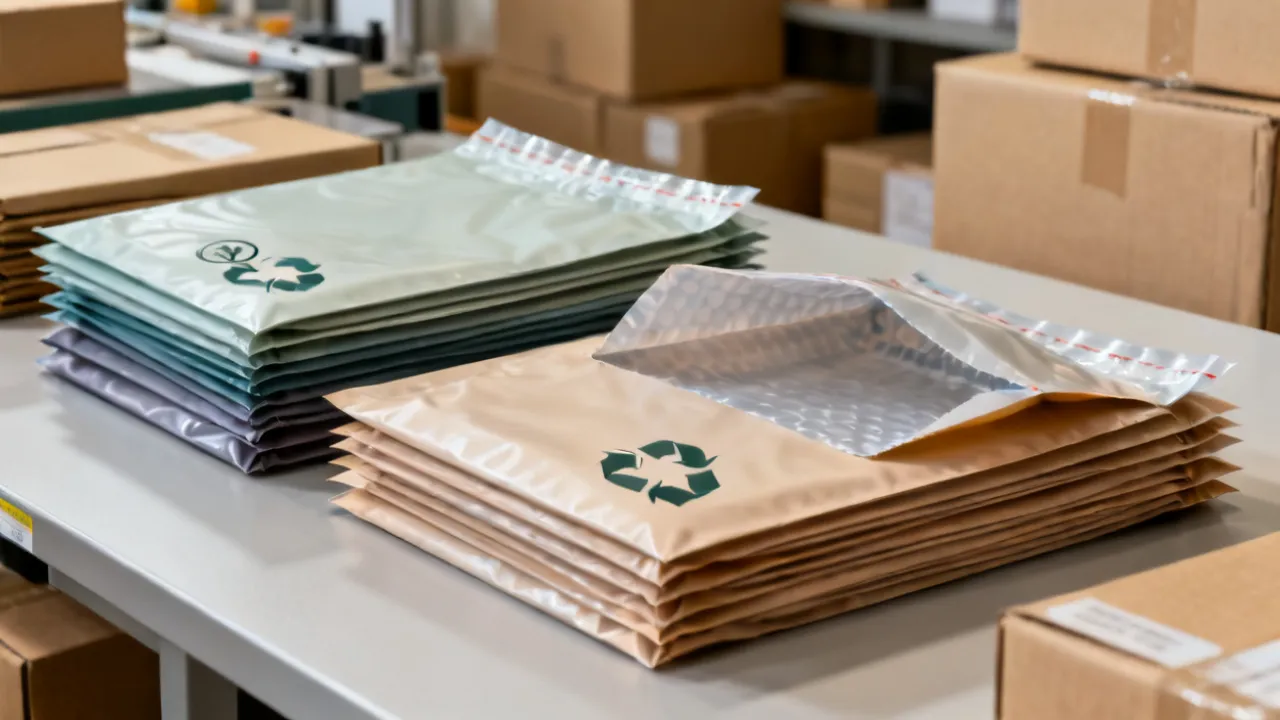
A Poly Mailer can be an effective shipping solution for apparel, linens, soft goods, documents, and other products that do not require rigid structural protection. Its principal advantages are low material usage, compact storage, resistance to rain and surface moisture, and fast application during packing. However, selecting the right mailer requires more than comparing dimensions or unit prices. The packaging must suit the product’s weight, shape, handling conditions, closure method, and likely exposure during transportation.
From an industry perspective, the central question is not whether a Poly Mailer is inexpensive or visually appealing. It is whether the mailer can preserve the condition of the shipment while supporting efficient warehouse work and meeting the expectations of the recipient. A package that arrives damaged can create higher costs through returns, replacement shipments, customer-service activity, and reputational harm. Conversely, an oversized or unnecessarily heavy package may increase material consumption and shipping charges.
Packaging selection also influences the entire order-fulfillment process. The chosen mailer affects how products are folded, how labels are applied, how quickly employees can complete an order, how much inventory must be stored, and how returned merchandise is handled. For this reason, a packaging decision should be evaluated as an operational system rather than as a single purchasing transaction.
The very important decisions can be summarized as follows:
A Poly Mailer is a flexible shipping envelope made primarily from polyethylene film. It commonly includes a self-sealing adhesive strip, a folded flap, and a smooth exterior suitable for shipping labels. Depending on the construction, the mailer may be opaque, translucent, colored, printed, padded, gusseted, or designed with a second adhesive strip for returns.
The term covers several product formats. A standard non-padded mailer is often used for clothing and other soft merchandise. A padded mailer adds an internal layer, such as air bubbles or foam, for limited cushioning. A gusseted mailer expands to accommodate bulkier products. A returnable design may provide two separate adhesive strips, allowing the original recipient to reseal the package when sending an item back.
Polyethylene is valued in packaging because it combines flexibility with resistance to water and many common contaminants. Its performance varies according to resin type, film structure, thickness, additives, seam design, and manufacturing quality. A thin mailer made with well-controlled film and strong seams may outperform a thicker product with inconsistent construction, so specifications and testing matter.
Unlike a corrugated box, a standard Poly Mailer offers limited resistance to crushing and puncture. It protects against scuffing, dirt, and weather exposure but does not create a rigid barrier around the contents. This distinction should guide the packaging decision from the beginning.
Poly Mailers are also different from paper envelopes and fiber-based shipping bags in their response to moisture, tearing, and folding. A paper package may provide a different appearance or end-of-life pathway, but it can soften when exposed to rain or condensation. The best choice depends on the product, destination, recovery infrastructure, and performance requirements rather than on one material category being universally superior.
| Format | Typical Use | Primary Strength | Main Limitation |
|---|---|---|---|
| Standard non-padded mailer | Clothing, fabric goods, printed materials, and soft accessories | Lightweight, compact, and quick to seal | Limited cushioning and structural support |
| Padded mailer | Small items needing modest shock or abrasion protection | Added internal cushioning | More material volume and possible recycling complexity |
| Gusseted mailer | Bulky soft goods, multiple garments, and expanded contents | Additional capacity without using a rigid carton | May require more careful sizing and sealing |
| Returnable mailer | Fashion, subscription products, and businesses with frequent returns | Supports a second shipment using an integrated closure | Higher purchase cost and added material features |
| Opaque security mailer | Private documents, branded goods, and products requiring discretion | Conceals contents and discourages casual inspection | Does not replace tamper-evident controls where those are required |
| Recycled-content mailer | Businesses seeking to incorporate post-consumer or post-industrial material | Can reduce reliance on virgin resin when properly specified | Performance and end-of-life options depend on composition and local systems |
Other variations include flat-bottom mailers, expandable side-seam designs, tear-strip mailers, and products with integrated document pouches. These features should be selected because they solve a defined operational problem. An integrated document pouch, for example, may be valuable when customs forms or delivery instructions must remain visible, while it may be unnecessary for domestic parcels with fully electronic documentation.
The top candidates for a Poly Mailer are products that can tolerate bending, compression, and ordinary parcel handling. Garments are a leading example because the mailer protects them from moisture and surface abrasion without adding the bulk of a box. Other suitable items may include towels, bedding, scarves, soft toys, fabric accessories, printed clothing, and certain flexible household products.
Products with hard corners, exposed metal components, or sharp edges require closer review. A zipper, buckle, or rigid component can puncture the film if the item moves inside the package. In such cases, a protective sleeve, tissue wrap, cardboard insert, or internal bag may be appropriate. The objective is to prevent the product from becoming a source of damage to its own packaging.
A Poly Mailer is generally unsuitable as the sole protective package for fragile glassware, ceramics, loose liquids, precision instruments, delicate electronics, or goods whose presentation depends on an undamaged rigid carton. A padded format may reduce minor impact risk, but padding is not equivalent to a crush-resistant box. Items affected by static electricity, humidity, or bending should also be reviewed against technical and product-specific requirements.
Temperature is another factor. Polyethylene film remains useful across many ordinary distribution environments, but extreme heat can affect adhesive performance, while very low temperatures may change flexibility. A supplier should provide storage and application guidance for the adhesive system. If shipments travel through severe seasonal conditions, conduct tests that reflect those environments rather than relying only on room-temperature samples.
Product value and customer expectations matter as well. A low-cost textile accessory may tolerate minor wrinkling, while a premium fashion item may need tissue, a branded inner sleeve, or a carefully sized mailer to preserve presentation. Packaging should protect not only physical function but also the condition in which the customer expects to receive the product.
Incorrect sizing is one of the very common causes of packaging inefficiency. A mailer that is too small may strain the seams and adhesive flap. One that is too large may allow the product to shift, use more material than necessary, and increase dimensional shipping charges where carrier rules apply.
Begin by measuring the item in its intended protective presentation. If the product will be folded, wrapped, bundled, or placed in an inner sleeve, measure the resulting package rather than the item in its original form. Record the width, height, and thickness. For products with irregular shapes, measure the widest and tallest points after arranging them as they will be packed.
Manufacturers may describe mailer dimensions in different ways. Some list the total outside size, while others identify the usable interior area after accounting for seams and the adhesive flap. These specifications are not interchangeable. Ask the supplier to clarify:
A practical fitting method is to place a representative packed product inside a sample mailer, position it away from the adhesive strip, and inspect the film under normal tension. The contents should fit without forcing the seams outward. The flap should fold naturally, and the adhesive area should contact a clean, flat surface. A small working margin is useful, but excessive empty space should be avoided.
For businesses with many stock-keeping units, a packaging matrix can simplify size selection. The matrix can list each product family, folded dimensions, recommended mailer, maximum order quantity, and any required inner protection. It can be posted at packing stations or incorporated into warehouse software. Such a system reduces the chance that employees will select a package based only on visual estimation.
When package thickness varies significantly, test the fullest normal configuration rather than the average order. An envelope that fits one shirt may not fit three shirts, a sweater, or a bundled set of linens. The selected mailer should accommodate normal variation without being so large that small orders move freely inside it.
Poly Mailer performance depends on more than film thickness. Important properties include tear resistance, puncture resistance, tensile strength, elongation, seam integrity, opacity, print adhesion, and adhesive strength. A supplier may provide a technical data sheet, but test methods and conditions should be examined before comparing products.
Film thickness is commonly expressed in microns or mils. A thicker film can provide greater resistance to puncture and tearing, but thickness alone does not guarantee better performance. Resin selection, orientation, layer structure, and production controls influence the final result. A multilayer film may combine different properties, such as strength, sealability, and printability.
Seams deserve particular attention. The side and bottom seams experience stress when a product is inserted and when the package is lifted. If the seams are uneven, weakly bonded, or poorly trimmed, failure may occur even when the central film remains intact. Examine samples for consistent seam width, clean edges, and the absence of channels or visible gaps.
Opacity may be needed for privacy or brand presentation. However, an opaque surface can make warehouse identification more dependent on labels or barcode scanning. Businesses should ensure that the external print and label contrast remain sufficient for reliable scanning under actual lighting conditions.
Film clarity, coefficient of friction, and surface finish can also affect handling. A very slippery film may be harder to stack, while a highly textured surface may reduce label adhesion. If mailers are loaded into automated equipment, confirm that their dimensions, stiffness, and surface properties are compatible with feeders, conveyors, scanners, and sortation systems.
Recycled content may affect color, clarity, odor, and mechanical consistency depending on the formulation and manufacturing controls. These differences do not automatically make a recycled-content mailer unsuitable, but they should be considered when the package must support premium presentation, precise printing, or demanding distribution conditions.
The adhesive strip is a functional component, not merely a convenience feature. A reliable closure should bond to the intended flap surface, resist accidental opening, and remain stable during ordinary transport. Adhesive performance can be influenced by dust, moisture, surface contamination, application pressure, and temperature.
During packing, the operator should align the flap before removing the release liner. Once the liner is removed, the adhesive should not be pressed against a dirty or wrinkled area. Applying firm, even pressure along the full closure helps create consistent contact. If the mailer is overfilled, pressure on the flap may distort the bond and encourage opening.
Some mailers use a tamper-evident design that leaves visible evidence when opened. This can discourage casual interference and provide a useful indication of package access. It should not be represented as a guarantee of security. Businesses shipping sensitive, regulated, or high-value products may need additional controls, including serialized labels, inner seals, specialized handling, or documented chain-of-custody procedures.
For returnable mailers, the second adhesive strip should be positioned so that it is not accidentally activated during the first shipment. Clear instructions help recipients understand which strip to use and how to prepare the return. A return feature can support operational efficiency, but it should be evaluated against actual return rates and the condition required for the second shipment.
Adhesive closure trials should include both newly manufactured samples and stock that has been stored for a realistic period. A closure that performs well immediately after production may respond differently after exposure to heat, cold, humidity, or prolonged pressure in a warehouse. Record the application date, storage conditions, and observed failures so that problems can be traced to a specific batch or process step.
A Poly Mailer usually provides a smooth surface for shipping labels, which can support fast identification and automated sorting. The label should be applied to a flat area without folds, seams, wrinkles, or excessive curvature. If the package is highly flexible, the label may detach or become difficult to scan when applied over a creased section.
Before scaling a packaging program, test the mailer with the business’s actual label stock, printer output, and barcode format. Confirm that adhesive labels remain attached after exposure to rubbing and moisture. If the mailer has a dark or patterned exterior, verify that label contrast is sufficient. Printed branding should not interfere with addresses, routing information, barcodes, or required markings.
Businesses should also consider how packaging appearance affects the customer experience. A well-sized, clean, consistently printed mailer can communicate organization. Excessive decorative ink, complicated finishes, or unnecessary layers may increase cost and complicate recycling without improving protection. Brand presentation should support, rather than replace, sound packaging engineering.
Label placement should be standardized through a simple work instruction or visual guide. This is especially important when the mailer contains a gusset or when the flap is longer than the main body. Consistent placement makes manual inspection easier and helps automated systems locate the barcode. It also reduces the risk that a return label will cover essential original information in a way that creates confusion.
Sustainability assessment should examine the complete packaging system rather than one material attribute. A Poly Mailer may use less material by weight than a rigid package, but its environmental profile depends on resin production, manufacturing, transport, product protection, reuse potential, collection systems, and disposal pathways.
Several terms require careful distinction:
Environmental claims should be specific, documented, and presented in a way that does not mislead purchasers or recipients. In the United States, the Federal Trade Commission’s Green Guides provide general guidance for environmental marketing claims. Other jurisdictions may apply different rules. Businesses should consult applicable local requirements and request supporting documentation from suppliers.
Recycling instructions must reflect the actual collection system available to the intended audience. Some flexible plastic films may be accepted through designated retail drop-off programs, while many curbside systems do not process them with rigid household containers. A label advising disposal through a particular channel should be used only when that channel is reasonably available to the relevant market.
Material reduction can be beneficial when it does not compromise protection. A right-sized mailer, efficient packing method, and reduced secondary wrapping may lower resource use. Yet an underperforming package that causes product damage can create a different form of waste. Packaging decisions should therefore balance material efficiency with shipment reliability.
Businesses should also evaluate whether adding a second material creates avoidable complexity. A polyethylene mailer with a paper insert, foam pad, metal fastener, or permanent adhesive label may require different separation steps at end of life. Where protection permits, reducing unnecessary components can make the package easier to manage. If additional materials are essential, the packing and disposal instructions should be clear.
Supplier selection should combine technical, commercial, and service considerations. Price per unit is important, but it is not a complete measure of value. A lower quoted price may be offset by inconsistent dimensions, adhesive failures, high minimum order quantities, long lead times, or greater product damage.
Ask potential suppliers for a clear specification sheet covering film type, thickness, dimensions, dimensional tolerance, closure construction, recycled content if applicable, printing capabilities, packaging quantity, and recommended storage conditions. If the mailer is intended for a particular carrier or market, confirm compatibility with relevant handling and labeling requirements.
| Evaluation Area | Questions to Ask | Evidence to Review |
|---|---|---|
| Film quality | What material structure and thickness are used? | Technical data sheet and sample inspection |
| Closure | How is adhesive performance tested and stored? | Application guidance and test results |
| Dimensions | Are listed dimensions external or usable? | Dimension drawings and production tolerances |
| Printing | Can the supplier maintain consistent color and barcode readability? | Printed samples and proofing process |
| Sustainability | What exactly does each environmental claim mean? | Material declarations and relevant certifications |
| Supply continuity | What are the lead times, order quantities, and replenishment terms? | Written quotation and service conditions |
| Quality control | How are film, seams, dimensions, and adhesive inspected? | Quality procedures, inspection records, or audit information |
When comparing quotations, calculate the usable cost rather than simply the invoice price. Include packaging freight, storage space, labor time, label consumption, expected failure rates, and the cost of returns or replacements. A mailer that allows faster packing may be financially preferable even if its unit price is higher, provided the productivity improvement is verified in the actual operation.
Supplier reliability should be considered alongside product quality. Ask whether the supplier can maintain the same film specification across production runs, how changes are communicated, and how complaints are investigated. A formal change-notification process is valuable because an unannounced alteration in resin, adhesive, dimensions, or seam construction may affect packing and transport performance.
For custom programs, approve a production sample before accepting a full order. The approved sample should identify dimensions, color, artwork, closure position, and any special features. Retain a reference sample or digital specification so that future deliveries can be compared objectively.
A structured test reduces the risk of making a decision based on a visual sample. The test should use representative products, realistic packing methods, actual labels, and the intended closure process. Include the heaviest common product and any product with unusual edges or dimensions.
Formal testing may be appropriate for higher-volume operations or sensitive products. Relevant procedures can include tensile testing, tear testing, puncture testing, seal-strength evaluation, and distribution simulation. Standards from organizations such as ASTM and the International Organization for Standardization may provide useful test frameworks, but the selected method should correspond to the actual packaging design and distribution environment.
Testing should include failure thresholds, not merely general observations. For example, a business might specify that no sample may arrive with an open seam, that labels must remain scannable, and that the product must show no puncture-related damage after a defined shipment trial. Clear criteria make supplier approval more objective and provide a basis for corrective action.
It is also useful to test different handling scenarios. A package may perform well when shipped alone but fail when compressed under heavier parcels. Another may resist rain but lose label adhesion after condensation. Samples can be exposed to stacking, vibration, rubbing, moderate drops, and changes in temperature when these conditions reflect the distribution network. Testing should be controlled and documented, while recognizing that informal trials do not replace professional package testing when the risk is significant.
Efficient use depends on a repeatable process. Store mailers in a clean, dry location away from direct sunlight, excessive heat, sharp objects, and chemical contamination. Adhesive release liners should remain intact until the moment of closure. Stock should be rotated according to the supplier’s recommendations, particularly when the adhesive has a stated shelf-life or storage range.
A practical packing sequence is:
Training should emphasize the difference between a properly filled mailer and an overstuffed one. Operators may be tempted to use one larger envelope for multiple products, but the resulting package can become difficult to seal and more vulnerable to edge damage. A size matrix at the packing station can reduce guesswork and improve consistency.
The packing station itself can influence performance. Mailers should be stored where operators can retrieve the appropriate size without stretching across sharp shelving or placing packages on contaminated surfaces. A smooth worktable, a clearly marked size system, and a nearby waste container for release liners can improve both safety and productivity.
Quality checks should be practical enough to perform without slowing the operation unnecessarily. Supervisors may periodically inspect sealed packages for exposed products, incomplete adhesive contact, crooked labels, and excessive tension. These observations can identify training needs before failures become visible through customer complaints.
Understanding failure patterns helps businesses correct problems systematically. If the side seam opens, investigate product dimensions, seam quality, insertion force, and film strength. If the adhesive flap lifts, review contamination, pressure, storage conditions, and overfilling. If the film punctures, examine the product for hard edges and consider an inner protective layer or stronger mailer.
Label problems often arise when the surface is wrinkled, dusty, or too flexible. Applying the label across a seam can also reduce contact area. If scanning failures occur, evaluate contrast, print quality, label placement, and whether the mailer’s exterior graphics interfere with the barcode.
Moisture resistance should not be confused with liquid containment. A Poly Mailer can help shield contents from rain and surface dampness, but it may not be suitable for an unsealed liquid product. Liquids should be packaged according to product-specific leakage controls, including appropriate inner containers and absorbent or secondary containment where required.
Another common failure is product migration inside an oversized mailer. When the contents slide from one end to another, the package may become unbalanced, labels may be placed on curved areas, and the item may experience more abrasion. Right-sizing, folding, or using a small amount of approved internal protection can reduce this movement.
Some problems originate outside the mailer itself. Incorrect inventory, inadequate product inspection, poor label data, or a packing station that exposes film to sharp tools can create failures that are mistakenly attributed to the packaging. A simple root-cause review should examine the product, the operator, the equipment, the material, and the environment before changing specifications.
The financial value of a Poly Mailer comes from several combined effects. Its flexible construction can reduce storage volume, packing time, and package weight in appropriate applications. It may also simplify label placement and reduce the need for tape or additional outer wrapping. These benefits should be measured in the context of the company’s order profile.
For a sound comparison, track:
Carrier pricing structures differ by market and service. Some shipments are charged primarily by actual weight, while others may apply dimensional rules, minimum charges, surcharges, or service-specific requirements. Packaging decisions should be checked against the current terms of the selected carrier rather than generalized assumptions.
For custom-printed mailers, include artwork preparation, proof approval, color consistency, minimum production quantities, and obsolete-stock risk. A standard mailer with a separate label may be more flexible for businesses with many product lines or frequent design changes. Custom printing may be more suitable when brand recognition and packing consistency have measurable value.
Labor savings should be measured over a realistic period. A mailer may appear faster during a short demonstration but create delays when operators must search for the correct size, remove difficult liners, or rework packages that do not close properly. Time studies should include product preparation, mailer retrieval, closure, labeling, scanning, and any quality checks.
Inventory carrying cost is another consideration. A business using ten mailer sizes may reduce material waste but increase storage complexity and the risk of stockouts in one particular size. A smaller range of carefully selected sizes may be easier to manage. The right balance depends on order volume, product variation, warehouse space, and replenishment reliability.
Returns can change the packaging requirement. If customers are likely to send products back in the original mailer, a durable and clearly designed returnable Poly Mailer may improve the reverse-logistics process. The original package should provide enough usable space for the product to be repacked without severe compression or damage.
Return instructions should explain how to remove or cover the original shipping label, where to place the new label, and which closure to use. If the mailer is not designed for a second shipment, customers may apply tape or other materials that complicate sorting and recycling. A dedicated return feature can reduce confusion, but its benefit should be compared with the additional material and purchase cost.
Businesses should inspect returned mailers and document common conditions. If very returns arrive with torn flaps, punctures, or label residue, the packaging design or instruction set may need revision. Return data can also reveal whether a different size range would improve product presentation and reduce repacking effort.
Returnable mailers are especially relevant to apparel, footwear accessories, subscription services, and rental programs. However, a returnable design should not be selected only because it appears environmentally favorable. The benefit depends on whether customers actually reuse the package, whether it survives the reverse journey, and whether the additional closure or film contributes to reliable second-use performance.
Packaging requirements vary according to product, destination, carrier, and jurisdiction. Businesses should check applicable rules for labeling, dangerous goods, privacy, consumer information, environmental marketing, and waste management. A general Poly Mailer should not be presented as suitable for regulated products unless its design and use have been evaluated for that purpose.
Environmental statements should be precise. For example, “made with recycled content” communicates a material input, whereas “recyclable” concerns possible recovery after use. If a claim depends on a specific collection program, the relevant condition should be stated clearly. Certifications may support a claim, but the certification’s scope, material coverage, and geographic relevance should be confirmed.
Businesses selling internationally should be especially careful with terms that have different meanings in different markets. Waste infrastructure, labeling conventions, and accepted materials can vary significantly. A responsible packaging program uses evidence appropriate to each market rather than applying one broad statement to every destination.
Privacy may also influence mailer selection. Opaque film can prevent casual viewing of documents, apparel, or branded merchandise. Nevertheless, opacity is not a replacement for secure data handling or appropriate inner packaging. Addresses, barcodes, and legally required markings must remain visible and readable even when the contents are concealed.
An industry expert evaluating a Poly Mailer program would normally prioritize performance and process stability before visual customization. The first stage is to separate product categories by protection needs. Soft apparel may require one specification, while footwear, books, or mixed-item orders may need another. A single universal mailer can appear efficient but may create avoidable failures when products vary substantially.
The second stage is to create a packaging specification that operators and suppliers can understand. It should define dimensions, acceptable tolerances, closure requirements, film characteristics, print or label restrictions, and inspection methods. A documented specification makes supplier comparisons more meaningful and reduces the risk of receiving a product that looks similar but performs differently.
The third stage is continuous review. Packaging performance should be monitored through damage records, returns, customer comments, warehouse observations, and supplier quality reports. When a failure occurs, the organization should identify the underlying cause rather than immediately changing to a thicker or larger mailer. Sometimes a modest adjustment in sizing, internal wrapping, or operator technique resolves the issue more efficiently.
Finally, sustainability should be treated as a design and systems question. Businesses should consider material reduction, recycled content, reuse, realistic recovery options, and product protection together. A credible program is specific about what the package can do, where it can be processed, and which conditions apply.
Experts also recommend avoiding specifications based solely on a supplier’s catalog name. Terms such as “heavy duty,” “premium,” or “eco-friendly” may be useful marketing descriptions, but they do not replace measurable requirements. Procurement teams should translate those descriptions into film thickness, dimensions, seam performance, adhesive behavior, and documented material content.
| Condition or Requirement | Recommended Practice |
|---|---|
| Product is flexible and non-fragile | Use a standard mailer after confirming size, weight, and edge conditions. |
| Product has hard or sharp components | Add an inner protective layer or select a stronger packaging format. |
| Product requires cushioning | Consider a padded mailer or a rigid package based on the impact risk. |
| Shipment contains liquids | Use appropriate leak-prevention and secondary-containment measures. |
| Package will be returned | Choose a returnable design and provide clear resealing instructions. |
| Environmental claim will be printed | Verify the claim with supplier documentation and applicable guidance. |
| Labels must be machine scanned | Test label adhesion, contrast, placement, and barcode readability. |
| Storage period is extended | Follow the supplier’s temperature, humidity, light, and stock-rotation guidance. |
| International distribution is planned | Review destination-market packaging, labeling, carrier, and waste requirements. |
Soft and flexible products such as clothing, linens, fabric accessories, and selected printed materials are common applications. The product should tolerate bending and ordinary compression. Fragile, sharp-edged, liquid, or crush-sensitive goods may require additional protection or a rigid package.
They are generally resistant to rain and surface moisture, but “water-resistant” is a more precise description than assuming complete waterproof performance. Seams, closures, punctures, and label areas can create weak points. A mailer should not be treated as a substitute for liquid containment.
Some polyethylene mailers may be accepted through flexible-film collection systems, but acceptance varies by location. Many curbside recycling programs do not process flexible film with rigid containers. Businesses should provide disposal guidance only after confirming the relevant local recovery pathway.
A standard mailer is primarily a flexible moisture and abrasion barrier. A padded mailer adds an internal cushioning layer that may reduce minor impact and surface damage. Neither format automatically provides the crush resistance of a corrugated box.
Measure the product after folding or wrapping it as it will be shipped. Compare the measurements with the supplier’s usable interior dimensions, not only the outside dimensions. The mailer should accommodate the contents without excessive tension or empty space, and the flap should have a clean area for secure closure.
Reuse is possible when the film, seams, and closure remain in good condition and the design supports another shipment. A returnable mailer with a second adhesive strip is specifically designed for this purpose. A damaged or heavily labeled mailer should not be reused when its integrity or address readability is uncertain.
No. Thickness can contribute to puncture and tear resistance, but resin formulation, film structure, seam construction, and adhesive quality also matter. Comparative testing with representative products provides a more reliable assessment than thickness alone.
It depends on the product presentation and protection requirement. Shoes without a rigid presentation box may be suitable for a strong mailer if their shape and components do not puncture the film. Shoes packaged in a presentation box may need additional protection to prevent crushing, scuffing, or deformation during distribution.
Store mailers under the supplier’s recommended conditions, keep the adhesive surface clean, avoid overfilling, align the flap carefully, and apply even pressure after removing the release liner. If failures continue, request adhesive-performance information and conduct tests under the temperatures and handling conditions experienced in distribution.
Not necessarily. Printing can strengthen visual consistency, but it may increase minimum order quantities, cost, and obsolete-stock risk. Businesses should compare branded mailers with standard designs and shipping labels based on customer experience, operational flexibility, and measurable marketing value.
Request material composition, film thickness, usable dimensions, tolerance information, closure specifications, printing details, storage guidance, order quantities, lead times, and quality-control procedures. For environmental claims, request specific documentation identifying the material, claim scope, and applicable recovery conditions.
Keep them in a clean, dry environment away from direct sunlight, excessive heat, sharp objects, and chemical exposure. Do not remove release liners before use. Follow supplier instructions regarding stacking, temperature, humidity, and stock rotation, particularly when adhesive performance is important.
Its main limitation is reduced structural protection compared with a rigid box. It can resist moisture and ordinary abrasion but may not protect fragile or crush-sensitive products. Selecting the format based on product risk is more important than choosing the lightest package in every situation.
There is no universal number. The appropriate range depends on product variation, order volume, storage capacity, and the cost of oversized packaging. A packaging matrix can identify the smallest practical set of sizes that accommodates normal orders without excessive tension or empty space. The range should be reviewed as products and order patterns change.
It can be used for suitable products when the carrier, destination requirements, labeling, customs documentation, and product-protection needs have been reviewed. International distribution may involve longer transit times, more handling, and different environmental conditions, so sample shipments should represent the intended routes.
Record the package condition, product condition, mailer size, batch information, route, and packing method. Photographs and shipment records can help determine whether the cause was puncture, overfilling, seam failure, adhesive failure, handling, or an external event. Corrective action should address the identified cause rather than automatically changing every package specification.
A Poly Mailer can support efficient, compact, and weather-resistant shipping when it is matched carefully to the product and distribution environment. The strongest purchasing decision considers usable dimensions, film and seam performance, adhesive reliability, labeling, storage, returns, sustainability claims, and local recovery conditions.
The very dependable approach is systematic: classify products, measure packed items, compare documented specifications, test representative shipments, train operators, and monitor results after launch. Businesses that follow this process can gain the practical benefits of flexible mailers while avoiding the common problems associated with poor sizing, inadequate protection, unclear environmental claims, and inconsistent supplier quality.
Packaging performance should remain connected to business objectives. A successful Poly Mailer program protects products, supports rapid fulfillment, minimizes unnecessary material, communicates useful information, and accommodates the realities of the delivery and return networks. When these requirements are evaluated together, the mailer becomes more than a low-cost envelope; it becomes a carefully selected component of a reliable shipping system.
Striking the Perfect Balance: Navigating Premiums and Out-of-Pocket Expenses in Senior Insurance Plans

Explore the Tranquil Bliss of Idyllic Rural Retreats

How to Make Lasting Memories at Disneyland Attractions

Affordable Phones and Plans for Seniors

Affordable Full Mouth Dental Implants Near You

Unlock the Top Kept Secrets to Finding Your Ideal Dentist for Flawless Dental Implant Results!

Discovering Springdale Estates

Unveiling RS Sul Telecom Services

The Guide to Car Trading


Understanding Proportional Valves
Proportional valves are hydraulic components vital for controlling fluid flow and pressure with high precision in various industrial applications. Their importance in automation and manufacturing settings stems from their ability to offer variable output in response to input signals, greatly enhancing system efficiency and performance.
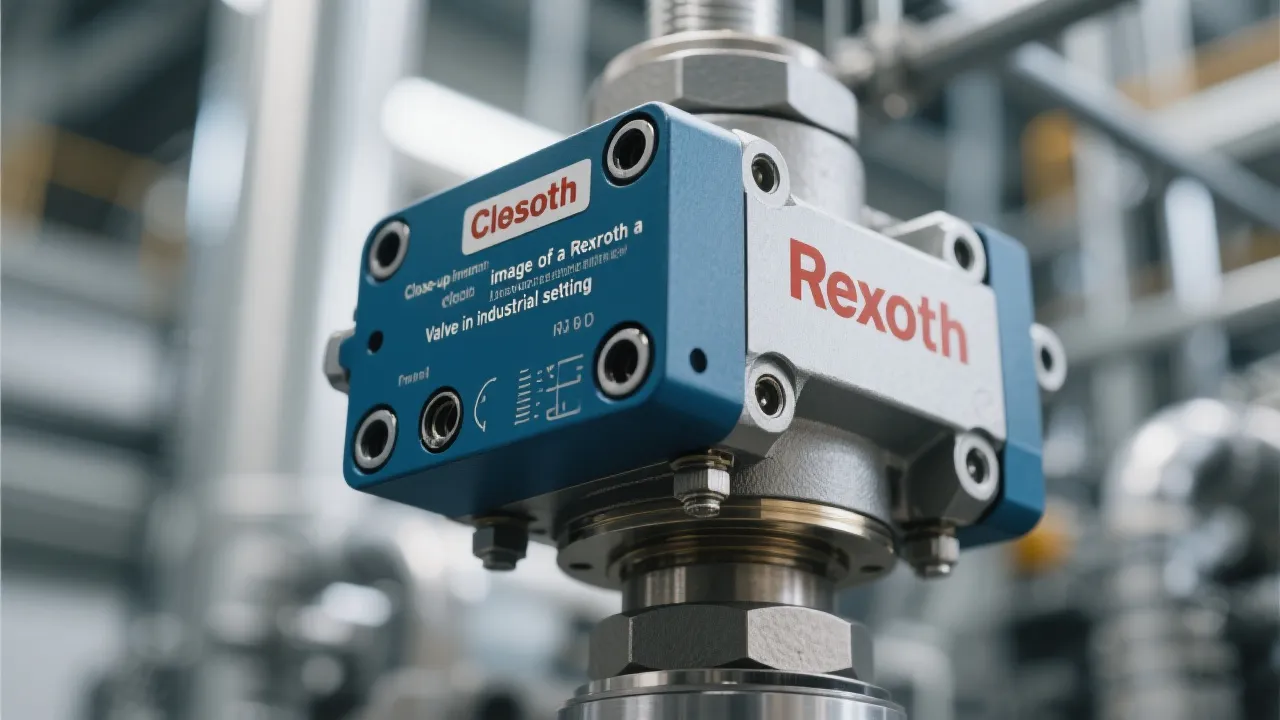
Understanding Rexroth Valve Systems
Rexroth Valves are quintessential components in various industrial applications, known for their precision and reliability. These hydraulic, pneumatic, and electrohydraulic valves regulate fluid flow in machinery, ensuring optimal performance and safety. Understanding their functionality and benefits is crucial for industries seeking efficiency and sustainability in their operations.

Unveiling Thermo Fisher Chromatography
This article explores the pivotal role of Thermo Fisher Chromatography in modern analytical science. Chromatography is crucial for separating compounds within mixtures, making it indispensable in industries such as pharmaceuticals and environmental testing. Thermo Fisher Scientific stands out in this field for its innovative solutions, leading to improved accuracy and efficiency in research and development.

Understanding Corrosion Inhibitor Manufacturers
In today's industrial landscape, corrosion inhibitor manufacturers play a crucial role in safeguarding equipment and infrastructure against corrosive damage. These manufacturers provide specialized chemicals that prevent corrosion in various environments, including industries such as oil and gas, marine, and construction. Understanding their operations and offerings is essential for selecting the right supplier and maintaining asset longevity.

Analyzing Lm66100 Digikey Components
This article offers an in-depth analysis of the Lm66100 component available through Digikey, a renowned distributor of electronic components. The Lm66100, a load switch, is integral in industry applications, providing efficient power management. This piece explores its features, applications, and availability through Digikey, while offering a comprehensive guide for industry professionals seeking to optimize their electronic designs.

Leading Corrosion Inhibitor Suppliers
Corrosion inhibitor manufacturers play a crucial role in protecting materials from degradation. These companies specialize in creating chemical compounds that slow down or prevent the corrosive effects on various surfaces, especially metals. Understanding their production processes and solutions offered is vital for industries reliant on metal infrastructure.