This guide explains how to evaluate, select, and use a Poly Mailer for modern shipping operations. Poly Mailers are lightweight flexible envelopes made primarily from polyethylene and are widely used for apparel, documents, accessories, and other non-fragile goods. Their performance depends on material thickness, seal design, dimensions, recyclability, product protection, labeling, storage, and fulfillment requirements. The article also examines sustainability claims, operational efficiency, quality control, and common purchasing considerations.
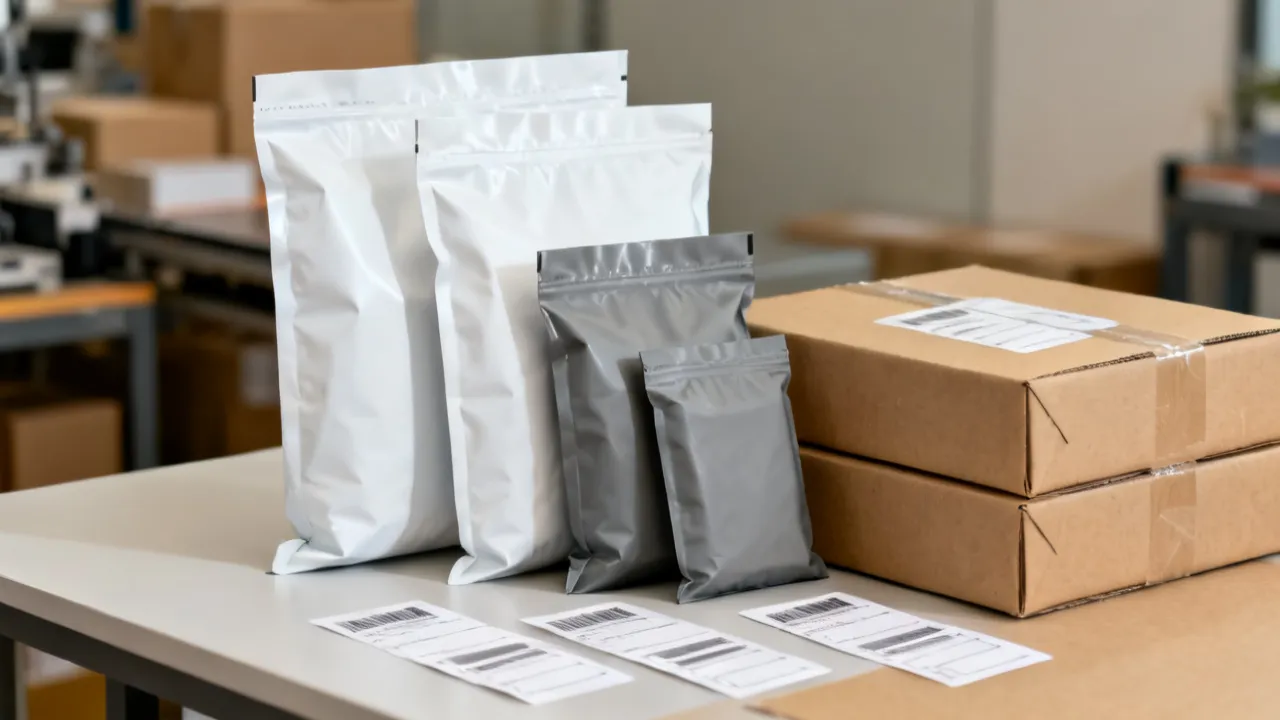
A Poly Mailer is more than a lightweight shipping envelope. It is a protective packaging component that influences product safety, postage weight, warehouse efficiency, customer perception, inventory requirements, and waste management. Selecting the correct mailer requires a balanced assessment of the product, transportation environment, sealing method, storage conditions, labeling requirements, return process, and end-of-life options.
For many e-commerce operations, a Poly Mailer is an efficient alternative to a corrugated box when the item does not require rigid protection. Clothing, bedding, printed materials, soft accessories, and certain consumer goods can often be packed securely in a flexible mailer. The packaging conforms to the contents, occupies relatively little storage space, and can simplify packing-line work.
However, a Poly Mailer is not suitable for every shipment. Glassware, unprotected electronics, sharp-edged products, liquids, and items vulnerable to crushing generally require a box, molded insert, padded envelope, or another specialized format. The important decision is not whether a mailer is inexpensive or visually attractive; it is whether the packaging is appropriate for the physical risks associated with the shipment.
From an industry perspective, packaging should be evaluated as a system. The film, adhesive strip, internal cushioning, product shape, shipping label, packing method, and distribution network all affect the final result. A strong mailer can still fail if it is overfilled, poorly sealed, exposed to unsuitable temperatures, or used with a product that needs rigid support.
Packaging selection also affects the customer’s perception of quality. A parcel that arrives torn, wet, excessively oversized, or difficult to open can create dissatisfaction even when the product itself is undamaged. Conversely, a correctly sized and neatly sealed mailer can support a clean, efficient delivery experience while reducing unnecessary material use.
A Poly Mailer is a flexible shipping envelope generally manufactured from polyethylene film. It is commonly produced with a self-sealing adhesive flap and may include additional features such as an opaque interior, tear strip, return adhesive, tamper-evident construction, handles, gussets, or internal padding.
The term covers several packaging categories:
Although these formats may look similar, they are not interchangeable. A standard mailer may be adequate for a sweatshirt but unsuitable for a ceramic item. A padded version may improve resistance to scuffs and minor impacts, yet it does not transform flexible packaging into a rigid protective container. Similarly, a product described as recyclable or compostable should be assessed according to its actual material composition, local collection systems, and applicable certification.
The opening style can also differ. Some mailers have a wide top opening for quick insertion, while others include a narrow flap intended to maximize closure strength. The choice may seem minor, but opening width can affect packing speed, product folding, and the likelihood that employees will force a product into an unsuitable package.
The performance of a Poly Mailer is determined by its film structure and manufacturing quality. Polyethylene is valued in packaging because it offers flexibility, moisture resistance, and useful tensile strength at relatively low material weight. Different grades and film structures can be selected according to the intended use.
Important material characteristics include:
Manufacturers may use multilayer films to combine different properties. For example, one layer may support strength while another improves printability or sealing performance. Buyers should request technical documentation when the mailer will be used for high-volume shipping, export operations, or products with unusual handling requirements.
Film uniformity is important because a mailer’s nominal thickness may not be consistent across its entire surface. Thin spots can become weak points when a parcel is stretched or punctured. Quality suppliers typically monitor film production, seam formation, adhesive placement, and finished dimensions through documented inspection procedures.
Size selection is one of the common sources of packaging failure. A mailer that is too small can strain the seams, prevent proper sealing, and create pressure points. A mailer that is too large may allow the product to move excessively, increase the chance of abrasion, and use more material than necessary.
Measure the product after folding or arranging it in the form in which it will be shipped. The relevant dimensions usually include length, width, and thickness. Allow enough space for insertion and sealing, but avoid excessive empty space. Apparel can often be folded into a compact profile, while books, textile bundles, and boxed accessories may need a wider opening and additional depth.
| Packaging Question | Why It Matters | Practical Evaluation |
|---|---|---|
| Will the item fit without compression? | Excessive force can damage the product or stress the seams. | Test the mailer with the largest expected product configuration. |
| Is there enough flap area for sealing? | An inadequate adhesive overlap can lead to opening during transit. | Confirm that the flap rests evenly across the closure zone. |
| Could corners or edges puncture the film? | Sharp or dense areas may create concentrated stress. | Use a padded mailer or internal protection when appropriate. |
| Will the label fit on a flat surface? | Wrinkles and folds may interfere with scanning or address readability. | Reserve a smooth label area before finalizing the size. |
| Is the mailer unnecessarily oversized? | Excess material can increase storage and handling inefficiency. | Compare the filled dimensions with the minimum suitable size. |
| Can the opening support the packing process? | A narrow opening may slow fulfillment or encourage forced insertion. | Observe packing staff using representative products. |
Packaging teams should test the largest and smallest products in a product family. A size that works for a thin shirt may not accommodate a heavy sweatshirt. If a catalog contains many product shapes, a small range of carefully selected sizes is often more practical than one universal mailer.
Businesses should also consider how products are sold in combination. A mailer suitable for one garment may be too small for a two-item order, and a package designed for a single book may fail when an order contains multiple books. A product-to-mailer matrix can identify the correct format for individual products, common bundles, and unusually large orders.
Standard Poly Mailers are generally appropriate for products that are flexible, durable, and not dependent on rigid structural protection. Typical examples include clothing, fabric goods, soft toys, non-fragile promotional materials, and certain documents. Their principal advantages are low storage volume, light weight, and straightforward packing.
Padded Poly Mailers add a cushioning layer, commonly made with bubble material or another flexible protective structure. They are useful when the product may experience minor impact, surface abrasion, or pressure during parcel handling. Small accessories, books, cosmetic containers with suitable secondary protection, and compact consumer products may benefit from this format.
Neither type should be selected solely by appearance. A padded envelope can protect against scratches and modest knocks, but it may not withstand substantial compression. A standard mailer may be adequate when the product itself provides cushioning, but it will not compensate for fragile construction.
An expert assessment considers four questions:
If the answer to the last question is yes, a box or rigid mailer should be considered, even if a Poly Mailer appears more convenient. The cost of a slightly more protective package may be lower than the cost of replacing a damaged product, reshipping an order, processing a return, and repairing customer trust.
Apparel is one of the most common product categories for Poly Mailer use because garments are flexible, relatively lightweight, and not usually damaged by moderate compression. Even within apparel, however, differences matter. Delicate fabrics may need an inner protective bag, while garments with exposed zippers, studs, or metal hardware may need edge protection to prevent punctures.
Books and printed materials can also be shipped in mailers, but their corners may become bent or abraded. A padded mailer, rigid insert, or protective wrap may be appropriate when presentation quality is important. Documents containing confidential information may require opaque film and tamper-evident closure.
Soft home goods, such as towels, blankets, and pillow covers, generally work well in standard mailers. Products with a dense folded profile can create considerable stress, however, especially when the mailer is stretched around them. For these items, gusseted construction or a larger format may be preferable to simply forcing the product into a narrow envelope.
Products containing liquids, powders, or loose small components need additional assessment. The mailer itself may resist exterior moisture, but it may not contain a leak or prevent a container from breaking. Secondary containment, sealed inner packaging, absorbent material, and a rigid outer package may be necessary depending on the product and applicable transport requirements.
Polyethylene film naturally provides a degree of resistance to rain, splashes, and humid conditions. This is particularly valuable in parcel networks where shipments may be transferred between vehicles, distribution centers, loading areas, and customer locations. Moisture resistance can help protect clothing, paper goods, and textile products from ordinary external exposure.
Moisture resistance does not mean waterproof performance under every condition. Seams, adhesive closures, punctures, and label edges remain potential entry points. If the contents are highly sensitive to water, the product may need an inner bag, sealed liner, or specialized barrier packaging.
Temperature also affects packaging performance. Adhesive strips may behave differently in very cold or hot environments, while film can become less flexible or more prone to deformation under particular conditions. Businesses shipping across significant climate variations should conduct practical trials using expected storage and transit conditions.
Exposure to ultraviolet light can also affect some films over extended periods. Mailers stored near windows, loading bays, or outdoor staging areas may experience unnecessary exposure. Even when the film remains visually acceptable, prolonged heat and sunlight can affect adhesive release liners, printed graphics, and material flexibility.
The adhesive closure is central to mailer security. Before applying the seal, the packer should ensure that the product is fully inside the envelope, the closure area is clean, and the flap is not folded or distorted. Dust, fibers, moisture, and overfilled contents can reduce adhesive contact.
A reliable sealing procedure typically involves the following steps:
Avoid placing products, invoices, or inserts directly across the adhesive zone. Internal material caught in the closure can create channels through which moisture or dirt enters and can reduce the effective bonded area. If a mailer is visibly overfilled, the correct response is to select a larger format rather than relying on extra tape as a routine solution.
Some mailers include tamper-evident features that reveal opening attempts. These features can discourage casual interference and support returns management. They should not be treated as a substitute for a strong material structure or secure fulfillment controls.
For businesses with automated or semi-automated packing lines, closure consistency should be tested at operating speed. A design that performs well in manual trials may produce alignment problems when equipment handles hundreds or thousands of parcels. The adhesive release liner, flap geometry, and film stiffness all affect machine compatibility.
Flexible packaging does not provide the same cushioning or stacking strength as a corrugated box. The product itself therefore plays a major role in determining whether a Poly Mailer is appropriate. Items should be folded, bundled, or positioned to reduce movement and prevent concentrated pressure.
For soft products, compression may be acceptable if it does not affect shape, finish, or customer presentation. For structured goods, internal sleeves or protective wraps may help isolate corners and edges. When additional material is used, the combined package should be measured again to confirm that the mailer is not overloaded.
Void management has a different meaning in a flexible envelope than in a box. The objective is not to fill every open area with cushioning; it is to prevent excessive shifting while maintaining a reliable seal. Overpacking can create tension along the closure, while underpacking can allow the item to slide and rub against the film.
The package should also be evaluated after the product has been handled by the customer. A mailer that protects the item in transit but tears immediately during opening may produce a poor experience and make returns difficult. Easy-open tear strips can improve convenience, but their placement and tear strength should be tested so they do not weaken the package prematurely.
E-commerce businesses often use Poly Mailers because they support a streamlined fulfillment process. A packer can select the appropriate size, insert the product, apply the closure, attach the shipping label, and place the parcel into the outbound workflow without assembling a box or adding extensive protective material.
The operational benefits may include:
These advantages depend on disciplined packaging standards. Fulfillment teams should establish a size guide, product-to-mailer matrix, sealing checklist, and escalation process for items that do not fit the normal workflow. Without such controls, employees may force products into undersized mailers or select oversized packaging by habit.
Warehouse layout also matters. Mailers should be stored close enough to the packing station for efficient access but not in locations where they can be exposed to sharp equipment, excessive heat, moisture, or heavy compression. Organized dispensers can reduce handling time and help maintain size consistency.
Training should explain why the packaging rules exist. Employees are more likely to follow a size guide when they understand that undersized packaging can cause seam failure and oversized packaging can increase material use and shipping expense. Short visual instructions at the packing station can reinforce the correct process without slowing fulfillment.
Returns are an important part of packaging design. A mailer with a second adhesive strip allows a customer to reseal the package without obtaining another envelope. This can simplify the return experience and help preserve the original packaging during the reverse journey.
When choosing a returnable Poly Mailer, review the position of the first and second strips. They should be clearly separated and easy to identify. Instructions should explain which strip is used for the outbound shipment and which is reserved for a return. Confusing placement can result in premature activation or improper closure.
Reusable mailers are another option, but their suitability depends on durability, cleaning expectations, customer behavior, and the number of intended cycles. A mailer designed for one-way use should not be marketed as reusable merely because it can technically be resealed. Performance claims should reflect documented testing and realistic handling conditions.
Returns analysis can reveal packaging weaknesses that outbound shipping data does not show. A returned mailer may be stretched, torn, contaminated, or damaged by the customer while opening it. Reviewing returned packaging helps determine whether the original design supports the full life cycle of the shipment or only the first delivery.
Packaging is often the first physical interaction a customer has with an online retailer. A clean, well-sealed mailer can communicate order accuracy and operational care. Custom printing may improve brand recognition, while a restrained design can support a professional presentation.
Branding should not compromise functionality. Dark printing can make labels harder to scan if it appears beneath the address area. Excessive ink coverage may affect recycling considerations or alter the surface characteristics of the film. The print should also withstand ordinary handling without transferring onto other parcels.
Businesses should consider whether the packaging design is appropriate for the products and audience. A fashion retailer may use a distinctive color or pattern, while a document supplier may prefer a neutral appearance that emphasizes privacy. In every case, customer-facing artwork should be balanced with clear shipping information and practical handling requirements.
Opening experience is another part of branding. A tear strip can make a package easier to open, but it should not create loose fragments that are difficult to dispose of. Clear return instructions, a second adhesive strip, and a clean interior can all contribute to a more positive experience without adding substantial material.
Environmental performance should be assessed across the packaging life cycle rather than by a single label or marketing phrase. Relevant factors include material quantity, recycled content, manufacturing inputs, transport weight, durability, reuse potential, and the availability of suitable collection systems.
Polyethylene packaging can be recyclable in certain systems, but acceptance varies by location and collection program. Consumers and businesses should follow local guidance rather than assuming that every plastic film item belongs in a household recycling bin. In many regions, flexible film requires a dedicated collection route separate from rigid plastic containers.
Recycled-content mailers can reduce reliance on newly produced resin, subject to material quality and supply conditions. Buyers should request documentation specifying the percentage and type of recycled content, as well as any applicable chain-of-custody or product certification.
Compostable mailers require particularly careful evaluation. Compostability may depend on industrial composting facilities, temperature, humidity, processing time, and certification criteria. A package described as compostable may not break down in a household compost pile or in the natural environment. Clear disposal instructions are therefore essential.
Material reduction is another sustainability strategy. Using the smallest suitable mailer, reducing unnecessary layers, and avoiding excessive printing can lower resource use. However, reducing thickness beyond the level needed for reliable performance may increase product damage, returns, and replacement shipments. The correct objective is optimized material use, not simply the lowest film weight.
| Environmental Consideration | Questions for Buyers |
|---|---|
| Material composition | What polymer or material is used, and is the composition clearly documented? |
| Recycled content | Is the stated recycled percentage supported by supplier documentation? |
| Collection pathway | Can the used mailer enter a recognized local or commercial collection program? |
| Compostability claim | Which composting environment and certification standard apply? |
| Durability | Will a lighter design increase damage, repacking, or return shipments? |
| Disposal communication | Are instructions understandable and suitable for the intended market? |
Sustainability should also be considered in relation to shipping efficiency. A mailer that weighs less and occupies less volume may reduce transportation impacts compared with a larger rigid package, but only when it protects the product successfully. A damaged item may require a replacement shipment, additional packaging, and disposal of the original product, which can outweigh the savings from the initial lightweight format.
Packaging procurement should include more than a visual inspection. A structured quality program helps identify failure risks before the mailer enters regular operations. Testing should reflect the products, packing methods, and distribution environment in which the packaging will be used.
Useful evaluation areas include:
Formal laboratory tests may be appropriate for large operations, regulated goods, or high-value products. For smaller businesses, controlled internal trials can still provide useful evidence if the method is documented and repeated consistently. Packaging should be tested with actual products rather than empty mailers, because the contents influence tension, shape, and puncture risk.
Acceptance criteria should be established before a supplier delivers a production order. These criteria may address material thickness, dimensions, color, print registration, adhesive placement, packaging count, carton condition, and defect tolerance. Written specifications reduce disputes and support more consistent purchasing decisions.
Pilot shipments are valuable because they expose packaging to actual carrier processes. A small shipment can be monitored for torn seams, detached labels, wetness, excessive scuffing, and customer complaints. The results should be documented and compared with the performance of the existing package, if one is already in use.
A supplier should be assessed on product quality, technical transparency, production consistency, lead time, communication, and ability to support the required volume. Price is relevant, but it should be considered alongside total packaging performance.
Before placing a significant order, request representative samples and ask for documentation covering:
Supplier claims should be specific and verifiable. Terms such as “eco-friendly,” “secure,” or “heavy duty” have limited value without supporting specifications. An experienced buyer asks how the claim is defined, how it is tested, and whether it applies to the entire mailer or only one component.
Samples should be evaluated in the actual packing environment. A mailer may look suitable during a desk review but prove difficult to open, seal, label, or stack during normal fulfillment. Staff feedback is useful because packers often identify practical problems before they appear in shipment data.
Supply continuity should also be reviewed. A mailer that is technically excellent but frequently unavailable can disrupt fulfillment. Businesses should ask about production capacity, alternative sizes, raw-material availability, shipping schedules, and procedures for notifying customers about specification changes.
Proper storage protects both the film and the adhesive closure. Poly Mailers should generally be kept in a clean, dry area away from direct sunlight, sharp objects, and excessive heat. Heavy cartons should not be stacked in a way that compresses or distorts the mailers.
Inventory should be rotated so older stock is used appropriately and packaging does not remain in storage beyond the supplier’s recommended period. Adhesive performance can change over time, particularly when packaging is exposed to temperature fluctuations or airborne contamination.
Stock records should distinguish between sizes, colors, material types, and printed versions. Mixing similar-looking mailers can create picking errors and may result in the wrong packaging being used for a product or customer order. Clear labels and designated storage locations can reduce this risk.
Inventory planning should account for seasonal demand. Holiday sales, promotional campaigns, and product launches can sharply increase the need for particular sizes. Ordering too late may force a business to use an unsuitable substitute, while ordering excessive quantities of custom packaging can create obsolete stock after a campaign ends.
A universal mailer policy often leads to overfilling for some products and excessive material use for others. A small, logical size range usually provides better protection and operational control.
Folded clothing is generally forgiving, but accessories, boxed items, and products with hardware may puncture the film. Edge protection or a different packaging format may be necessary.
Dust, fibers, and moisture can interfere with adhesive bonding. The closure zone should remain clean and flat before sealing.
Internal cushioning helps with certain impacts but does not provide the structural strength of a rigid box. Fragile goods require a packaging system designed around their specific vulnerabilities.
A label placed over folds, seams, or highly textured surfaces may detach or become difficult to scan. A smooth, suitably sized label area should be planned before packing.
Recyclability and compostability depend on material composition, certification, and local infrastructure. Packaging descriptions should be accurate, specific, and supported by supplier evidence.
A lower purchase price may be offset by higher damage rates, slower packing, poor adhesive performance, or excessive storage needs. Total cost should include packaging, labor, shipping effects, returns, replacements, and disposal considerations.
Additional tape can occasionally support an unusual shipment, but routine taping often indicates that the mailer is too small, the adhesive is defective, or the closure is being applied incorrectly. The underlying cause should be corrected instead of creating a slower and less consistent process.
A structured buying process reduces risk and supports better decisions.
The financial evaluation of a Poly Mailer should extend beyond the quoted unit price. A practical total-value model includes the cost of the mailer, labor required to pack it, storage space, label application, shipping weight, product damage, customer returns, and disposal or collection requirements.
Lightweight packaging may reduce parcel weight, but the effect depends on the carrier’s pricing structure and the shipment’s dimensional profile. A mailer normally occupies less external volume than a box, yet the benefit should be verified against the actual carrier rules used by the business.
Custom printing may create an additional production charge or larger minimum order. The value of branding should be compared with simpler options such as a printed insert, adhesive label, or restrained one-color design. A premium finish is not necessarily advantageous if it complicates recycling or increases lead time.
Businesses should also account for stock obsolescence. Printed mailers may become unusable when branding, address information, product lines, or regulatory wording changes. Neutral mailers offer greater flexibility, while custom designs may be justified for stable, high-volume product ranges.
Labor savings can be significant in high-volume operations. A mailer that opens easily and seals quickly may reduce packing time compared with a box that requires folding, taping, and void filling. Those savings should be measured rather than assumed. A poorly designed mailer that tears during insertion or requires repeated resealing can eliminate the expected efficiency advantage.
Packaging requirements vary by jurisdiction, product category, carrier, and disposal system. Companies should review applicable rules concerning labeling, environmental claims, product safety, extended producer responsibility, and transport documentation.
Environmental statements should be precise. For example, a statement that a mailer contains recycled polyethylene is different from a statement that it can be recycled in every municipal collection system. Similarly, a compostability claim should identify the relevant certification or processing environment where required.
Shipping labels must remain legible and securely attached. Privacy-sensitive products may require opaque film, plain exterior design, or limited product information on the label. Businesses should also review whether return instructions, handling symbols, or customer notices are required for their product category.
Printed information should remain current. If a mailer includes disposal instructions, return directions, or certification marks, those details should be reviewed whenever the supplier, market, or applicable program changes. Outdated instructions can confuse customers and undermine otherwise responsible packaging practices.
A Poly Mailer is often a strong choice when the item is lightweight, flexible or already protected, resistant to ordinary handling, and not dependent on rigid structural support. Apparel, linens, soft accessories, and many non-fragile retail products fit this profile.
It is less suitable when the contents are fragile, sharp, highly compressible in a harmful way, sensitive to bending, or likely to puncture the film. Products with liquid contents may require leak-resistant inner packaging and a rigid outer container. High-value items may also benefit from layered security and stronger protective construction.
The decision should be made at the product-category level rather than applied indiscriminately across an entire catalog. A retailer can use mailers for clothing while reserving boxes for shoes, cosmetics, electronics, or mixed orders. This approach usually provides a better balance between efficiency and protection.
Mixed orders deserve special attention. When a soft product and a rigid or fragile product are shipped together, the packaging requirement is determined by the most vulnerable item and by the way the products interact. A shoe box, bottle, or accessory with hard edges may damage clothing inside a mailer. In such situations, a box or a layered inner package is usually safer.
From a packaging engineering standpoint, the top Poly Mailer is the one that meets the shipment’s risk profile with a controlled amount of material. Selection should begin with failure analysis: What could happen to the product during packing, sorting, transportation, delivery, and return? Once those risks are understood, the mailer’s film, dimensions, closure, padding, and labeling requirements can be specified logically.
It is also important to distinguish laboratory performance from operational performance. A film may show strong tensile properties in a controlled test but still fail when a packer stretches it around an irregular product. A closure may bond well under ideal conditions but perform poorly when the adhesive area contains lint or when the parcel is stored in a cold warehouse. Real-world trials are therefore an essential part of responsible packaging approval.
Experts also recommend monitoring packaging after launch. Damage reports, resealing problems, customer feedback, and packing-time observations reveal whether the original assumptions were correct. Packaging should be treated as an adjustable process rather than a one-time purchasing decision.
Data collection makes improvement more practical. A business can record the mailer size used, product category, damage type, fulfillment location, carrier route, and customer complaint. Patterns may reveal that failures are concentrated in one size, one supplier lot, one product with exposed hardware, or one seasonal climate condition. Corrective action can then target the real source instead of replacing every mailer with a more expensive format.
Common examples include clothing, bedding, fabric accessories, non-fragile promotional items, printed materials, and certain soft consumer goods. The product should be durable enough to tolerate flexible handling and should not have exposed edges that can puncture the film.
It can replace a box for suitable products, but not for every shipment. A box is generally more appropriate when the contents need rigid support, stacking strength, impact protection, or separation from neighboring parcels. Product fragility and shape should determine the format.
They may provide protection against minor impacts and surface abrasion, but padding does not equal rigid protection. Fragile products may require internal cushioning, a sturdy inner container, or a corrugated outer box in addition to or instead of a padded mailer.
Measure the product in its intended shipping configuration, including folding or internal wrapping. Select a mailer that allows insertion and secure closure without excessive tension. The package should not be so large that the contents move substantially during handling.
It generally means that some portion of the polyethylene used to manufacture the mailer comes from recycled material. Buyers should request documentation identifying the recycled-content percentage and whether it refers to pre-consumer, post-consumer, or another material category.
No. Acceptance depends on the material, local collection infrastructure, and applicable recycling program. Flexible film may require a dedicated collection route rather than placement in a standard household recycling container. Disposal instructions should be based on local guidance.
Not necessarily. Some compostable mailers are designed for industrial or commercial composting conditions and may not break down in a household compost system. The product’s certification and disposal instructions should be reviewed carefully.
Store mailers in a clean, dry environment within the supplier’s recommended temperature range. Keep the adhesive area clear from dust and fibers, avoid touching it unnecessarily, and apply firm pressure across the complete closure.
Custom printing can support brand recognition and customer experience, especially for stable high-volume product lines. It should be evaluated against minimum order quantities, artwork changes, lead times, label readability, and end-of-life considerations.
They can simplify customer returns when the second adhesive strip is clearly identified and the mailer is sufficiently durable for the intended return process. The design should be tested with both outbound and inbound handling conditions.
Keep them in a dry, clean location away from direct sunlight, excessive heat, moisture, and sharp objects. Avoid heavy compression that could distort the film or closure flap. Organize stock by size and material type to reduce picking errors.
Inspect dimensions, film appearance, seams, opacity, adhesive placement, print quality, carton condition, and quantity. A sample should also be filled and sealed with an actual product to confirm practical performance before the stock enters routine use.
Match the mailer to the product, avoid overfilling, protect sharp edges, seal the closure correctly, and use a different format when the item requires rigid support. Tracking damage and return reasons helps identify recurring packaging problems.
Opacity is valuable for privacy-sensitive products, apparel, documents, and goods whose appearance should not be visible during delivery. For other products, opacity may be selected primarily for branding or light protection. The appropriate level depends on the contents and customer expectations.
A gusseted mailer includes an expandable side or bottom section that creates additional capacity for bulky or irregular items. It can be useful for textile bundles and larger soft products, but the filled package must still be tested for closure strength and label placement.
Specifications should be reviewed when products change, shipping routes expand, suppliers change materials, carrier handling requirements are updated, or damage and return rates increase. An annual review is also useful for high-volume operations even when no obvious problem has occurred.
A Poly Mailer can provide an efficient, lightweight, and adaptable shipping solution when it is matched carefully to the product and distribution process. Reliable selection considers material strength, size, closure performance, moisture exposure, labeling, returns, sustainability, storage, and supplier consistency together.
Businesses should avoid choosing packaging based on appearance or unit price alone. Samples, operational trials, documented specifications, and ongoing performance reviews offer a more dependable foundation. When the product is non-fragile and flexible, a well-designed mailer can simplify fulfillment and support a consistent customer experience. When the product requires structural protection, the responsible decision is to use a more suitable packaging format.
The best packaging program is usually not built around one mailer design. It combines a small selection of formats, each assigned to a defined product category and shipping risk. This approach allows a business to capture the efficiency of flexible packaging without exposing unsuitable products to unnecessary damage. With careful sizing, proper sealing, accurate environmental communication, and continuous quality monitoring, Poly Mailers can become a practical part of a dependable and responsible shipping system.
Striking the Perfect Balance: Navigating Premiums and Out-of-Pocket Expenses in Senior Insurance Plans

Explore the Tranquil Bliss of Idyllic Rural Retreats

How to Make Lasting Memories at Disneyland Attractions

Affordable Phones and Plans for Seniors

Affordable Full Mouth Dental Implants Near You

Unlock the Top Kept Secrets to Finding Your Ideal Dentist for Flawless Dental Implant Results!

Discovering Springdale Estates

Unveiling RS Sul Telecom Services

The Guide to Car Trading


Understanding Proportional Valves
Proportional valves are hydraulic components vital for controlling fluid flow and pressure with high precision in various industrial applications. Their importance in automation and manufacturing settings stems from their ability to offer variable output in response to input signals, greatly enhancing system efficiency and performance.

Understanding Rexroth Valve Systems
Rexroth Valves are quintessential components in various industrial applications, known for their precision and reliability. These hydraulic, pneumatic, and electrohydraulic valves regulate fluid flow in machinery, ensuring optimal performance and safety. Understanding their functionality and benefits is crucial for industries seeking efficiency and sustainability in their operations.

Unveiling Thermo Fisher Chromatography
This article explores the pivotal role of Thermo Fisher Chromatography in modern analytical science. Chromatography is crucial for separating compounds within mixtures, making it indispensable in industries such as pharmaceuticals and environmental testing. Thermo Fisher Scientific stands out in this field for its innovative solutions, leading to improved accuracy and efficiency in research and development.

Understanding Corrosion Inhibitor Manufacturers
In today's industrial landscape, corrosion inhibitor manufacturers play a crucial role in safeguarding equipment and infrastructure against corrosive damage. These manufacturers provide specialized chemicals that prevent corrosion in various environments, including industries such as oil and gas, marine, and construction. Understanding their operations and offerings is essential for selecting the right supplier and maintaining asset longevity.

Analyzing Lm66100 Digikey Components
This article offers an in-depth analysis of the Lm66100 component available through Digikey, a renowned distributor of electronic components. The Lm66100, a load switch, is integral in industry applications, providing efficient power management. This piece explores its features, applications, and availability through Digikey, while offering a comprehensive guide for industry professionals seeking to optimize their electronic designs.

Leading Corrosion Inhibitor Suppliers
Corrosion inhibitor manufacturers play a crucial role in protecting materials from degradation. These companies specialize in creating chemical compounds that slow down or prevent the corrosive effects on various surfaces, especially metals. Understanding their production processes and solutions offered is vital for industries reliant on metal infrastructure.