This guide explains the Gbs Cobra’s design, sourcing considerations, and practical setup steps for buyers evaluating kit-based performance builds. Objectively, it explores what “Gbs Cobra” typically refers to in the market, how components are chosen and validated, and what requirements matter for safe assembly. It also outlines a comparison framework and conditions to help readers compare options responsibly.
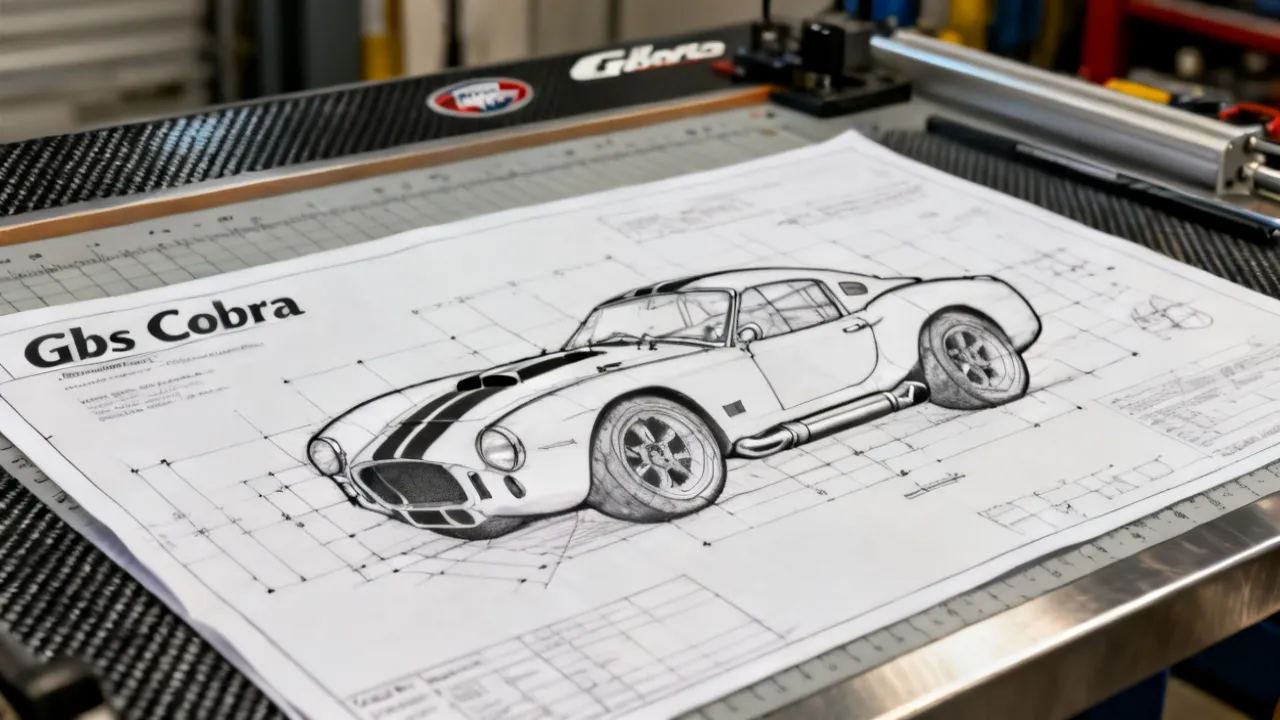
If you’re considering a Gbs Cobra—often associated with a kit-style build or replica-style project—the smartest starting point is not “Which one is low price?”, but rather which one you can validate end-to-end: legality, parts compatibility, build complexity, and quality of documentation. For very buyers, the decision hinges on three items you can verify before purchasing: (1) the supplier’s build documentation and part traceability, (2) the availability of matching drivetrain and suspension components, and (3) inspection expectations in your area.
In objective terms, a “Gbs Cobra” is typically discussed in the context of a Cobra-inspired chassis and body platform paired with performance components selected by the builder or the supplier. Because kit-based performance builds vary widely by supplier, country rules, and configuration, the safest approach is to treat any model name as a starting label—not a complete specification. Your evaluation should therefore focus on the exact configuration you’re getting, not the nickname alone.
Also remember that “buying guidance” is not only about selecting the right package. It’s about deciding how much uncertainty you’re willing to accept. The more you can reduce uncertainty before payment—via written included-part lists, clear compatibility mapping, and documented installation methods—the more predictable your total time and cost will be. A Cobra-inspired build often looks simple on a product page, but it becomes a system-of-systems project the moment you choose engine, transmission, cooling, steering, and brakes.
What follows is an expanded, practical guide that preserves your original structure while adding deeper inspection and decision workflow. The goal is to help you ask the right questions, understand why those questions matter, and avoid the most common failure points when evaluating a Gbs Cobra kit build.
In the enthusiast and kit-building ecosystem, “Gbs Cobra” very commonly functions as a shorthand for a Cobra-inspired build approach associated with a particular supplier or product line. However, the term can be used loosely across listings and communities. From an industry perspective, that means two shoppers can see the same label but receive different outcomes depending on what’s included (chassis only vs. chassis + body + suspension package, etc.).
To keep the assessment objective, consider the “definition layer” you need from the seller. A credible supplier should be able to clarify the exact bill of materials category (e.g., frame/chassis specification, body type, brake system class, steering geometry assumptions, and whether it’s intended for road use or track-focused use).
In many markets, buyers discover late that “Cobra-inspired” can cover multiple chassis philosophies: some kits are designed around modern donor subframes and geometry, while others replicate older-era suspension layouts. Those differences affect everything from how you select control arms to where brake calipers sit relative to wheel spokes. Even if two kits “look” identical, their underlying architecture can change the allowable drivetrain families and wheel/tire sizing ranges.
Therefore, your first step is to obtain a clear mapping of what the supplier means by their name. Don’t accept “it’s a Gbs Cobra” as enough. Ask for:
If the supplier can provide those details readily, you’re likely dealing with a more mature product. If they cannot, your project becomes riskier because you’ll have to “guess integration,” which is time-consuming and often expensive.
Because you asked for price information to be integrated, it’s important to handle pricing responsibly. Without verified, current local quotes, the very defensible approach is to discuss cost structure rather than inventing figures. In kit-based builds, total budget often includes more than the base package: rolling chassis components, drivetrain decisions, brake upgrades, wheels/tires, wiring, cooling, and inspection/registration-related steps.
Practical value metric: compare “complete configuration readiness” rather than the headline kit price. A lower upfront price can become more expensive if you later discover missing systems, mismatched mounting points, or documentation gaps that slow assembly and increase rework.
Industry note: reputable suppliers usually price in documentation quality and parts matching. Less-responsible sellers may underprice the package while shifting the integration burden to you.
To make this more concrete, consider a “value stack” approach:
When buyers get surprised by final cost, it’s usually because one of these “value stack” items was not priced into the mental model. A “cheap” kit might look attractive until you realize you still need multiple systems that were assumed to be part of the original deal.
You can reduce that risk by asking for a written list of inclusions and exclusions. If a supplier won’t provide clear “included vs. excluded” wording, treat that as a warning sign.
When a shopper searches for a Gbs Cobra, they often encounter multiple vendors, each emphasizing different aspects: some focus on chassis and body supply, others bundle performance components, and some offer partial kits. From a technical standpoint, your supplier choice affects more than convenience—it affects safety and build feasibility.
Look for a supplier that can provide:
For an objective buyer, this is where supplier details become decisive: a “complete kit” label should correspond to a verified inventory list, and any omissions should be explicitly stated.
To go deeper than the original checklist, you can evaluate supplier maturity in three practical ways:
Another overlooked area is warranty and return terms. A kit might have a parts warranty, but you may not be able to return installed components. Ask how the supplier handles missing hardware, damaged parts, and mis-drilled sections (especially in chassis/body integration where errors can compound).
Finally, verify whether the supplier provides any “known good” build plans. For example, some suppliers maintain a list of common donor configurations that have been successfully built and inspected. If such a list exists and is current, it can reduce your integration risk drastically.
Even when the chassis and body are well designed, a Cobra-inspired build typically demands skill in several domains:
Industry experts generally advise documenting each integration stage—photos, part numbers, and torque confirmations—because future troubleshooting and inspections are easier when you can prove what was installed and how.
To expand on “build complexity,” it helps to view a Cobra-inspired kit as a set of interconnected constraints. For example:
Another real-world complexity is “iteration.” Most successful builders expect at least a few rounds of fitting, removal, modification, and re-fitting. What matters is whether the kit architecture and documentation make iteration efficient rather than chaotic.
Therefore, when you evaluate a Gbs Cobra package, pay attention to:
Builders who avoid these points early tend to spend later on custom fabrication, additional hardware, or rework they did not budget.
Many listings describe performance outcomes (acceleration, top speed, lap times). As a professional practice, it’s top to treat such numbers as configuration-dependent unless the seller provides test conditions and component details. For a Gbs Cobra build, performance depends on engine choice, transmission gearing, differential ratio, tire compound, vehicle weight, and cooling capacity.
If you encounter quantified statements, request the underlying configuration and test context rather than relying on marketing. This is not about skepticism for its own sake—it’s about ensuring you compare the same system.
To interpret performance claims more responsibly, ask for at least the following:
Because a Cobra-inspired kit is not a standardized factory vehicle, it is entirely possible for two “similar” builds to behave very differently. That difference isn’t necessarily bad—it can be expected. But you should know what you’re buying and what trade-offs you’re accepting.
Also consider that performance claims can be influenced by how much work the builder has done beyond the kit. For example, a kit might come with a baseline suspension, but achieving lap times could require additional tuning, upgraded brakes, improved cooling, and careful alignment. If the listing omits those tuning steps, you should assume the performance number is “best case.”
When evaluating a Gbs Cobra package, focus on verifiable signals rather than adjectives:
To strengthen the “quality signals” section, here are additional concrete checks you can request or verify without guessing:
Quality isn’t only about how things look; it’s about whether the kit makes correct assembly feasible and repeatable.
Below is a practical supplement you can use after reviewing supplier listings. It’s designed as a comparison table and a structured checklist. Use it to translate “interest in a Gbs Cobra” into a build plan you can execute and verify.
| Evaluation area | What to verify for a Gbs Cobra option | Why it matters |
|---|---|---|
| Package completeness | Exact inventory: chassis/body, suspension components, steering system, brakes, wiring approach, cooling mounts | Prevents rework and unexpected sourcing costs |
| Compatibility map | Engine/transmission mount compatibility and any recommended donor components | Ensures drivability and reduces integration risk |
| Structural documentation | Build manuals, critical measurements, and hardware/finish specifications | Improves inspection outcomes and reduces safety uncertainty |
| Brake and steering validation | Master cylinder and caliper selection coherence; steering geometry assumptions; line routing guidance | Directly affects safety and pedal feel |
| Supplier support | Response quality, warranty/returns terms, and whether the supplier can clarify omissions | Shortens troubleshooting time during assembly |
| Local compliance pathway | How the supplier handles registration/incomplete compliance documentation | Ensures your project can be legally inspected |
To make this workflow more actionable, you can use a “decision tree” approach:
This step-by-step decision tree reduces “buyer’s regret” by ensuring you’re matching kit complexity to your own time and capability.
To expand this into a more robust “conditions/requirements checklist,” consider adding the following items during your pre-purchase phase:
These expanded checklist items matter because many inspection failures are not about aesthetics—they are about missing or weak attachment points, unclear documentation for safety systems, or component incompatibility causing unsafe operation.
For readers who want to anchor decisions in reliable frameworks, industry understanding of vehicle safety and inspection commonly aligns with standards issued by national transport authorities and technical vehicle inspection services. Because you did not provide a specific country or city, readers should consult their local vehicle inspection authority and relevant transport ministry guidance for exact compliance requirements. Where general industry knowledge is referenced (e.g., why brake/steering validation matters), the rationale is consistent with accepted vehicle safety engineering practices used across automotive engineering and inspection regimes.
Recommended approach: treat inspection requirements as the governing constraint, then ensure your chosen Gbs Cobra configuration can meet those constraints with documented parts and installation methods.
One practical way to apply this in your planning is to create an “inspection requirements worksheet” before you buy. List categories you expect to be checked—lights, brakes, steering free play, tire tread requirements, seatbelts, and vehicle identification documentation. Then for each category, note which parts are supplied by the kit and which are added by you. This becomes your map of where documentation will be needed most.
When you do that, a supplier’s value becomes more measurable. For example, if you discover that your local inspection needs proof of brake master cylinder sizing or requires an approved mounting method for seatbelts, you can prioritize kit configurations that come with those documented solutions.
From an expert builder’s standpoint, the biggest risk in Cobra-inspired kits isn’t typically the appearance—it’s integration. A kit can look correct and still fail to behave predictably if alignment assumptions, brake bias, cooling adequacy, or electrical loads are mismatched.
Here’s the expert workflow many professional builders use to keep things orderly:
This systematic approach often saves time. It also provides a clearer paper trail for inspectors, which can matter as much as the parts themselves.
To further reduce risk, experts also use “integration gates”—small checkpoints that prevent compounding mistakes. Integration gates might include:
These gates are especially valuable in Cobra-inspired kits because multiple systems share the same space in a compact engine bay and because the aesthetic body shell can hide wiring or routing mistakes until late. Building gates early helps you catch issues while parts are still accessible.
A Gbs Cobra build’s driving character usually emerges from the relationship between suspension geometry, tire selection, and alignment. The classic Cobra silhouette is iconic, but the “feel” comes from measurable parameters:
Because kit configurations vary, the top guidance is to follow the supplier’s recommended alignment and component selection approach, then refine with professional alignment measurements once the vehicle is assembled and settled.
To make this section more comprehensive, it’s worth explaining how common design choices influence real-world feel. For example:
Even if your main goal is style, you will still need correct alignment and setup to achieve safe predictable handling. Many Cobra-inspired builds are driven by enthusiasts who enjoy spirited driving. In that context, minor misalignment can translate into noticeable steering pull, uneven tire wear, and less confidence during braking.
Additionally, if you plan to change tire size later (a common enthusiast behavior), you should re-check alignment and clearance. Tires have different sidewall shapes and overall diameters, which can change wheel well clearance and suspension travel outcomes.
Owners often plan their first few maintenance intervals based on assumptions from factory vehicles. Kit builds are different: tolerances, wiring methods, and component aging can vary. A sensible maintenance plan for a Gbs Cobra typically includes:
In objective terms, these are generic vehicle reliability practices, but they’re especially relevant after assembly when systems are fresh and may still settle.
To expand maintenance planning beyond basic intervals, consider the following ownership realities for a Cobra-inspired kit:
A maintenance mindset also includes “documentation maintenance.” Keep your build log updated with what you did, when you did it, and with which parts. If you later sell the vehicle or need inspection documentation, a clean record helps you prove what was changed and when.
Finally, think about practical spare parts. Many kit owners keep spares for high-wear items like brake pads and certain sensors, and they maintain a short list of known parts that are difficult to source quickly. This reduces downtime if something fails unexpectedly.
A “Gbs Cobra” is commonly used as a label for a Cobra-inspired kit-style build associated with a supplier or product line. The term can cover different package configurations, so you should confirm the exact components included in the specific listing or quote.
Because the label can be applied broadly, treat it as a starting descriptor, not as a complete specification. A responsible seller will provide a detailed bill of materials or at least a structured included-parts list that reveals what you’re actually buying.
Compare the total configuration readiness: what’s included (chassis/body/suspension/brakes/wiring), what you must source separately, documentation quality, and whether compatibility with your chosen drivetrain is explicitly supported. Headline prices alone usually mislead in kit builds.
If possible, normalize your comparison by making a “must-have parts list” for your planned drivetrain and road-legal needs. Then price the kit listings based on what they cover versus what you must buy anyway. This turns price comparison into an apples-to-apples exercise.
Often, the supplier will design mounts and interfaces around typical engine families or donor component patterns. You should verify compatibility by part numbers, mounting dimensions, or the supplier’s supported engine/transmission list before purchasing.
Even when a kit claims “universal fit,” there are still practical constraints: steering column clearance, exhaust routing, driveshaft angle, and radiator location. So you may not need a specific engine brand, but you do need to ensure the selected engine fits the chassis geometry and that the supplier supports the integration approach.
Ask for: a complete included-parts inventory, build manual availability, brake/steering component compatibility notes, any known installation caveats, and guidance for inspection readiness in your area. Written answers matter more than verbal assurances.
To increase the usefulness of supplier answers, ask follow-up questions that force specificity. For example: “Which master cylinder bore size is recommended with your supplied calipers?” or “What are the torque specs for the steering rack mounting bolts in your build manual?” Specific answers indicate the supplier has engineered the kit rather than simply assembled it from generic parts.
Common mistakes include incomplete integration planning (especially brakes/steering/fuel), skipping measurement-based dry-fit checks, and treating alignment as an afterthought. Maintaining build records and performing system commissioning steps reduces these risks.
Another frequent issue is assuming that “fitment” automatically means “safe.” A component can fit physically but still be unsafe due to poor alignment, inadequate brake line routing, insufficient clearance at full lock, or thermal risk. Always plan validation checks, not just assembly.
Very experts recommend commissioning and incremental testing. Confirm brake operation, steering feel and affordable play, leak-affordable fuel and cooling systems, and electrical stability before extended driving.
“Drive immediately” can be interpreted many ways. You might be able to perform a short yard test, but a responsible commissioning plan should include brake pedal pressure stability checks, steering alignment checks, fluid leak checks under load, and temperature monitoring during the first short road session.
It is highly important for safety-critical systems (brakes, steering, fuel lines, structural integrity) and for compliance. Even if you are an experienced builder, professional inspection can provide a second layer of assurance.
A professional inspection is especially valuable when your local compliance process expects documentation. A qualified inspector can also flag issues that might be “fixable later” but that can become expensive if discovered only after you’ve completed bodywork and wiring.
Requirements vary by jurisdiction, but typically include inspection of brakes, lighting, seatbelt anchorage, vehicle identification documentation, and emissions-related considerations where applicable. Use your local authority’s checklist and confirm your kit’s documentation can support it.
In many regions, modified vehicle compliance can depend on how you label and document the vehicle. Some jurisdictions ask for specific documentation for major components or for proof of structural integrity and safety system installation. So plan documentation early, not at the end.
Prioritize packages that specify part numbers or compatible component families (brake kits, suspension wear items, steering components). Keep receipts and track component identifiers so replacements are straightforward.
In a Cobra-inspired kit, replacement parts can sometimes be more difficult if the build uses uncommon adapters or unique brackets. If you know the kit’s components are based on common donor parts or widely available aftermarket parts, sourcing will be much easier.
Local regulations, inspection expectations, and available workshop support do vary. If the term “nearby” is relevant to your planning, treat it as a prompt to check local compliance steps early and confirm whether local shops can service your chosen drivetrain and brakes.
Even if you plan to do your own build, it helps to identify a local shop willing to support inspections or post-build commissioning. That can shorten time-to-road legality and reduce the risk of delays if a specialized component requires tuning or verification.
A Gbs Cobra project can be rewarding, but the top outcomes come from disciplined evaluation: verify what’s included, confirm compatibility, assess documentation quality, and plan for inspection readiness. Instead of chasing broad claims, build a configuration “truth set,” document your assembly milestones, and commission the vehicle using proven safety checks.
If you share your intended use (road vs. track), your preferred drivetrain approach, and your general region for inspection requirements, I can help you create a more tailored comparison checklist for your specific Gbs Cobra option.
At the end of the day, the best buying decision is the one that makes the build predictable: predictable parts sourcing, predictable installation steps, predictable inspection documentation, and predictable vehicle behavior once assembled. A Cobra-inspired kit is a system project, so your job as a buyer is to insist—up front—on the information that turns a “replica label” into a buildable, legal, and safe vehicle.
Striking the Perfect Balance: Navigating Premiums and Out-of-Pocket Expenses in Senior Insurance Plans

Explore the Tranquil Bliss of Idyllic Rural Retreats

How to Make Lasting Memories at Disneyland Attractions

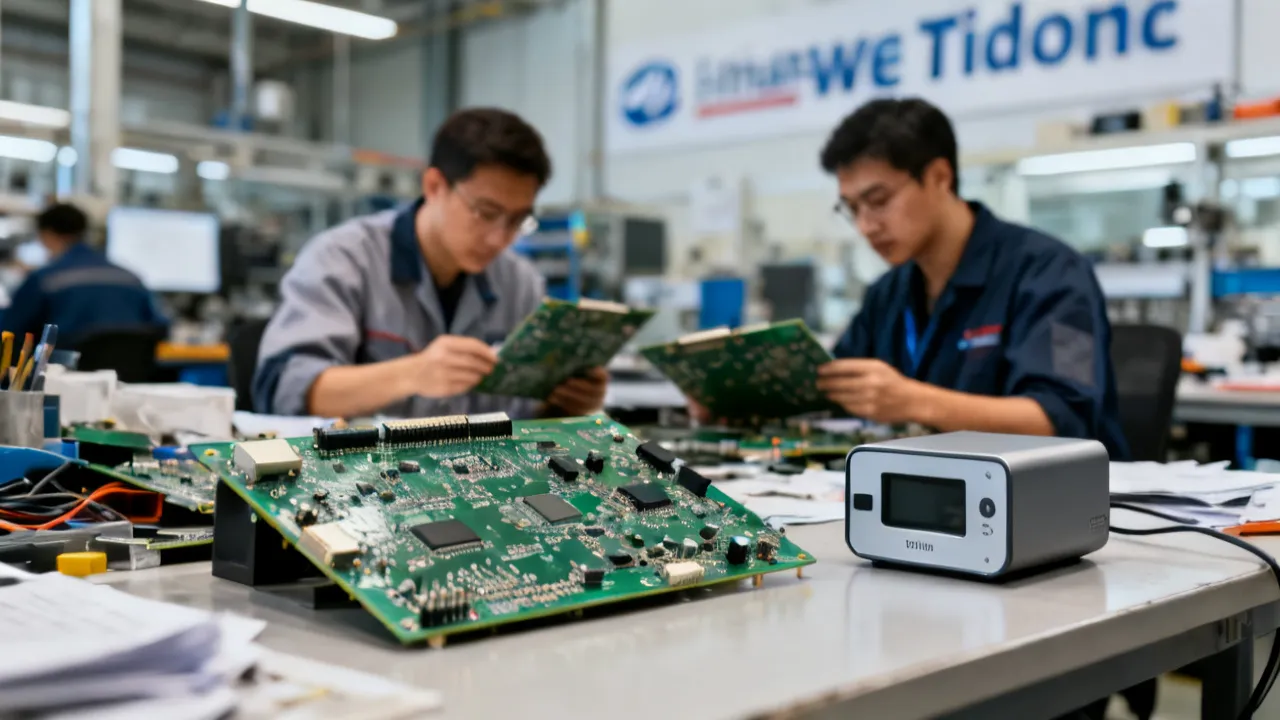
4rkojvsx Technology: Industry Insights and Buying Guide
Affordable Phones and Plans for Seniors

Affordable Full Mouth Dental Implants Near You

Unlock the Top Kept Secrets to Finding Your Ideal Dentist for Flawless Dental Implant Results!

Discovering Springdale Estates

Unveiling RS Sul Telecom Services

Striking the Perfect Balance: Navigating Premiums and Out-of-Pocket Expenses in Senior Insurance Plans
Finding an optimal mix of insurance premiums and direct medical costs is crucial for effective healthcare budgeting. This discussion will delve into tactics to achieve a balance that aligns with your finances.
4rkojvsx Technology: Industry Insights and Buying Guide
This guide explains 4rkojvsx with an evidence-based, step-by-step approach to evaluating suppliers, pricing, and requirements before purchasing. Objectively, the term points to a technical category where compatibility, quality controls, and documentation matter as much as the nominal price. Readers will also find a practical comparison table, conditions, and targeted FAQs.
Unlock the Top Kept Secrets to Finding Your Ideal Dentist for Flawless Dental Implant Results!
Selecting an adept dentist is critical for ensuring the efficacy and your satisfaction during a dental implant procedure. This in-depth guide is designed to assist you in finding a dental expert who meets your personal requirements, guaranteeing that your path to dental implant success is seamless and fruitful.

Protect Your Perfect Smile: Master the Art of Defending Your Teeth Against Acid Attacks
Though they may tantalize the palate and invigorate the senses, foods and drinks with high acid content are a double-edged sword with regard to oral wellness. Continual exposure to these substances progressively strips away the protective enamel from our teeth, which can lead to increased sensitivity, changes in coloration, and a variety of other dental complications. This composition offers insight into relishing these zesty favorites while safeguarding your teeth from damage.

Comprehensive Insight into Boob Enhancement
Boob enhancement is a cosmetic procedure aimed at augmenting the size and improving the shape of breasts for aesthetic purposes. With the evolution of medical procedures, this enhancement has become more sophisticated, offering various options to cater to individual preferences and needs. This detailed guide explores the intricacies of boob enhancement, tackling myths, benefits, and expert advice to help potential candidates make informed decisions.

Pmoc Abrava: Supply, Pricing, and Quality Guide
This guide explains what “Pmoc Abrava” is used for in professional settings and how suppliers evaluate quality and consistency. It offers an objective overview of common procurement considerations, documentation, and verification practices. Readers will also find a comparison-style supplement section and practical requirements before choosing a source.
