This guide explains how Sightsavers Truckers support global vision and health programs through logistics, route planning, and partner coordination. “Sightsavers Truckers” commonly refers to branded trucking and transport operations connected to Sightsavers’ work. Background covers why freight reliability matters, what stakeholders typically require, and how organizations assess service performance in humanitarian health supply chains.
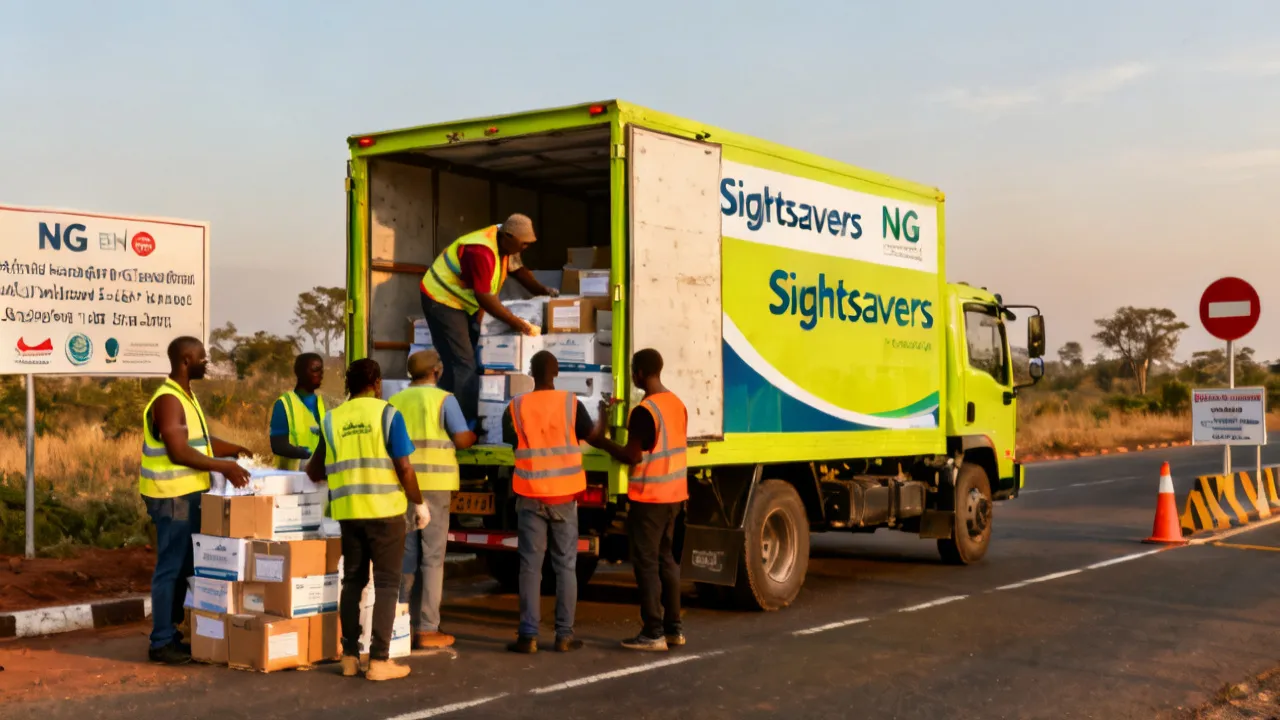
In practical terms, Sightsavers Truckers represent the transport-and-logistics capability that helps move essential supplies, equipment, and program materials from depots to service delivery points. For organizations working in eye health, neglected tropical diseases, and community-based screening, the weakest link is often not clinical expertise—it’s whether the right items arrive on time, in usable condition, and in the right place for outreach teams to do their work. When trucking is integrated into program planning, it strengthens last-mile consistency, reduces avoidable delays, and helps partners maintain continuity across districts.
Eye health delivery is often a chain of interdependent events: outreach staff must coordinate with community structures, clinicians must have supplies ready for examinations and treatments, and supervisors must manage patient flow. In that context, transport reliability is a measurable risk factor. A late delivery may not just delay a shipment—it can disrupt staffing schedules, reduce appointment attendance windows, and cause the program to reallocate scarce field time to procurement recovery. When that happens repeatedly, it erodes community trust and can reduce the overall effectiveness of screening and treatment campaigns.
From an industry expert’s perspective, trucking support tied to large public-health programs is evaluated less by marketing and more by operational fundamentals: documentation control, route reliability, asset tracking practices, safety standards, and coordination with medical and community teams. That’s the lens through which this guide explains the concept and how stakeholders usually structure requirements and assessments. Importantly, these fundamentals are not merely “nice to have.” They are the practical controls that reduce the probability of stockouts, incomplete kits, damaged equipment, and compliance failures.
Another reason Sightsavers Truckers matters is that public-health logistics frequently operates under constraints that commercial logistics doesn’t always face at the same intensity. For instance, health programs might have short field seasons, limited storage capacity at remote sites, and strict requirements around how medicines and consumables are packed and tracked. A commercial delivery may still deliver eventually; a health outreach schedule might not be able to “wait eventually.” If outreach teams are scheduled for a particular day (and communities are mobilized accordingly), the logistics window becomes non-negotiable.
Finally, logistics reliability also affects accountability and reporting. Many funders and oversight bodies require evidence that supplies were delivered and used as intended. Without a disciplined trucking operation—proof-of-delivery, documented dispatch, and traceable receiving—program audits become harder, and the organization may face delays in reporting or reimbursement.
The phrase Sightsavers Truckers is commonly used to describe trucking operations and transportation services associated with Sightsavers’ mission. In a supply-chain context, it can mean a partner fleet, contracted logistics providers, or internally coordinated transport that enables program implementation. Because humanitarian and public health projects vary by country and season, the exact model may differ, but the function remains consistent: move goods reliably so services can reach communities.
Rather than treating trucking as a standalone activity, programs typically integrate it with:
In practical planning, “truckers” is also a shorthand for a broader transportation system: packaging standards, dispatch documentation, vehicle management, and receiving verification. When stakeholders talk about “Sightsavers Truckers,” they are often signaling a specific operational relationship—an expectation that the transport service will behave predictably under program constraints and will provide the paperwork and condition reports needed for accountability.
To make the idea even more concrete, consider a typical outreach kit scenario. A kit might include instruments, consumables, medication components, and patient record materials. Clinicians require these kits to be assembled and delivered before the outreach begins. If the truck arrives late, the outreach may still start—only without full kits. The clinician then improvises by splitting patients across available equipment, postpones certain examinations, or sends patients to a later date. That reduces throughput and creates uneven quality of service. Over time, those operational gaps can increase the risk of missed cases and reduce program impact.
So “Sightsavers Truckers” is not just about moving a vehicle. It is about enabling consistent service delivery patterns in environments where delays and damage have a direct effect on public-health outcomes.
Vision and eye-care initiatives often depend on time-sensitive coordination between multiple parties: procurement teams, warehouse staff, field supervisors, and community outreach workers. In this environment, transport reliability becomes a measurable risk factor. If supplies arrive late, outreach teams may operate without required kits, medications, or consumables—creating downstream delays and wasted field time.
Moreover, eye-care programs typically handle items that require careful storage conditions—such as sterile consumables, temperature-sensitive materials, or equipment that must be protected from damage. Even when temperature extremes are not a formal constraint for every item, safeguarding against humidity, shock, and improper stacking helps maintain usability. Instruments can be compromised by rough handling; blister packs can be damaged by crushing; packaging can be torn, which complicates quality verification and increases the likelihood that items must be quarantined or discarded.
Logistics reliability also matters because field teams often operate without the same “repair and replacement” options available to central facilities. If a vehicle breaks down, there might be no spare vehicle ready at that moment. If a delivery arrives with shortages, the field team may not have the ability to reorder quickly and still keep the outreach schedule intact. That is why trucking performance must be assessed not only as “speed” but as “resilience under uncertainty.”
In addition, eye-health programs frequently rely on batch- or lot-specific materials. Some components might have expiration dates, batch codes, or serial numbers. Traceability becomes essential for inventory management, quality control, and reporting. A transport system that cannot maintain accurate documentation can cause the program to lose the ability to reconcile delivered supplies with consumption records.
Another factor is that outreach may involve multiple delivery points—district warehouses, health facilities, partner storage sites, and sometimes community-level distribution points. Each additional node increases the complexity of logistics handover. A strong transport system reduces the risk of items being misplaced between nodes, and it ensures each receiving point records the correct quantities and conditions.
When a logistics provider supports a large mission-linked program like Sightsavers Truckers, industry expectations often include the following capabilities:
Effective trucking is built on route planning that accounts for road conditions, seasonal weather impacts, delivery windows, and security considerations where relevant. At the program level, this means aligning delivery dates with field deployment schedules.
Route management also includes planning for realistic transit times. In many regions, “distance” alone is not a good predictor of travel time. Roadworks, flood-prone areas, and peak traffic at market towns can create unpredictable delays. A capable trucking provider develops route plans that include buffer times and alternative routes where feasible.
In addition, route management should incorporate vehicle constraints. Some vehicles require specific access conditions—taller vehicles may not fit narrow roads or may be restricted near certain facilities. Loading and unloading points must also be considered, because a vehicle that can technically pass a route might still be unable to safely load or unload at a facility.
Reliable programs maintain traceability from dispatch to receipt. In practice, that includes clear bills of lading (or equivalent documents), packing lists, serial tracking when needed, and proof-of-delivery workflows.
Traceability is especially important when shipments involve items with batch/lot identifiers or instruments with serial numbers. If records are inconsistent, the program may not be able to verify whether the correct version of a product was delivered, which can matter for compatibility with existing protocols, procurement contracts, or clinical equipment calibration.
Documentation should also include what many organizations call “handover evidence.” This is not only proof that something was delivered, but proof of the condition and quantities at delivery. For example, if cartons arrive crushed or if seals show evidence of tampering, that should be documented immediately while the shipping chain still has visibility.
Transport performance isn’t solely about speed. It’s also about minimizing loss and damage through safe driving practices, correct loading methods, secure fastening, and protection of packaging.
Asset protection includes more than just preventing theft. It includes preventing damage from vibration, improper stacking, and inadequate securing during stops. For sensitive items—such as medical equipment cases—transporters should follow disciplined loading practices, including using padding, ensuring items are not exposed to direct contact with hard surfaces, and confirming that packaging can tolerate the vibration patterns expected on local roads.
Safety standards also involve driver compliance: adherence to speed limits, secure driving, safe stopping procedures, and compliance with any locally required permits or vehicle checks. For humanitarian operations, safety is also a form of program continuity—an incident that disables a vehicle or injures a driver can halt an entire outreach cycle.
A mature logistics operation has escalation plans: what happens if a vehicle breaks down, if there is a road closure, or if scheduled delivery points shift due to field conditions. This is essential for humanitarian continuity.
Coordination is not only internal between the transporter and the program team. It often involves communication among multiple levels: warehouse staff, field supervisors, security focal points, and sometimes local partner organizations. When escalation procedures are clear, the program can respond quickly to problems without losing time waiting for unclear approvals.
Escalation procedures should define decision points and timelines. For instance: how long can a shipment be delayed before it triggers alternate distribution planning? Who can authorize a reroute? Who informs clinicians and who informs receiving points? A well-designed system reduces the number of people who “guess” what to do next.
Quality checks are often performed at receipt points: verifying package integrity, checking for shortages, and confirming that items are in a usable state before distribution to clinical teams.
In practice, quality checks should be structured and repeatable. That means using receiving checklists, having a standardized approach to documenting package condition, and ensuring that shortages are recorded with enough detail to allow reconciliation later. For example, recording the number of damaged cartons, the visible condition (e.g., torn seals, water damage indicators), and the presence of batch/lot labels helps the program decide whether items can be used, quarantined, or returned.
Quality checks also help build trust between program teams and logistics providers. When receiving outcomes are documented consistently, the program can address systemic issues (like packaging weakness) with evidence rather than subjective complaint.
You asked for price information to be integrated; however, no specific price figures were provided in the prompt. In professional practice, trucking support for mission-linked operations is typically budgeted using cost components such as:
If you’re comparing options for Sightsavers Truckers-type logistics, the very useful “price” comparison is often total cost of service: not only the transport line item, but also the cost of delays, rework due to damaged shipments, and the effort required to recover documentation issues.
To illustrate how total cost changes the decision, consider two hypothetical scenarios. Provider A charges slightly less per trip but frequently delivers outside the planned window and has inconsistent documentation. That can lead to field teams waiting, missing outreach time, or redispatching items. Provider B charges more per trip but delivers on time, maintains shipment condition, and provides complete proof-of-delivery. Even if Provider B’s transport fee is higher, the program may end up saving money overall because it avoids the operational costs of disruption.
Therefore, when organizations negotiate pricing, they often request transparent breakdowns tied to service conditions rather than accepting a single “flat rate.” Transparent breakdowns make it easier to understand trade-offs and to adjust service levels to match mission needs.
In many programs, pricing discussions also include assumptions about loading labor, vehicle availability, storage responsibilities, and the cost of waiting time. Waiting time can become a hidden cost if receiving points are not prepared, or if documentation is incomplete and causes delays at handover. Good planning reduces waiting time for both sides.
Because your prompt mentions supplier details but does not provide a named supplier, this section focuses on how organizations typically structure supplier evaluation for Sightsavers Truckers-related operations. In a well-run procurement process, supplier selection includes both operational and compliance criteria.
Common supplier assessment areas include:
From an expert standpoint, suppliers are often judged on how they handle exceptions. A delivery service that performs well in “ideal” conditions may still fail a program if breakdowns or route changes are common. Therefore, the supplier’s escalation procedure matters as much as their usual turnaround time.
To make evaluation more objective, many programs score suppliers against a set of measurable requirements. For example, they might evaluate:
Additionally, evaluation should consider “organizational fit.” A good trucking provider aligns with the communication rhythm of the health program—such as providing status updates at defined milestones (pickup confirmed, dispatch confirmed, in-transit update, ETA update, delivery confirmation). Without this alignment, field teams struggle to plan around logistics realities.
Finally, procurement evaluation should verify that the supplier can scale. Many health programs expand shipments during outreach campaigns. A supplier that cannot handle increased volumes may perform acceptably in small tests but fail under campaign peaks.
Your instruction indicates that if a city/country appears in keywords, it should be replaced with “nearby.” No location-specific city/country terms were included in the provided keywords, so this guide stays location-neutral. Still, localization is real in logistics: what differs in “nearby” regions is often road infrastructure quality, the availability of staging warehouses, and typical customs/permit processing times. For field teams, these differences show up as:
In other words, Sightsavers Truckers-type operations succeed when planners treat geography as a variable, not a backdrop.
To extend this in practical terms, consider how “nearby” regions might differ in radio coverage and communication infrastructure. If transport staff rely on phone updates but coverage is weak along certain routes, the supplier might need alternative communication methods (e.g., scheduled check-ins, backup numbers, or simple reporting procedures at key waypoints). This impacts how you set expectations for status updates.
Another localization variable is the availability of safe loading/unloading spaces. Some facilities may not have enough space to safely unload, or they may require specific scheduling to avoid disrupting services. That adds time on either side of the transport leg. A transporter that plans for unloading constraints can protect the overall delivery window.
Seasonality also matters. Even within a “nearby” geographic band, rainfall patterns can vary. Mud, washed-out bridges, and increased travel risk can require alternative routes or additional safety time. A transporter that monitors seasonal constraints and builds contingency time into plans will deliver more reliably.
In short, localization influences dispatch timing, safety practices, communication routines, and the feasibility of alternate routing. Treating these variables as fixed assumptions leads to predictable failure modes.
Below is a structured supplement to help you compare approaches. Per your instruction, the table contains no links.
| Aspect | Typical “Sightsavers Truckers”-style approach | How to assess fit (objective signals) |
|---|---|---|
| Service model | Mission-integrated transport (partner fleet, contracted logistics, or coordinated internal routing) | Clear dispatch-to-delivery workflow; evidence of coordination with field schedules |
| Performance metrics | On-time delivery, shipment condition at arrival, proof-of-delivery completeness, and exception handling | Quarterly or per-shipment reporting; documented incident resolution timelines |
| Handling standards | Packaging integrity checks, correct loading practices, protected goods, and arrival verification | Standard operating procedures for loading/unloading; receiving checklists |
| Documentation & traceability | Traceable records for dispatch, transit, and receipt; batch/lot handling when required | Consistent paperwork generation; organized delivery confirmations |
| Risk management | Safety procedures plus recovery plans for breakdowns, delays, or route interruptions | Defined escalation procedure; evidence of contingency planning |
| Cost structure | Total cost considers distance, timing constraints, handling needs, documentation, and insurance | Transparent line items; ability to explain trade-offs (e.g., faster routing vs. higher cost) |
To make the comparison table more actionable, consider how you might convert the “How to assess fit” signals into a procurement scoring model. For example, you can weight documentation quality and exception response higher than cost when the mission has strict outreach windows. You can also require sample documentation packs (redacted) that demonstrate how the supplier records dispatch and delivery evidence.
Also, when using a comparison table in procurement, it helps to define the “unit of evaluation.” Are you evaluating one route, one campaign cycle, or the supplier’s general performance across a region? If your evaluation unit is unclear, suppliers may respond with incomplete evidence.
This article’s operational framing aligns with widely used humanitarian and supply-chain practices. For baseline concepts and terminology, readers may consult the following reputable organizations:
Specific numerical claims are intentionally avoided because your prompt does not provide verified pricing, regional performance figures, or named supplier data. Still, the principles described here are consistent with common approaches used in structured logistics governance: define service scope, set measurable requirements, implement standard operating procedures, and review performance based on evidence.
This section is written as a practical sequence that organizations often follow when deploying services resembling Sightsavers Truckers.
Start by clarifying what will be transported: medical supplies, equipment, consumables, or program materials. Then define packaging requirements, handling sensitivity, and any storage considerations for transit and receipt.
To make the “shipment profile” more useful, programs often categorize shipments by handling class. For example: “fragile equipment,” “sealed consumables,” “bulk cartons,” “documents and record kits,” and “return/disposal materials.” Each category may require different packaging practices, different loading behavior, and different receiving verification steps.
You should also define what “usable state” means for each category. For example, sealed consumables might require intact seals and labeling readability. Fragile equipment might require damage checks and case closure verification. Documents might require completeness and legibility rather than physical integrity.
Identify when field teams will be ready to receive. In eye-health programming, outreach timing can be the “schedule driver.” Create delivery windows that reflect realistic arrival expectations, including buffer time for exceptions.
When mapping delivery windows, align not only the “ideal day” but also the “acceptable range.” If outreach staff can receive deliveries only during specific hours, then the transport plan must incorporate those restrictions. If the program can tolerate delivery earlier but not later, that should be stated explicitly. Logistics providers need this clarity to plan dispatch timing.
Additionally, consider the time needed at receiving points. Receiving is not instantaneous; it might involve counting cartons, inspecting packaging integrity, verifying batch/lot documentation, and signing proof-of-delivery. If receiving points are understaffed or have limited time, transit schedules must incorporate that reality.
Match vehicle capacity and configuration to how items are packed (e.g., pallets, cartons, crates). Ensure loading/unloading processes minimize damage and reduce turnaround time at receiving points.
Vehicle choice should also consider road and environment. Vehicles must be compatible with route conditions and must allow safe securing of cargo. In many program contexts, logistics providers need to demonstrate that they can protect shipments from dust, moisture, and vibration.
Loading method also matters because poor loading practices create damage even when the road is smooth. For example, stacking sensitive equipment directly on top of cartons can cause crushing and instrument misalignment. Correct use of padding, separation, and secure fastening improves the probability of “condition at arrival” meeting program standards.
Loading discipline includes verifying weights, ensuring correct distribution within the cargo compartment, and confirming that cargo is stable during braking and turns. Those details reduce both damage risk and safety risk.
Create a dispatch documentation pack with packing lists, shipment identifiers, and receiving instructions. Define who captures proof-of-delivery and how discrepancies are recorded.
Document packs should be designed for field usability. For example, receiving staff may not have reliable internet access, and they might rely on paper forms or offline mobile tools. The documentation should be readable, structured, and complete enough to reconcile shipments later.
Traceability should cover the entire chain. That means having dispatch documents at departure, in-transit references if available (e.g., vehicle identification), and receipt documents at arrival. When feasible, programs also use photo evidence: images of seals, carton labels, and the unloading process. Photo evidence can be helpful when resolving discrepancies.
Finally, document naming conventions and numbering should be consistent so that shipments can be tracked without ambiguity. A common weakness in many programs is that documents are created but not standardized, leading to confusion and delays during audits.
Agree on incident reporting: breakdowns, route diversions, damaged goods, missing packages, or delays. Ensure field supervisors and central coordinators know who to contact and within what time frame.
Escalation procedures should define triggers. For example, what happens if:
Each trigger should have an action: notify specific contacts, pause distribution if required, quarantine affected items, and document findings. The objective is to prevent downstream use of potentially compromised supplies.
Exception management should also include how to protect the field schedule. In some situations, programs may decide to dispatch partial kits to avoid stopping outreach entirely. That decision should be pre-defined with governance rules and approvals to avoid inconsistent practices.
Safety escalation also covers accidents, driver injuries, and security threats. A transport provider should have a safety plan that includes driver and cargo protection, as well as procedures for communication and reporting to the program team.
At arrival, inspect packaging integrity, verify quantities, and record any variances. If discrepancies occur, the program should have a documented process for resolution—so future shipments can improve.
Receiving checks should be structured and repeatable. For example, receiving staff might use a standardized checklist that includes carton condition, seal integrity, label readability, and count verification. Discrepancies should be recorded with enough detail to support claims and corrective actions.
After receiving, the “close the loop” step is critical. Many programs discover issues but do not implement corrective actions with the transporter or supplier. Closing the loop means reviewing the cause of discrepancies and implementing changes: improving packaging, adjusting loading methods, refining dispatch documentation, or modifying route planning.
Closing the loop also includes reconciling inventory records. Logistics should provide delivery evidence that allows stock records to update accurately. That reduces stock mismatches and improves planning for future shipments.
At regular intervals, review metrics such as on-time delivery rates and condition-at-arrival outcomes. Use structured reviews to refine routing, packaging, dispatch timing, and supplier communication.
Monitoring should not only capture “success” but also capture the patterns behind failures. For example, if deliveries to certain receiving points consistently arrive late, the program should analyze whether the issue is dispatch timing, receiving constraints, route complexity, or vehicle availability. Each cause requires a different corrective action.
Performance review cadence matters. Monthly reviews may be too slow for high-tempo outreach campaigns. Some organizations use per-shipment reviews combined with quarterly strategic performance dashboards.
Additionally, consider the human factor. Communication failures often contribute to operational breakdowns. If drivers and receiving staff have unclear handover responsibilities, the program should address that through training and clear assignment of roles.
In addition, many mission-linked programs require contractual clarity on responsibilities. For example, who is responsible for re-packing damaged cartons (if allowed), who files insurance claims, and who provides replacement items when shortages occur. Clear responsibilities reduce friction and speed up resolution.
Programs also sometimes require that transport providers submit incident reports in a specific format. A standardized format can include the time of incident, location, shipment ID, affected quantities, photos, and immediate corrective steps. This structure makes it easier for program teams to manage governance and audit trails.
When organizations evaluate trucking operations supporting public health initiatives such as those associated with Sightsavers Truckers, there is a recurring pattern. Problems seldom begin at the moment a truck starts driving. They usually originate earlier—in planning, packaging, and handover steps.
If dispatch occurs without confirming receiving readiness, even a reliable truck can “fail” by arriving at the wrong time. The fix is operational coordination: align warehouse release, document completion, and field team availability.
A mismatch can happen when the warehouse ships as soon as goods are packed, without considering whether the receiving point is staffed. It can also happen when outreach teams adjust field schedules but logistics planning is not updated. Prevention involves establishing a coordination rhythm—such as daily confirmations prior to dispatch during campaign periods.
Some programs use a confirmation mechanism where receiving points must confirm availability by a cut-off time. Others include a buffer day for deliveries. Whatever the approach, the key is to treat delivery windows as an enforceable operational requirement, not as a suggestion.
Damaged cartons, compromised seals, or missing labels often point to inconsistent packing standards rather than poor driving. For programs involving medical goods, this is especially important. Standardized packing checklists and labeling conventions reduce receiving confusion.
Weak packaging can also be linked to procurement behaviors. If different suppliers pack items differently, the program might receive goods in inconsistent cartons that do not stack well. When transporters load inconsistent packaging, damage rates can rise. Prevention includes requiring minimum packaging standards from procurement partners and inspecting packaging integrity prior to loading.
Labeling conventions are also part of protection. If cartons are mislabeled or labels are covered or unreadable after transport, receiving staff can’t verify contents. That can lead to delays and potential misallocation of kits.
To prevent this, programs can enforce labeling and sealing standards, including ensuring that labels are placed where they remain visible even if cartons are handled frequently.
Missing or inconsistent paperwork can cause clearance delays, internal rework, and disputes during receiving. Strong dispatch documentation and proof-of-delivery discipline mitigate this risk.
Documentation errors include wrong shipment IDs, missing packing lists, inconsistent batch/lot documentation, or incomplete proof-of-delivery. Sometimes documents are present but not aligned with the physical shipment. For example, the packing list may show different quantities than the cartons actually delivered. That is why documents and physical cargo must be reconciled at dispatch, not only at receipt.
Prevention involves a dispatch verification step where a responsible person checks that documents match the shipment before the vehicle leaves. When possible, dual verification (two-person checks) can reduce error rates for critical shipments.
Another prevention step is to ensure that receiving staff have templates and guidance for capturing discrepancies. If receiving staff are not trained on how to record discrepancies, they might record them inconsistently, making it hard to resolve issues later.
Very routes experience disruptions. The critical variable is whether the supplier has clear escalation and contingency actions. Without them, delays cascade and field teams lose productive time.
Exception management failures are common when the logistics provider treats exceptions as ad hoc problems rather than as part of a governed system. A governed system includes defined triggers, communication protocols, documentation requirements, and possible compensating actions (e.g., partial delivery, re-routing, or replacement dispatch).
For humanitarian programs, contingency actions must also consider ethical and clinical constraints. For example, if medicines require certain storage conditions, the program might decide not to distribute compromised items even if outreach time is limited. Exception management must balance service continuity with quality and patient safety requirements.
Prevention involves testing the escalation plan during smaller pilot shipments so that the program learns how quickly communication and decision-making happen. A plan that looks good on paper may fail in practice if roles and timelines aren’t understood by drivers and receiving staff.
It typically refers to trucking and transport operations associated with Sightsavers-supported programming—helping move supplies and equipment so field teams can deliver services. The exact structure (partner fleet, contracted transport, or coordinated internal routing) can vary by project.
Common measures include on-time delivery performance, condition of shipments at receipt, completeness of proof-of-delivery documentation, and responsiveness to exceptions (breakdowns, route changes, or delivery issues).
Assess operational capability (fleet readiness and maintenance), compliance (licenses and insurance), documentation workflows (traceability and receiving records), safety practices, and contingency plans for disruptions.
Indirectly, yes. While trucking does not replace clinical expertise, it affects whether teams have supplies when and where they need them. Better logistics can reduce cancellations, delays, and partial kit issues.
Reliable estimates typically require shipment volume and handling needs, vehicle requirements, route distance and conditions, delivery windows, loading/unloading assumptions, insurance/risk coverage expectations, and any documentation or compliance steps involved.
There isn’t a universal answer. Single-supplier models can simplify reporting and coordination, while multi-supplier approaches may improve resilience by matching different vehicles or service strengths to specific routes. The top choice depends on route variability and operational risk.
Programs generally require receiving checklists, clear discrepancy reporting, and defined resolution steps (e.g., replacement procedures or documentation for insurance claims), so the issue is corrected for future shipments.
Your prompt did not provide specific price figures or named suppliers, so this article focuses on professional cost drivers and evaluation criteria rather than unverified numbers.
Understanding Sightsavers Truckers is ultimately about seeing trucking as a system: planning, packaging, documentation, safety, and exception handling working together to protect program continuity. When the operational design is sound—and when performance is monitored with practical metrics—logistics becomes a strategic enabler for health outreach teams rather than a background task.
If you share your intended region (or the types of routes), shipment categories, and required delivery windows, I can tailor the comparison table and the supplier evaluation checklist to your specific scenario—while keeping the assessment objective and evidence-aligned.
To make those next steps actionable, consider also sharing how your program currently handles receiving. For example, do receiving points have checklists and trained staff? Are proof-of-delivery forms standardized? How do you capture discrepancies and how quickly can you request resolution? The answers determine what logistics requirements should be tightened and what could be simplified.
Ultimately, the goal is to make transport predictability visible—through measurable service levels, clear accountability, and feedback loops that improve both the delivery and the downstream clinical or distribution workflow. When that happens, “Sightsavers Truckers” becomes less of a label and more of a reliable operational capability that supports consistent access to eye health services.
Striking the Perfect Balance: Navigating Premiums and Out-of-Pocket Expenses in Senior Insurance Plans

Explore the Tranquil Bliss of Idyllic Rural Retreats

How to Make Lasting Memories at Disneyland Attractions

4rkojvsx Technology: Industry Insights and Buying Guide

Affordable Phones and Plans for Seniors

Affordable Full Mouth Dental Implants Near You

Unlock the Top Kept Secrets to Finding Your Ideal Dentist for Flawless Dental Implant Results!

Discovering Springdale Estates

Unveiling RS Sul Telecom Services


WLLE: Practical Sourcing Insights with Quality Focus
This guide explains how WLLE helps organize sourcing decisions by balancing specification clarity, supplier reliability, and quality checks. Objectively, “WLLE” is treated here as a practical workflow label, while the repeated “😊 😊 😊” cues a user-experience orientation rather than a technical claim. The article also outlines decision conditions, comparison criteria, and FAQs for buyers.

Pis: Expert Buying Guide and Supplier Comparison
This guide explains Pis in an objective, decision-ready way—covering typical supplier considerations, evaluation criteria, and practical steps to choose what fits your needs. The background sections clarify what “Pis” generally refers to in commerce contexts, common use cases, and why supplier transparency matters when you compare options.

Revisional Porto Alegre: Expert Guidance and Options
This guide explains how a revisional approach is applied in Porto Alegre, outlining practical steps, due diligence, and supplier selection considerations. “Revisional Porto Alegre” refers to reviewing, adjusting, and verifying prior arrangements or plans to reduce risk and improve outcomes. The article offers an objective industry lens and a structured checklist for requirements, sources, and common questions.

Understanding Cxxxvldlo Supply Quality Standards
This guide explains how Cxxxvldlo-related supply quality is evaluated, organized, and verified across sourcing workflows. Objectively, it frames what “Cxxxvldlo” typically represents in operational contexts, why documentation and auditability matter, and how procurement teams translate supplier requirements into consistent handling. The goal is clarity—so decisions remain traceable, repeatable, and compliant.

Pono Explained: Meaning, Use, and Buyer Guidance
This guide clarifies what Pono is, how it’s commonly used, and how to evaluate quality when sourcing it for personal or commercial purposes. It objectively outlines the background of Pono terminology, common product forms, typical supplier roles, and practical decision criteria—so you can compare options confidently without relying on vague claims.

Understanding Joao.clemente.de.soiza.c.p.f Identifiers
This guide explains how to interpret the identifier “Joao.clemente.de.soiza.c.p.f” in real-world record workflows and compliance contexts. It then provides objective background on what such code-like strings typically represent, how organizations verify them, and what quality controls reduce errors. The discussion focuses on responsible handling, traceability, and audit readiness without relying on unverified claims.
